The latest China update news points to a sharper and more consequential phase in US-China rivalry. Over a single weekend, tensions widened across several fronts: semiconductor controls, sanctions tied to Iranian oil, China’s food security strategy, a major Airbus aircraft order, and renewed maritime friction with the Philippines.
The most important development was Beijing’s decision to order domestic firms not to comply with certain US sanctions. That step matters because it moves China from quiet resistance to overt legal and political confrontation. It also creates a new dilemma for Chinese banks and companies that depend on the global dollar system while operating under Chinese law at home.
Table of Contents
- US-China sanctions clash enters a riskier phase
- China orders firms to defy US sanctions
- Food security is becoming a core national security issue
- China’s airlines deepen their turn toward Airbus
- Philippines-China tensions rise again in the South China Sea
- What these developments mean together
- FAQ
US-China sanctions clash enters a riskier phase
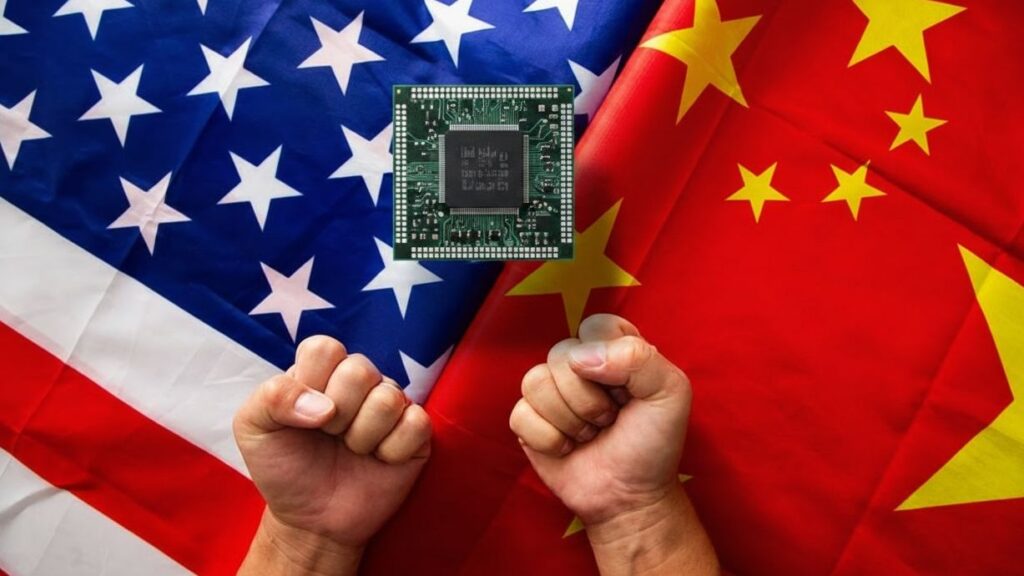
Washington had already been tightening pressure on China’s technology and energy links. The US Department of Commerce reportedly instructed several suppliers of chipmaking equipment to halt some shipments to China’s second-largest chipmaker, Huahong Semiconductor. The apparent goal is to slow China’s progress in advanced chip fabrication, especially as Huahong reportedly pushes toward 7-nanometer capabilities that are important for artificial intelligence applications.
This move reflects a broader US concern that China may be narrowing the gap in what could be called “good enough” AI chips. Even if China still trails the most advanced Western semiconductor leaders, incremental gains in domestic production can have major military, industrial, and commercial consequences. Reported cooperation between Huawei and Huahong adds to that concern.
The timing is especially notable because these restrictions arrived shortly before an anticipated meeting between Donald Trump and Xi Jinping. That has raised two competing interpretations:
One view: Washington is trying to maximize leverage before top-level talks.
Another view: the measures risk undermining prior diplomatic understandings and making any summit more fragile.
There is also a practical question about enforcement. If the restrictions do not fully cover foreign subsidiaries of American firms, some shipments might still move through overseas channels. That would reduce the policy’s impact while still provoking a political backlash from Beijing.

Pressure on China’s Iranian oil links
At the same time, the United States has been escalating pressure on Chinese energy trade tied to Iran. The Treasury Department warned global financial institutions about sanctions exposure linked to Chinese “teapot” refineries, the smaller independent processors concentrated in Shandong province that have imported discounted Iranian crude.
Washington has also sanctioned major participants in that trade, signaling a broader effort to squeeze Iran’s oil revenues. For Chinese firms, this is not an abstract legal matter. It is a commercial and financial risk with immediate consequences.
Large Chinese financial institutions often face a hard reality: Beijing may reject unilateral US sanctions in principle, but banks that need access to dollar clearing systems often comply in practice. Smaller refiners, however, remain heavily tied to Iranian supply chains and frequently rely on opaque shipping and trading networks to keep crude moving.
That contradiction set the stage for Beijing’s weekend response.
China orders firms to defy US sanctions
China’s government has now explicitly instructed domestic companies not to recognize or comply with US sanctions imposed on five Chinese refiners connected to the Iranian oil trade. This is a significant escalation. In the past, Chinese authorities often left space for firms to quietly adjust in order to protect overseas business interests. This time, Beijing used a legal instrument introduced in 2021, commonly known as its blocking statute, to take a more direct stand.
China’s Commerce Ministry argued that the US measures unlawfully interfere with normal trade and lack a basis in international law without authorization from the United Nations. Under the order, Chinese entities are barred from complying with the sanctions. Firms that suffer losses because counterparties cut ties in response to US pressure may also seek compensation in Chinese courts.
That change is important for three reasons.
It formalizes economic resistance. Beijing is no longer relying only on rhetoric. It is using domestic law as an instrument of statecraft.
It creates conflicting legal obligations. A Chinese bank may face penalties in China if it follows US sanctions, but penalties abroad if it ignores them.
It raises the stakes for global finance. The clash is no longer limited to trade or industrial policy. It now touches the legal foundations of cross-border banking.
Chinese state media portrayed the order as a turning point, describing it as a pivotal step in turning China’s legal toolkit from a mostly symbolic reserve into an actively used economic weapon.
Why this move is unusually risky for Beijing
China’s decision is assertive, but it is also risky. The dollar-based financial system still dominates global trade and settlement. That means Chinese banks, especially those with international operations, remain vulnerable if Washington responds with broader secondary sanctions.
The immediate pressure is falling on lenders with exposure to the sanctioned refiners. They are reportedly seeking guidance from regulators because they may now be trapped between two legal systems. Complying with Washington could violate Chinese directives. Defying Washington could threaten access to dollar funding, clearing, or correspondent banking relationships.
If the United States extends sanctions to Chinese financial institutions or large state-owned firms, the confrontation could escalate quickly. That would not just affect bilateral trade. It could disrupt commodity flows, banking operations, and corporate risk management across multiple jurisdictions.
For that reason, this may prove to be one of the most consequential items in recent China update news. Beijing is signaling that it is more willing to absorb financial strain in order to resist US pressure. Whether that position can be sustained is another question.
Food security is becoming a core national security issue
Another major theme is less dramatic but arguably just as strategic: food. In China, food carries cultural and political meaning beyond basic consumption. Images of abundant meals and rich cuisine often symbolize prosperity and social stability. But behind that image is a structural vulnerability.
China is the world’s largest producer of grain and meat, yet it is also deeply dependent on global agricultural markets. Since joining the World Trade Organization in 2001, the country has become more integrated with international food supply chains. By the early 2020s, China was relying on foreign suppliers for roughly one-third of its food.
That level of dependence matters because China also faces significant domestic constraints:
Limited arable land
Water scarcity
Rising consumption
A persistent agricultural trade deficit
Unlike the United States or the European Union, which are broadly more self-sufficient, China is more exposed to disruptions in global supply chains. The war in Ukraine and broader geopolitical tensions have reinforced the view in Beijing that food security belongs in the same strategic category as energy and finance.

How Beijing wants to reduce import dependence
China’s response is a coordinated, state-led effort to reduce external reliance, especially in animal feed and protein. The strategy includes investment in:
Agricultural technology
Genetically modified crops
Biotechnology
Alternative proteins
More efficient farming systems
The objective is not simply to produce more food. It is to redesign the food system so that China can buffer itself against trade shocks, sanctions, conflict, and supply disruptions.
If successful, this could reshape global agricultural trade. Reduced Chinese demand for soybeans, especially from the United States and Brazil, would force major exporters to find new buyers. China could also try to become a major producer of advanced food technologies, including cultivated protein and high-efficiency agri-tech systems.
But success is far from guaranteed. Structural constraints remain severe, and replacing imported food inputs at scale is difficult. If the transition stalls, China may remain vulnerable to exactly the kind of external shocks it is trying to avoid.
China’s airlines deepen their turn toward Airbus
Another significant development concerns commercial aviation. China Southern Airlines and its subsidiary Xiamen Airlines have ordered 137 Airbus A320neo family aircraft in a deal with a catalog value of about $21.4 billion. The order includes 102 aircraft for China Southern and 35 for Xiamen Airlines, with deliveries scheduled from 2028 to 2032.
As with most major aviation contracts, the final transaction value is likely lower after discounts. The bigger story is strategic rather than financial: Airbus is consolidating its position in China while Boeing remains sidelined.
Chinese airlines have not publicly announced a major Boeing order since 2017. That long drought reflects more than commercial preference. Aircraft procurement is increasingly entangled with diplomacy, trade friction, and broader political relations.
Additional deals reinforce the trend. Air China Cargo has confirmed an order for four A350F freighters, with options for six more. Taken together, Chinese carriers have ordered roughly 390 Airbus aircraft since late 2025.

What the Airbus shift signals
The growing Airbus advantage suggests that political alignment now plays a larger role in industrial purchasing decisions. As China’s ties with Europe deepen in selected sectors, Airbus is benefiting. Boeing, by contrast, remains disadvantaged unless political conditions change or Washington successfully pushes for renewed purchases.
This matters because aircraft orders are among the clearest examples of how geopolitics can reshape high-value industrial markets. They affect not only manufacturers but also maintenance chains, financing, training, airport planning, and long-term aviation partnerships.
Philippines-China tensions rise again in the South China Sea
The final major issue is the South China Sea, where the Philippines has accused multiple Chinese vessels of conducting unauthorized maritime scientific research in waters under Philippine jurisdiction. Manila says the operations took place without approval and violated the United Nations Convention on the Law of the Sea, which requires coastal state consent for research within an exclusive economic zone.
Philippine authorities said four Chinese ships were involved. Their reported locations included waters near Itbayat in Batanes, areas off Palawan near the disputed Jackson Atoll, and waters near Scarborough Shoal, one of the region’s most persistent flashpoints.
According to Philippine officials, one of the vessels is an advanced oceanographic survey ship capable of deep-sea mapping and geophysical exploration. Another was described as an “intelligent drone mothership” able to deploy multiple unmanned systems for broad maritime surveys.
China rejected the accusation, saying the vessels were engaged in normal scientific research in waters under Chinese jurisdiction and in accordance with domestic and international law. It also warned the Philippines against what it called dangerous actions near Chinese ships.
Why scientific research is politically sensitive
In contested waters, scientific activity is rarely just scientific. Survey work can have strategic value for submarine operations, seabed resource mapping, military planning, and long-term legal claims. That is why even seemingly technical missions can trigger diplomatic and operational confrontations.
The latest incident fits a longer pattern. China claims most of the South China Sea through its so-called nine-dash line, claims that overlap with those of several Southeast Asian states. The Philippines won an international arbitration ruling in 2016 that rejected China’s expansive position, but Beijing has refused to accept the decision.
Recent years have seen repeated confrontations around Scarborough Shoal, Second Thomas Shoal, and other disputed features. Tensions have also been amplified by the Philippines’ closer security ties with the United States, including broader access to military facilities under the Enhanced Defense Cooperation Agreement.
That means routine encounters at sea increasingly carry a risk of escalation. The problem is not only the legal disagreement. It is the combination of overlapping sovereignty claims, military signaling, and operational proximity in one of the world’s busiest and most contested maritime corridors.
What these developments mean together
Each of these stories is important on its own, but taken together they show a broader shift in China’s strategic posture.
On sanctions, Beijing is testing whether it can use domestic law to resist US financial pressure.
On semiconductors, Washington is trying to slow Chinese progress in high-value technology.
On food, China is treating import dependence as a national security vulnerability.
On aviation, geopolitical alignment is influencing major industrial purchases.
On maritime disputes, strategic rivalry is intensifying even around activities labeled scientific.
The common thread is fragmentation. Trade, finance, supply chains, and security are becoming harder to separate. States are increasingly using legal rules, industrial policy, sanctions, and procurement decisions as tools of competition.
For businesses and policymakers, this creates a more difficult operating environment. A decision that once looked purely commercial may now carry sanctions risk, diplomatic implications, or national security consequences.
The current China update news cycle therefore points to something larger than a set of isolated incidents. It suggests the international system around China is becoming more contested, more politicized, and less predictable.
FAQ
Why is China’s order to ignore US sanctions such a major development?
Because it turns China’s opposition to US sanctions into an explicit legal directive. Instead of quietly letting firms adjust to American pressure, Beijing is telling domestic companies not to comply. That creates direct conflict between Chinese law and US sanctions enforcement.
Which Chinese companies are at the center of the sanctions dispute?
The dispute centers on Chinese refiners linked to the Iranian oil trade, especially independent “teapot” refineries that process discounted crude. Banks with exposure to those firms are now under pressure because they may face legal risks from both Washington and Beijing.
Why is food security such a strategic issue for China?
China produces enormous amounts of food, but it also depends heavily on imports and faces limits in farmland and water. That makes it vulnerable to global disruptions. Beijing increasingly sees food security as part of national security alongside energy and finance.
What does the Airbus order say about China’s relationship with Boeing?
It shows that Chinese airline purchasing decisions are being shaped by geopolitics as well as economics. Airbus has gained ground in China, while Boeing has not received a major public Chinese order in years, reflecting wider political tensions between Beijing and Washington.
Why are Chinese research vessels near the Philippines causing concern?
Because maritime survey activity in disputed waters can support strategic objectives such as seabed mapping, resource assessment, and military planning. In the South China Sea, research missions are often seen as part of a larger sovereignty and security contest.
What is the main takeaway from this round of China update news?
The main takeaway is that competition involving China is broadening across finance, technology, food systems, aviation, and maritime security. The result is a more fragmented international environment in which economic activity is increasingly shaped by political and strategic conflict.