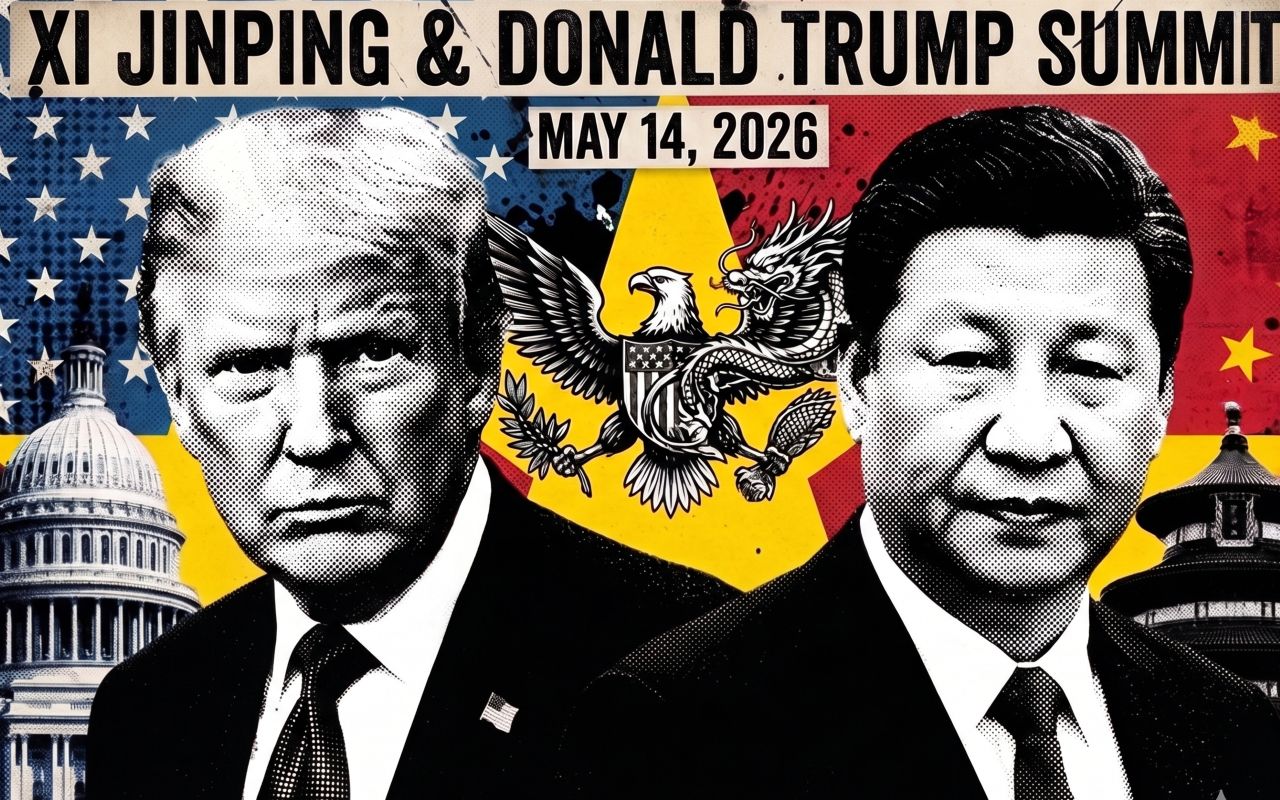
The latest round of high-level US-China diplomacy ended in Beijing with plenty of ceremony, warm language, and carefully managed optics. What it did not deliver was much in the way of decisive progress on the issues that actually matter most.
That was the core story from the Xi Jinping-Donald Trump summit: a public display of stability amid deep unresolved tensions over trade, Taiwan, semiconductors, and the wider geopolitical fallout from the Iran crisis.
At the same time, beneath the image of confidence Beijing projected abroad, China’s domestic financial system is showing a very different reality. Banks are relying more heavily on a familiar strategy of extending, delaying, and disguising bad debt rather than fully confronting it. That may buy time, but it also raises the risk of long-term stagnation.
So picture this weekend as fairly clear. Externally, Beijing wants to look steady, capable, and on equal footing with Washington. Internally, the economy remains burdened by structural weakness, falling efficiency, and a banking system under growing stress.
Table of Contents
- The Xi-Trump summit: strong optics, limited substance
- Trade outcomes were modest and left key questions unanswered
- Semiconductors and AI remain a strategic deadlock
- Taiwan was one of the summit’s most sensitive fault lines
- Iran and Hormuz remained unresolved strategic pressure points
- Beijing’s message: strategic stability without major concessions
- China’s economic reality looks much weaker at home
- Why the official bad-loan numbers are hard to believe
- The rise of zombie firms is becoming a bigger drag on growth
- Beijing is choosing gradual deterioration over sudden rupture
- The real danger may be stagnation, not a sudden crash
- The bigger picture
- FAQ
The Xi-Trump summit: strong optics, limited substance
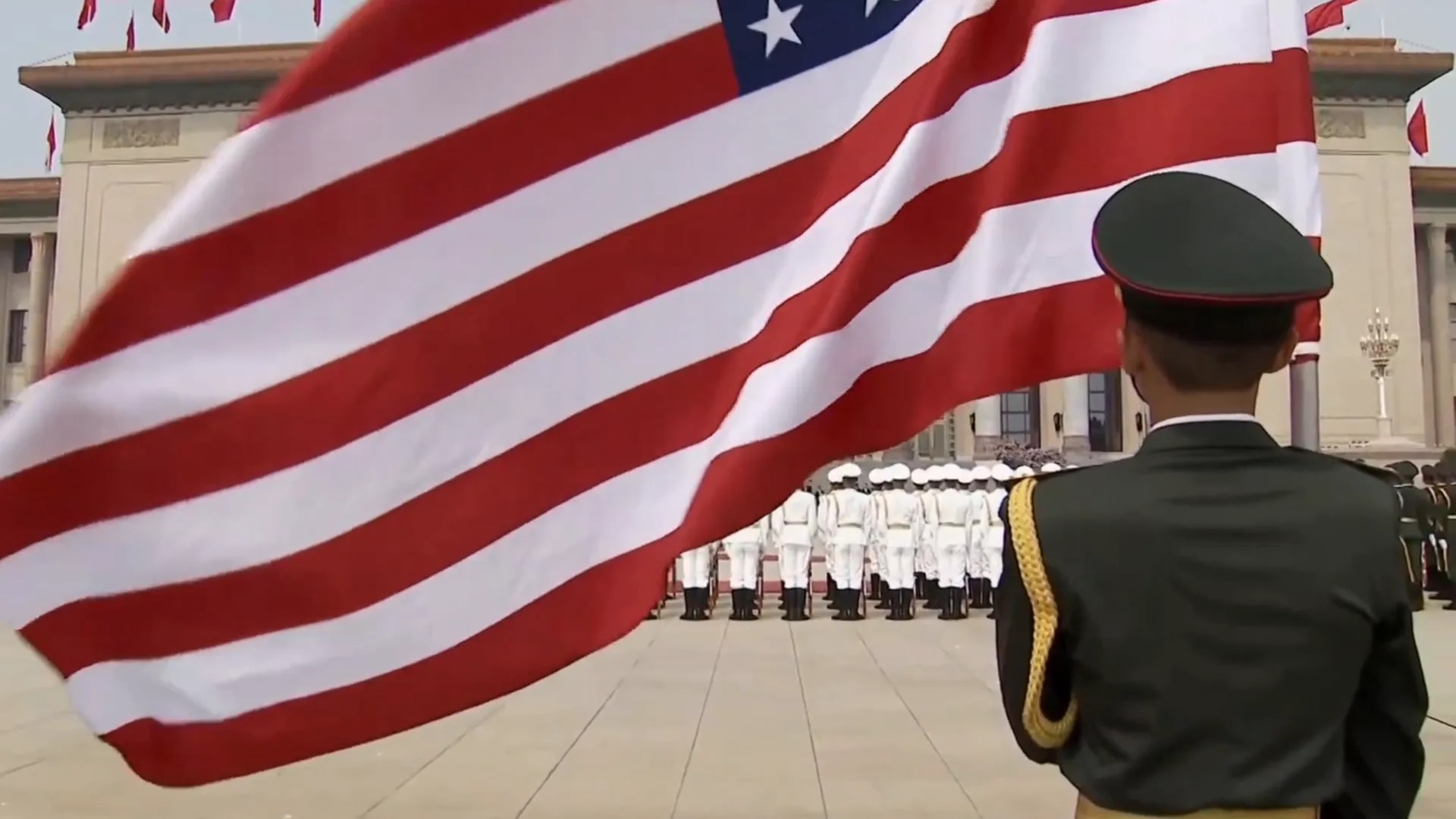
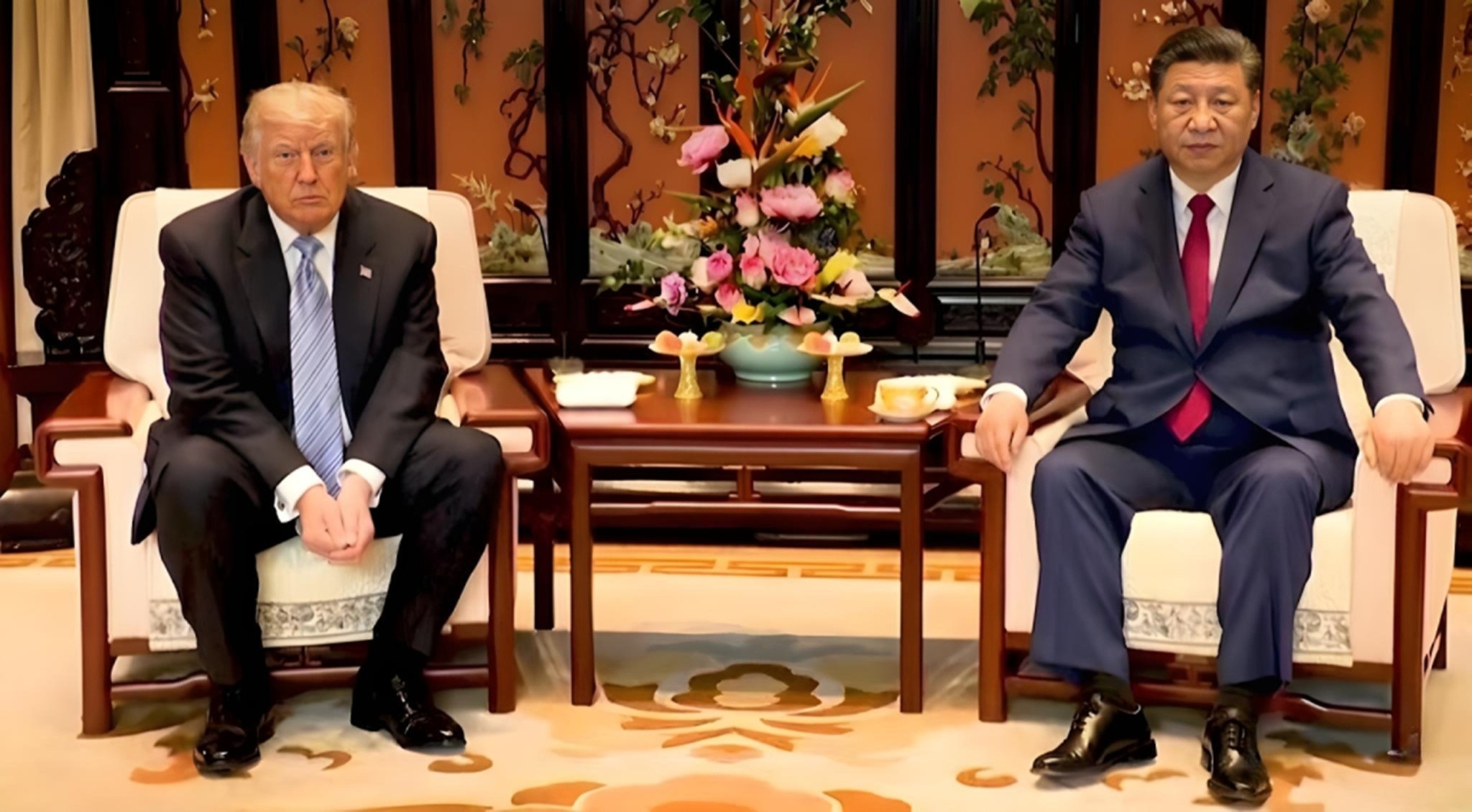
The summit concluded inside Zhongnanhai, the heavily guarded leadership compound in Beijing where the top Communist Party leadership works and lives. Xi’s decision to host Trump there was significant. It was a deliberate signal of confidence, prestige, and political parity.
The symbolism was unmistakable. There were gardens, tea, lunch, and highly public gestures of friendliness. Xi even promised to send rose seeds to the White House after Trump praised the roses on display. The atmosphere was designed to project calm and personal rapport.

But as is often the case in major-power diplomacy, the tone and the substance diverged sharply.
Despite repeated praise between the two leaders, there were no major breakthroughs on the biggest disputes dividing the world’s two largest economies. No serious resolution on tariffs. No clear agreement on Taiwan. No new framework on advanced semiconductor exports. No major shift on Iran.
That matters because heading into the summit, expectations were not for friendship or pageantry. They were for movement on the real fault lines in the relationship.
Instead, the clearest outcome may simply have been the avoidance of further deterioration.
Trade outcomes were modest and left key questions unanswered
US officials described the economic discussions as constructive, but the actual deliverables looked fairly limited.
US Trade Representative Jamieson Greer said the two countries would create a mechanism to oversee tariff reductions covering roughly $30 billion in goods. Even there, implementation appears likely to take months rather than days or weeks.
There was also discussion of increased Chinese purchases of American agricultural products, with Greer suggesting the total could exceed $10 billion over the coming years. Some US slaughterhouses also reportedly regained export licences for beef sales into China.
Trump further claimed China had agreed to buy 200 Boeing aircraft. Beijing, however, stopped short of publicly confirming that deal.
That gap between US claims and Chinese public confirmation was one of the recurring features of the summit. Washington spoke in a more upbeat and specific register. Beijing was noticeably more restrained.
And even if the Boeing number holds, it still fell short of earlier market speculation that China might announce orders for as many as 500 aircraft. Against those expectations, 200 looked less like a blockbuster and more like a modest gesture.
That broader pattern fits the summit as a whole. There was enough to sustain headlines about progress, but not enough to suggest a real reset in the relationship.
For broader context on China’s weakening external trade momentum and the geopolitical pressure surrounding it, see this analysis of China’s trade slowdown and global instability.
Semiconductors and AI remain a strategic deadlock
One of the most revealing details from the trip was the role of Nvidia and the prominence of AI chip policy in the discussions.
Nvidia CEO Jensen Huang unexpectedly joined Trump’s delegation during a stop in Alaska. That was not a trivial detail. It underscored just how central artificial intelligence and semiconductor competition have become in the US-China relationship.

Trump later confirmed that Nvidia’s H200 chips were discussed in the meetings. Yet once again, there was no major outcome. No revised export-control regime. No public agreement on future Chinese access. No sign that the underlying technology competition is easing.
Treasury Secretary Scott Bessent also said the two sides discussed protocols to prevent non-state actors from gaining access to advanced AI models. That may be important in principle, but details were sparse, and it did little to resolve the broader strategic contest over chip supply chains and computing power.
In other words, one of the most consequential issues in the bilateral relationship remains unresolved. And it remains unresolved because it is not really a normal trade dispute. It is a struggle over national power, industrial leadership, and military-relevant technology.
Taiwan was one of the summit’s most sensitive fault lines
If semiconductors are central to the future of great-power competition, Taiwan remains central to the risk of outright confrontation.
Chinese reporting strongly emphasised Beijing’s position on Taiwan during the summit, and Xi reportedly warned Trump that mishandling the issue could trigger conflict between China and the United States.
The White House, notably, avoided mentioning Taiwan in official summaries.
That omission was telling. It suggested an effort to avoid public escalation on the most sensitive issue in the relationship.
But after leaving Beijing, Trump said he had made no commitments to Xi on Taiwan and remained undecided about a planned $14 billion US arms sale to Taipei. His comment was blunt: he had listened to Xi but did not offer a response.
That kind of ambiguity will likely unsettle Taiwan and regional partners already concerned about uncertainty in US strategic commitments.
For Beijing, Taiwan is the core sovereignty issue. For Washington, it is tied to regional deterrence, alliance credibility, and the balance of power in the Indo-Pacific. It is therefore one of the few topics where symbolism cannot carry the relationship very far. Eventually, ambiguity itself becomes part of the risk.
Related coverage on Beijing’s recent cross-strait positioning and the wider risks around Taiwan can be found in this article on Taiwan outreach and regional risk.
Iran and Hormuz remained unresolved strategic pressure points
The conflict involving Iran also loomed over the summit, especially because of the global importance of the Strait of Hormuz.
Before the trip, US officials had hoped Xi might pressure Tehran toward a settlement and help ensure the continued reopening of Hormuz, a critical oil shipping route whose disruption would intensify energy market stress and inflation concerns worldwide.
That did not really happen, at least not in any visible or meaningful way.
Trump praised China for positions Beijing had already publicly held: opposition to Iranian nuclear weapons, support for keeping Hormuz open, and refusal to provide military aid to Tehran. But China did not publicly commit to greater pressure on Iran, despite being one of Iran’s largest oil customers.
So once again, there was rhetorical convergence without substantive movement.
This matters because the Iran issue sits at the intersection of energy security, inflation, shipping risk, and great-power diplomacy. Beijing wants stability in oil flows, but it also wants to preserve room for manoeuvre in the Middle East. Washington wants more active Chinese help, but Beijing appears unwilling to align itself too closely with US strategic objectives.

That leaves a familiar result: broad statements of principle, but little evidence of coordinated action.
For a deeper look at how Hormuz tensions are feeding into China’s inflation, debt strain, and regional security calculations, see this China update news analysis on Hormuz turmoil.
Beijing’s message: strategic stability without major concessions
One of the more important conceptual signals from Beijing was Xi’s use of the phrase “constructive strategic stability".
This appears to be an attempt to frame US-China competition within guardrails. The idea is not friendship. It is not alignment. It is not reconciliation. It is a managed rivalry with limits.
Some analysts have compared this to Cold War ideas of strategic stability, though adapted to a much more economically interconnected and technologically entangled era.
The message from Beijing was fairly clear. China no longer wants to present itself as negotiating from weakness. During Trump’s first term, Beijing more often responded to pressure with concessions designed to prevent escalation. Now the approach increasingly emphasises deterrence, retaliation, and resilience.
Whether that is a sound assessment of China’s actual leverage is another question.
On trade, the United States still has considerably more leverage overall. China’s strongest position in a direct economic confrontation lies mainly in areas like rare earths. So while Beijing is trying to signal symmetry and strategic confidence, it is not obvious that the underlying balance is as favourable as that posture suggests.
Still, both sides appeared interested in avoiding a sharper rupture, at least for the moment. In a period of rising military tension, fragile energy markets, and weak global growth, simply preventing deterioration may have been the summit’s most meaningful achievement.
China’s economic reality looks much weaker at home
That image of diplomatic steadiness abroad contrasts sharply with the deeper structural problems inside China’s economy.
One of the most serious is in the banking system, where lenders are relying on what can fairly be described as an extend-and-pretend strategy.
Banks across the country are rolling over troubled loans, delaying repayments, and keeping financially weak firms alive rather than formally recognising the bad debt sitting on their books.
On the surface, this helps maintain stability. It avoids sudden defaults, reduces the chance of panic, and prevents an immediate shock to regional banks and confidence.
But the cost is accumulating under the surface.
Officially, China’s non-performing loan ratio stands at just 1.5 per cent. Many analysts believe the real figure is much higher, with estimates ranging from 10 per cent to 20 per cent. If those estimates are even partly correct, the scale of hidden stress is enormous.

The gap matters because it suggests the banking system is not eliminating risk. It is postponing recognition of risk.
Why the official bad-loan numbers are hard to believe
China is still dealing with the aftermath of a historic property market collapse, weak consumer demand, soft private investment, and sluggish exports. Growth has slowed sharply from the years when credit expansion and property development powered the economy forward.
Under those conditions, stable bad-loan ratios look less like reassurance and more like a warning sign.
The reason is straightforward. If the economy is under heavy strain but the official stock of bad debt barely moves, there is a good chance banks are being allowed or encouraged to keep troubled loans from being fully classified as non-performing.
That appears to be exactly what is happening.
Rather than recognising losses, banks extend repayment periods, refinance maturing loans, or capitalise unpaid interest into new debt. This keeps defaults from surfacing immediately, but it does not restore the health of the borrower or the productivity of the underlying asset.
It simply keeps the problem alive.
The rise of zombie firms is becoming a bigger drag on growth
The most obvious consequence of this strategy is the expansion of so-called zombie firms.
These are companies that cannot generate enough income to cover even their interest costs yet continue operating because credit keeps being rolled over.
Research cited from the Federal Reserve Bank of Dallas found that zombie firms accounted for about 16 per cent of assets at China’s non-financial companies in 2024, up from just 5 per cent in 2018.
That is a very large shift in a short period of time.
Property developers remain among the most distressed borrowers, but the problem has spread beyond real estate into manufacturing and services. That spread is important because it suggests the issue is no longer confined to one broken sector. It is becoming more economy-wide.
The consequence is lower productivity. Capital that could be financing healthier businesses, innovation, or consumption instead remains trapped in failing firms simply to avoid recognising losses.
This is one reason why an economy can avoid a dramatic crisis and still perform badly for years.
Beijing is choosing gradual deterioration over sudden rupture
Chinese authorities are trying to manage a difficult trade-off.
If banks are forced to recognise large volumes of bad debt all at once, especially among weaker regional lenders, the result could be panic, forced recapitalisations, or even bailouts. With property values already depressed and local economies under pressure, that is not a trivial risk.
So instead, Beijing appears to be opting for controlled deterioration.
Banks have been writing off more bad loans and transferring troubled assets to state-backed asset management companies. But many of those risks remain inside the financial system rather than being cleanly resolved.
At the same time, profitability in the banking sector is under pressure. Interest margins are shrinking. Loan growth is slowing. New lending last year was the weakest since 2018, reflecting poor demand across the economy.
Authorities have responded by injecting large sums into the banking sector through special sovereign bond issuance and recapitalisation efforts for major lenders.
That can stabilise balance sheets for a while. It cannot, by itself, restore productive growth.
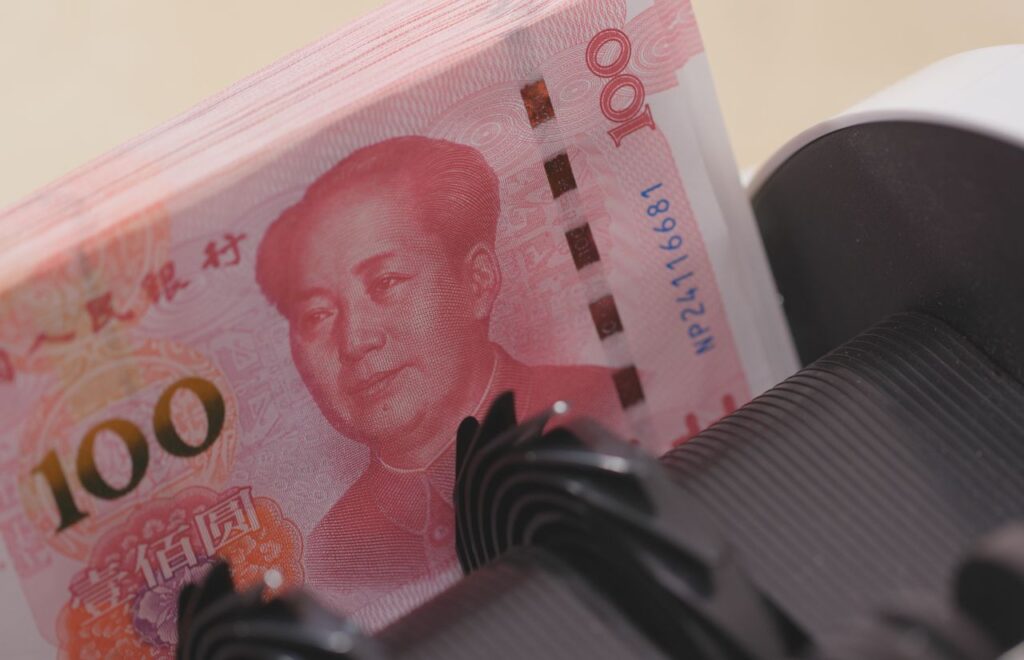
The International Monetary Fund has warned that prolonged regulatory forbearance can mask the true scale of stress. Its recommendation is essentially the opposite of what Beijing is currently doing: phase out leniency and accelerate recognition of bad loans before the risks get larger.
But policymakers are clearly worried that moving too fast could trigger the very instability they are trying to avoid.
The real danger may be stagnation, not a sudden crash
There is a tendency in discussions about China’s financial system to focus on whether a dramatic collapse is imminent. That may be the wrong question.
The more important issue may be whether China can avoid a prolonged period of weak growth caused by bad capital allocation, low productivity, and steadily accumulating financial strain.
That is a harder problem than a one-off rescue.
As Victor Shih of the University of California, San Diego, put it, there may be no immediate financial crisis, but there is no free lunch in economics. The cost shows up in weaker growth and lower efficiency.
That is the essence of the current Chinese banking story. Stability is being preserved, but it is increasingly a low-quality form of stability. It prevents acute breakdown while allowing chronic weakness to spread.
Michael Pettis of Peking University made a similar point in a particularly useful way. The idea that bad loans do not matter in a state-controlled banking system because liabilities can simply be rolled forward forever is false. Those liabilities still have to be serviced. If the assets do not generate enough income, then someone else must absorb the burden through direct or indirect transfers.
“The liabilities have to be serviced, and if they cannot be serviced from income from the assets then they must be serviced through direct or indirect transfers.”
For a period, those transfers can remain buried within the banking system and appear as rising debt. Eventually, however, the costs have to be allocated somewhere. And it is that uncertainty, Pettis argues, that creates financial distress costs and drags down growth once bad debt is finally recognised.
That is a serious warning, because it suggests the issue is not merely accounting. It is about the long-term growth model itself.
The bigger picture
Put the two major stories together, and a consistent pattern emerges.
On the international stage, Beijing is projecting confidence, discipline, and strategic steadiness. It hosted a major US presidential summit in a way that reinforced status and control while making few substantive concessions.
At home, however, the economy remains under structural pressure. The property collapse, debt accumulation, weak demand, and declining efficiency continue to constrain the system. The banking sector is acting less like a healthy allocator of capital and more like a shock absorber for unresolved losses.
That contrast matters.
It helps explain why China is so focused on stability as both a diplomatic message and a domestic policy objective. Stability is not just a slogan. It is the operating principle holding together an increasingly difficult balance between external rivalry and internal weakness.
For now, that balance is holding. But neither the summit optics nor the banking forbearance strategy changes the underlying reality. In both cases, the fundamental disputes and distortions remain unresolved.
That is why this moment feels less like a turning point and more like a pause.
FAQ
Did the Xi-Trump summit produce any major breakthroughs?
No major breakthroughs were announced. The summit produced warm rhetoric and some modest trade-related signals, but no decisive agreements on tariffs, Taiwan, advanced semiconductor exports, or Iran.
Why was the meeting in Zhongnanhai important?
Hosting the US president in Zhongnanhai was a symbolic move by Xi Jinping. It signalled confidence, prestige, and Beijing’s desire to present itself as operating from a position of strategic parity with Washington.
What happened in trade during the summit?
US officials said the two sides would establish a mechanism to oversee tariff reductions on around $30 billion in goods. There were also indications China could increase purchases of US agricultural goods and possibly Boeing aircraft, although some claims were not publicly confirmed by Beijing.
Was there any progress on Nvidia chips or AI export controls?
No clear breakthrough emerged. Nvidia’s H200 chips were discussed, and both sides reportedly talked about limiting access to advanced AI models by non-state actors, but there was no public agreement changing the core semiconductor dispute.
How did Taiwan feature in the summit?
Taiwan was one of the most sensitive issues. Xi reportedly warned that mishandling Taiwan could lead to conflict. Trump later said he made no commitments to Xi and remained undecided on a proposed US arms sale to Taipei.
Why are analysts concerned about China’s banks if official bad-loan numbers are low?
Because many analysts believe the official non-performing loan ratio understates the true level of financial stress. Banks are often extending or restructuring troubled loans instead of recognising them as bad debt, which can hide risk while reducing long-term productivity.
What are zombie firms, and why do they matter?
Zombie firms are companies that cannot generate enough income to cover their debt costs but continue operating because banks keep refinancing them. They matter because they trap capital in unproductive parts of the economy and weaken overall growth.
Is China facing a financial crisis right now?
The immediate concern is less about a sudden collapse and more about a prolonged slowdown. China appears to be avoiding an acute financial crisis through regulatory leniency and state support, but that approach can lead to years of weaker growth and rising inefficiency.
That is the central takeaway from this round of China update news. Diplomatically, the temperature may have come down for now. Economically, the deeper structural strains are still there, and in many cases they are getting harder to ignore.