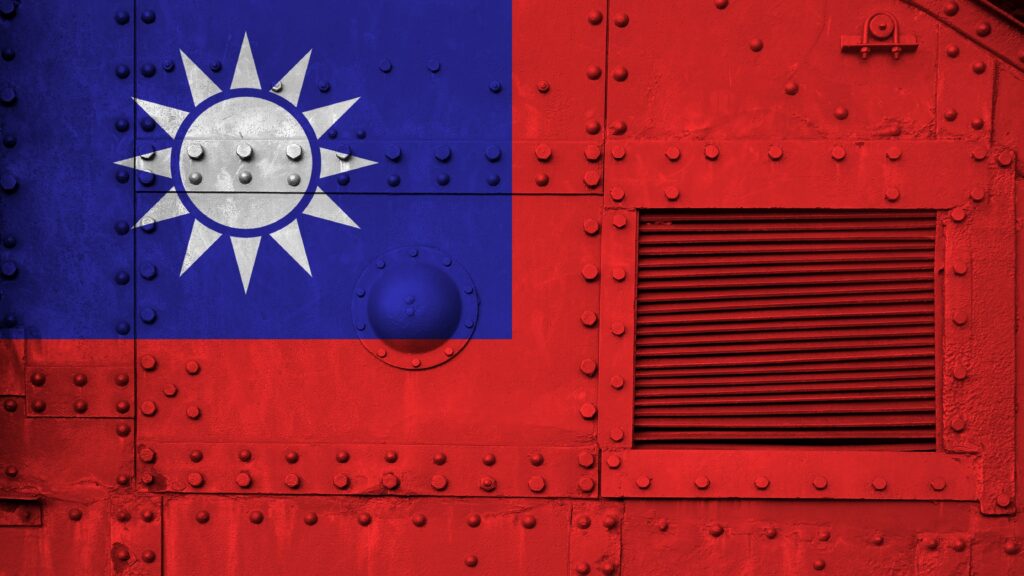
China update news is being shaped by three sharply contrasting developments at once. First, Taiwan has again moved to the center of US-China tension just ahead of a high-stakes meeting between Xi Jinping and Donald Trump. Second, Taiwan’s economy is posting an extraordinary growth performance that stands out not only in East Asia, but across the developed world. Third, Beijing is trying to prove that Hainan can become a flagship free trade port even as investors question whether the island can truly compete with established global hubs.
Taken together, these developments reveal a broader picture. China’s external environment is becoming more sensitive, its neighbors are recalibrating around economic necessity, and one of Beijing’s most important political goals, unification with Taiwan, is unfolding alongside a deeply uncomfortable economic comparison.
Table of Contents
- Taiwan returns to the center of US-China friction
- Why Taipei is worried about becoming a bargaining chip
- Taiwan’s economy is delivering a striking contrast
- The AI boom is powering Taiwan’s expansion
- Strong exports are now feeding domestic demand
- Australia and China move toward pragmatic cooperation
- Hainan is Beijing’s biggest free trade bet in decades
- The bigger picture
- FAQ
- Conclusion
Taiwan returns to the center of US-China friction
Tensions over Taiwan are once again emerging as the most sensitive fault line in the US-China relationship. In a call with US Secretary of State Marco Rubio, Chinese Foreign Minister Wang Yi reportedly warned that Taiwan remains the “biggest risk” to bilateral stability and urged Washington to “make the right choices.” Taipei responded quickly, criticizing Beijing for what it described as unilateral and threatening language.
The exchange matters because it comes only weeks before an anticipated summit between Xi Jinping and Donald Trump. That timing raises the stakes considerably. When senior Chinese officials elevate Taiwan in this way ahead of leader-level talks, it signals that Beijing wants to frame the issue as both non-negotiable and dangerous.
For Beijing, Taiwan is not simply a diplomatic disagreement. It is treated as a core sovereignty issue. Chinese officials continue to define the island as a breakaway province and maintain that eventual unification, described by Beijing as reunification, is a long-term objective. The official position also continues to leave open the use of force if necessary.
That political claim has increasingly been backed by military pressure. In recent years, Chinese aircraft and naval vessels have appeared around Taiwan with near-daily regularity. These activities serve several functions at once:
They pressure Taiwan psychologically and militarily.
They normalize a higher tempo of Chinese operations around the island.
They signal resolve to Washington and other regional powers.
The United States, meanwhile, continues to operate under strategic ambiguity. Washington recognizes Beijing diplomatically, but remains Taiwan’s principal security backer. That long-standing formula was designed to deter both a declaration of formal independence by Taipei and coercive reunification by Beijing. Yet ambiguity only works when all sides believe the balance is stable. Right now, that stability looks less certain.
Why Taipei is worried about becoming a bargaining chip
One source of concern for Taiwan is the suggestion that US arms sales to the island could become part of broader discussions between Trump and Xi. Even the appearance that Taiwan-related security issues might be folded into a larger negotiation creates unease in Taipei.
From Taiwan’s perspective, the risk is obvious. If arms sales become negotiable, then a core element of the island’s deterrence posture could be treated as leverage in a broader US-China deal. That would introduce uncertainty at precisely the moment Taiwan is facing both stronger military pressure and shrinking diplomatic space.
That diplomatic squeeze has become more visible. President Lai Ching-te was recently forced to postpone a planned trip to Eswatini after multiple countries reportedly denied overflight or transit access. Reports indicated that Beijing pressured several governments, including some in Europe, to block the trip.
One especially notable detail is that some officials reportedly pointed to Washington’s own decision to deny a US stopover to Lai. If accurate, that suggests American actions may influence how third countries calculate the political cost of accommodating Taiwan. In practical terms, this means Beijing’s pressure works even better when it can be reinforced by hesitation elsewhere.
China has publicly praised countries that restrict Taiwan’s diplomatic movements, framing such decisions as support for the one-China principle. Taipei sees the pattern differently. It argues that Beijing is intensifying efforts to restrict Taiwan’s international presence through both diplomatic coercion and military intimidation.
The larger point is that Taiwan is no longer just one issue among many in great-power competition. It is increasingly the issue most likely to destabilize the relationship. If either side misreads the other ahead of the Xi-Trump meeting, tensions in the Taiwan Strait could rise quickly.
Taiwan’s economy is delivering a striking contrast
While Taiwan faces mounting pressure geopolitically, its economic performance is telling a very different story. Official data from Taipei showed first-quarter GDP growth of 13.7 percent year over year, the fastest pace since 1987. For any economy, that would be notable. For a developed, high-income, export-driven economy, it is exceptional.
This is one of the most important pieces of China update news because it undercuts a central narrative long promoted by Beijing: that China’s state-led authoritarian model offers a superior engine for growth compared with Taiwan’s liberal democratic and capitalist system.
Growth at this scale is usually associated with emerging economies industrializing from a low base. It is not the sort of number expected from a mature economy already deeply integrated into global trade and technology networks. That is why many analysts were surprised. Forecasts had expected moderation, not acceleration.
The explanation lies above all in one powerful trend: the global boom in artificial intelligence infrastructure.
The AI boom is powering Taiwan’s expansion
Taiwan sits at the heart of the global semiconductor supply chain. More than three quarters of its exports are technology-related, and its chipmakers are indispensable to the AI buildout now underway across the world economy.
At the center of this ecosystem is Taiwan Semiconductor Manufacturing Company, or TSMC. The company produces advanced chips used in data centers, machine learning systems, and other computing-intensive applications. As global firms race to expand AI capacity, demand for these chips has surged.
The export numbers illustrate just how strong that demand has become. Taiwan’s exports hit a record high in March, rising nearly 62 percent from a year earlier. Net exports alone contributed close to 10 percentage points to GDP growth, an enormous share even for an economy built around trade.
Several features make this moment especially unusual:
The growth is concentrated in leading-edge sectors. Taiwan is not benefiting from a general commodity upswing or cyclical rebound alone. It is benefiting from a high-value technology cycle.
The timing is strategic. AI has become a priority investment area for firms and governments globally, which gives Taiwan an outsized role.
The benefits are broadening. The gains are no longer confined only to export manufacturers.
That final point matters. What makes the latest data stand out even more is that domestic demand also contributed materially to growth.
Strong exports are now feeding domestic demand
Private consumption contributed roughly 2.7 percentage points to Taiwan’s first-quarter growth. Part of that appears linked to the stock market. Taiwan’s equity market has surged alongside the AI boom, lifting total market capitalization to around $4.5 trillion and surpassing Canada to become the sixth-largest stock market globally.
This creates what economists often call a wealth effect. When household asset values rise, people tend to feel more confident spending. That in turn supports consumption, services activity, and broader business confidence.
In other words, Taiwan’s current expansion is not just an export story. It is becoming a broader economic cycle in which external demand, investment, financial markets, and domestic spending reinforce one another.
There are still risks. Taiwan remains heavily dependent on imported fuel, so volatility in energy markets can create cost pressure. The conflict involving Iran has contributed to instability in global energy markets, but so far the impact on Taiwan has been limited because external demand for its technology exports remains so strong.
Looking ahead, economists still expect some moderation. Yet even with slower growth from these extraordinary levels, Taiwan could remain one of the fastest-growing economies in Asia, not merely among developed Asian economies, but across the region more broadly. Some forecasts for 2026 have already been revised upward to above 8 percent annual growth.
That is rare territory for an advanced economy.
The strategic implication for Beijing
The economic comparison is politically awkward for Beijing. Taiwan’s current performance challenges the idea that centralized political control produces better economic outcomes. It also highlights how much value can be generated by trusted participation in a global, rules-based, high-tech supply chain.
At the same time, Taiwan’s strength comes with vulnerability. If AI spending were to cool sharply, or if the semiconductor and broader tech sectors suffered a major downturn, Taiwan would be heavily exposed. Its current success is real, but it is also concentrated.
For now, however, the contrast is unmistakable: Taiwan is under pressure militarily and diplomatically, yet thriving economically in a way that few advanced economies can match.
Australia and China move toward pragmatic cooperation
Another significant development involves Australia’s Foreign Minister Penny Wong, who traveled to Beijing for high-level talks with Wang Yi. The most pressing issue was energy security, reflecting how geopolitical shocks are reshaping economic priorities across the Indo-Pacific.
The discussions took place against the backdrop of supply disruption linked to conflict in the Middle East. Fuel and fertilizer flows have come under pressure globally, and Australia has made clear that stable Chinese exports of jet fuel, petrol, and fertilizer matter to its own economic resilience.
Canberra’s message was direct. Without those supplies, Australia’s domestic economy could be strained, and so could sectors that generate exports for China itself, including mining and agriculture. Iron ore and food products remain core elements of the Australia-China trade relationship, so the issue is not simply bilateral diplomacy. It is a question of supply-chain continuity.
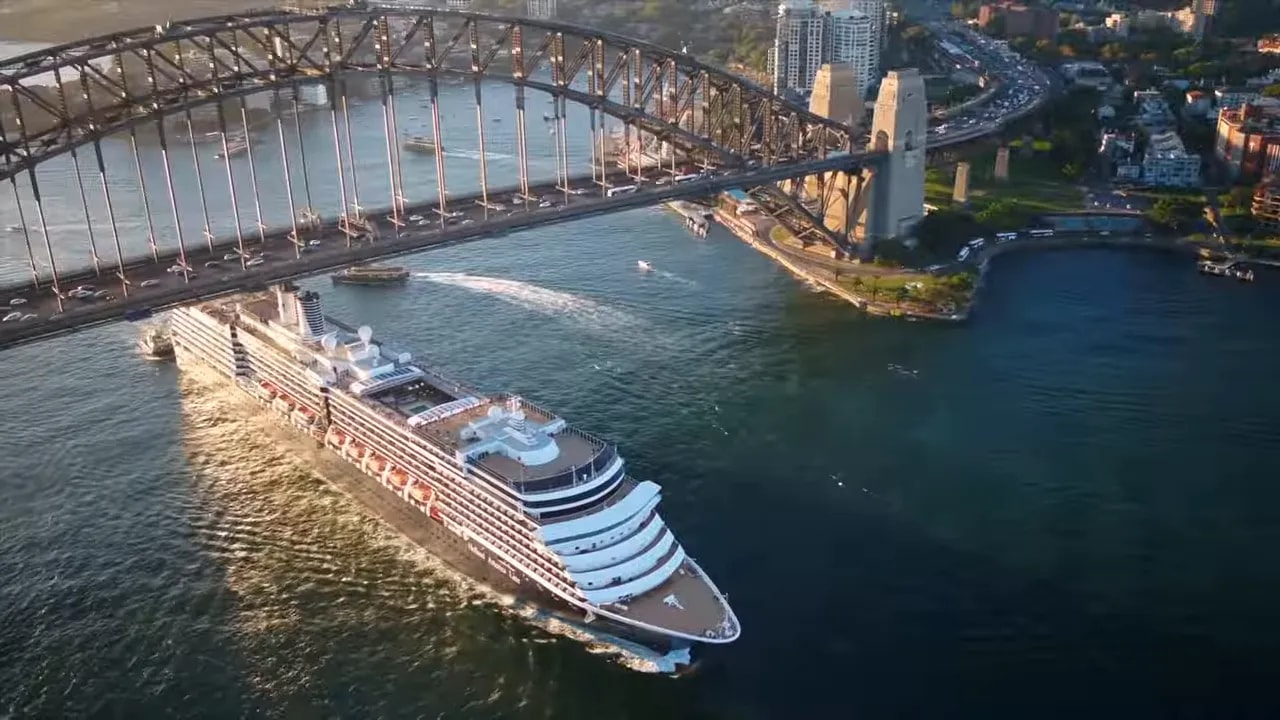
Early signs suggested Beijing was receptive. Chinese state-owned oil companies reportedly began re-engaging with Australian firms over jet fuel sales after a period of declining supplies. Wong described this as a positive indication of cooperation.
That does not mean the relationship is free of tension. During an earlier meeting with Vice President Han Zheng, Chinese officials reportedly tried to remove Australian media before Wong had finished speaking, creating a small but telling diplomatic incident. Such moments are reminders that even when practical cooperation improves, political sensitivities remain close to the surface.
Still, the broader trend is clear. Australia appears to be taking a more economically pragmatic approach to China in some areas, including a wider embrace of Chinese electric vehicles such as BYD models in government fleets. The message is not that strategic rivalry has disappeared. It is that both sides are willing, for now, to prioritize stability where mutual dependence is obvious.
This may prove temporary. Australia and China continue to sit on opposite sides of several strategic questions. But in periods of global supply disruption, necessity often narrows the room for ideological distance.
Hainan is Beijing’s biggest free trade bet in decades
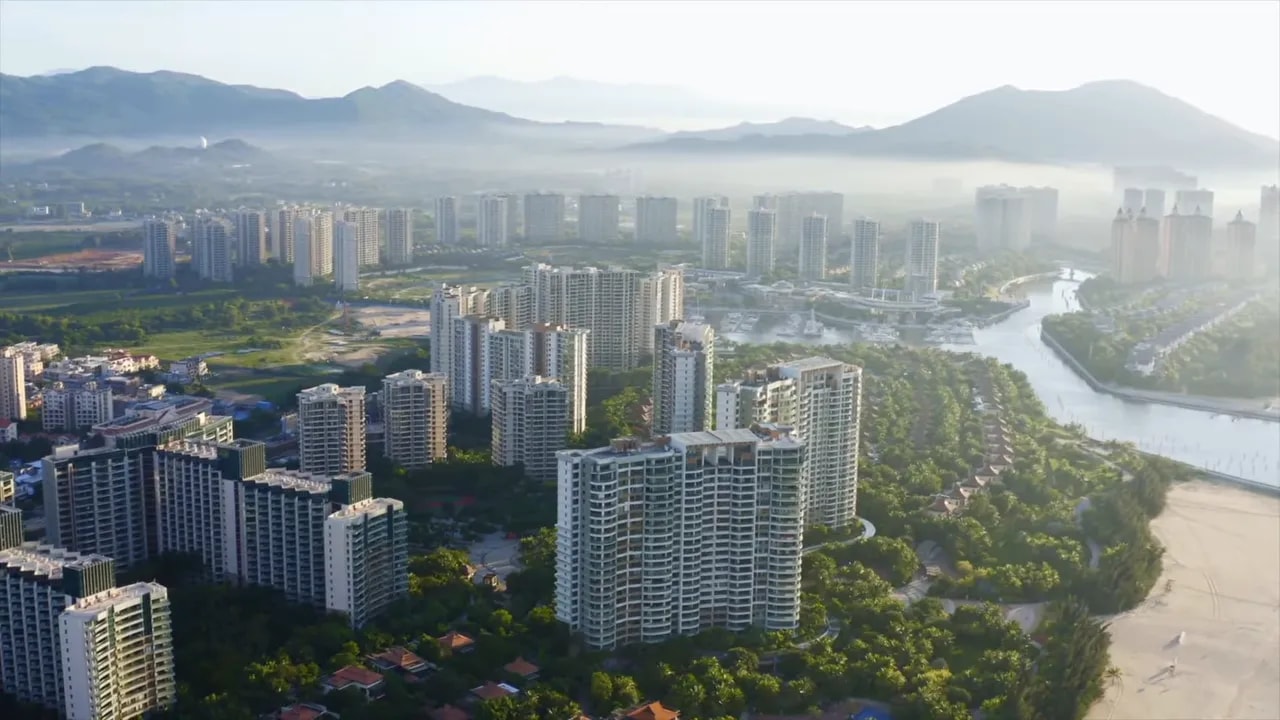
The final major story in this round of China update news is Hainan. Beijing is pressing ahead with plans to transform the tropical island into what officials hope will become the world’s largest free trade port.
Hainan has long been known mainly as a tourism destination, but the central government now wants it to serve a very different role: a flagship demonstration that China is still committed to reform and opening even as global tensions rise and foreign business confidence weakens.
The project carries strong political backing from Xi Jinping, which elevates its importance beyond local policy experimentation. Hainan is not just another regional development initiative. It is a test of whether China can still create a globally attractive business platform under current domestic and international conditions.
What has changed in Hainan
A major step came in December of last year, when Hainan’s customs regime was effectively separated from mainland China. Under the new arrangement:
Most imported goods can enter without tariffs.
Products that undergo sufficient local processing can then enter the mainland tariff-free.
Some of China’s most liberal policies for foreign investment are being applied on the island.
Certain corporate and personal income taxes are capped at 15 percent.
Those measures are meant to attract manufacturers, traders, service firms, and international capital. Early indications suggest there has been some traction. Thousands of foreign trade companies have reportedly registered, and some firms have seen meaningful savings on imported raw materials. Export activity has also improved for some businesses using the new setup to expand overseas.
Why skepticism remains
Despite these incentives, many questions remain unanswered. Hainan may have more policy flexibility than most of China, but it still faces structural limitations that are hard to solve through tax incentives alone.
The main concerns include:
Location. Hainan is relatively remote compared with the major manufacturing and financial centers of coastal China.
Market size. Its domestic market is limited, which can reduce appeal for firms seeking scale.
Infrastructure. The island still lacks the deep logistics and business ecosystem that established trade hubs offer.
Institutional credibility. It does not provide fully convertible currency arrangements or the kind of independent legal environment associated with places like Singapore or Hong Kong.
That last point may be the most important. Global investors often look beyond tax rates and customs policy. They also assess legal predictability, currency flexibility, regulatory consistency, and dispute resolution mechanisms. Hainan may offer looser rules than the rest of China, but if investors remain worried about the broader policy environment, the island’s advantages could be limited.
There are also indications that momentum could become uneven even within China. Some officials have reportedly expressed concern about declining central government support and warned that the project will need sustained investment if it is to succeed.
Hainan therefore represents both an opportunity and a stress test. It is Beijing’s effort to revive the language of reform and opening in a much more skeptical era. Whether it becomes a genuine global trade hub will depend on more than promotional ambition.
The bigger picture
These three stories are connected more closely than they first appear.
On one side, Taiwan is becoming more central to strategic competition and more difficult to manage diplomatically. On another, Taiwan’s economic success is reinforcing its relevance in the global system, particularly through semiconductors and AI. At the same time, countries such as Australia are showing that even amid strategic mistrust, economic dependence still shapes policy choices. And in the background, China is trying to demonstrate through Hainan that it remains open for business and capable of institutional innovation.
The common thread is leverage.
Taiwan has technological leverage. China has diplomatic and military leverage. Australia has resource leverage. Hainan is Beijing’s attempt to rebuild commercial leverage through policy design.
That is why these developments matter beyond their immediate headlines. They show how economics, security, and political legitimacy are now blending together across the region.
FAQ
Why is Taiwan considered the biggest risk in US-China relations?
Taiwan touches on sovereignty, military deterrence, and great-power credibility all at once. Beijing treats it as a core national issue, while the United States remains Taiwan’s main security backer. That combination makes miscalculation especially dangerous.
Why is Taiwan’s economy growing so quickly?
The main driver is the global AI investment boom. Taiwan is central to advanced semiconductor production, and rising demand for AI chips has sharply increased exports, investment, and financial market gains. Those gains are also feeding domestic consumption.
Is Taiwan’s current growth sustainable?
It may moderate from current levels, but it could still remain strong. The main risk is concentration. Taiwan is benefiting heavily from one major technology cycle, so a downturn in AI or semiconductors would hit the economy hard.
What did Australia want from China in the latest talks?
Australia focused on energy security and access to key Chinese exports such as jet fuel, petrol, and fertilizer. These supplies are important for domestic stability and for supporting sectors like mining and agriculture that export to China.
What is China trying to achieve in Hainan?
Beijing wants Hainan to become a major free trade port and a symbol of continued economic opening. The island is being offered tariff relief, tax advantages, and more liberal investment rules to attract global business.
Why are investors skeptical about Hainan?
Investors see limitations in location, infrastructure, market size, and institutional design. Hainan still lacks some of the features that make top financial and trade hubs attractive, including stronger legal autonomy and full currency convertibility.
Conclusion
The current cycle of China update news highlights a region in transition. Taiwan is under greater strategic pressure, yet economically stronger than it has been in decades. Australia and China are rediscovering the logic of practical cooperation under supply stress. And Beijing is betting that Hainan can help prove China still has the capacity to open, adapt, and attract.
Each of these stories points to the same conclusion: the next phase of regional competition will not be defined by military tension alone. It will also be shaped by control over supply chains, access to technology, and the credibility of economic models. That is where the most important contests are now unfolding.