
China update news this week spans four major developments with broad political and economic significance: a deadly fireworks factory explosion in Hunan, renewed signs of a possible summit between Donald Trump and Xi Jinping, fresh evidence that inequality in China is worsening, and new research into how Chinese capital is used abroad. Taken together, these stories show the tensions shaping China today, from industrial safety and social strain to high-level diplomacy and long-term technological strategy.
The events do not fit into a single narrative, but they point to a common theme. China is trying to manage risk on multiple fronts at once. Some of those risks are immediate and tragic, such as industrial accidents. Others are strategic and cumulative, such as weak household consumption, strained ties with the United States, and concerns over the purpose of Chinese overseas acquisitions.
Table of Contents
- Deadly fireworks factory explosion in Hunan
- Trump says a Beijing meeting with Xi is still on track
- China’s inequality problem is worsening as growth slows
- New research points to a strategic logic behind Chinese overseas acquisitions
- What these developments reveal about China’s current trajectory
- FAQ
Deadly fireworks factory explosion in Hunan
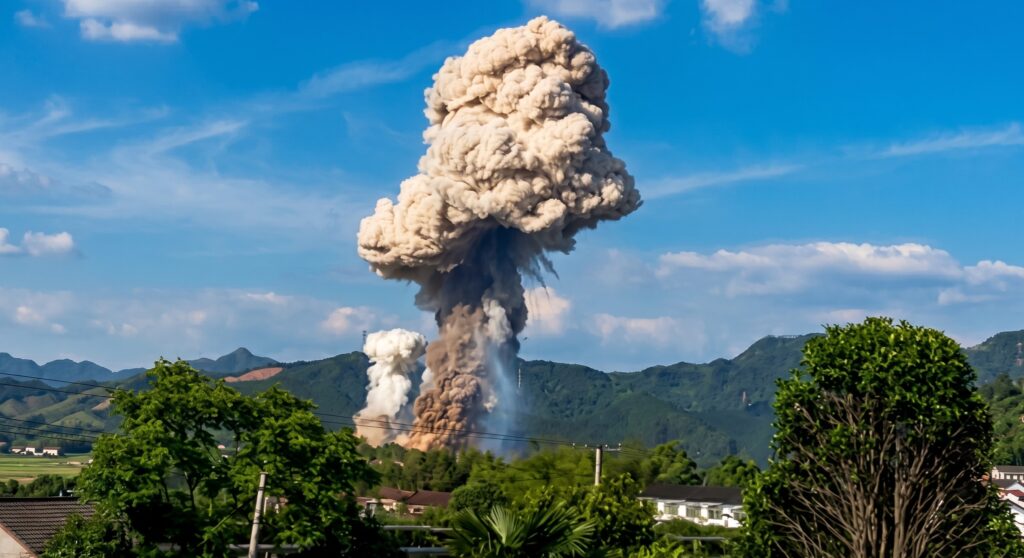
A powerful explosion at a fireworks factory in central China killed at least 21 people and injured 61 others, underscoring the persistent dangers in one of the country’s highest-risk industries. The blast took place at the Huashang Fireworks Plant in Liuyang, a city in Hunan Province that is widely known as a global center of fireworks production.

The explosion struck at around 4:40 p.m. local time. Emergency teams moved quickly, evacuating residents within a three-kilometer radius. Nearly 500 rescue personnel were deployed, and robots were used to help locate people trapped in the wreckage. Authorities also warned that two nearby gunpowder warehouses created a continuing threat, forcing rescue crews to proceed carefully and humidify the surrounding area to reduce the risk of secondary explosions.
The physical damage was extensive. Windows were shattered in nearby homes, metal structures were warped, and debris was reported across local roads. Some residents fled the area entirely, while others were forced to evacuate amid fears of additional blasts.
Why the incident matters beyond the immediate death toll
This was not an isolated industrial accident. It fits a longer pattern of safety failures in sectors involving chemicals, explosives, and heavy industrial risk. Chinese authorities opened an investigation into the cause and imposed control measures on the person responsible for the factory. Xi Jinping also called for full rescue efforts and a thorough investigation to ensure accountability.
But official responses after major accidents are a familiar feature of Chinese governance. The more difficult question is whether enforcement improves in practice.
Public concern remains intense because of repeated disasters over the years. The most infamous modern example is the Tianjin explosions, where massive chemical blasts at a warehouse killed more than 170 people and devastated a wide urban area. That disaster became a symbol of what can happen when dangerous materials are poorly managed and local oversight fails.
Fireworks-related industrial explosions are particularly troubling because they are not rare. Earlier this year, a similar incident in Hubei Province reportedly killed 12 people. The pattern suggests that safety standards in high-risk industries remain inconsistent, even after repeated promises of tighter oversight.
Key concerns highlighted by the Liuyang explosion include:
Weak enforcement of safety standards in hazardous industries
Ongoing exposure of nearby communities to industrial risk
The challenge of preventing repeat accidents despite publicized crackdowns
The gap between central directives and local implementation
For policymakers, incidents like this are not only about emergency response. They also raise a broader issue of state capacity. China has the resources to launch large rescue operations quickly. The harder test is whether those resources can be matched by durable prevention.
Trump says a Beijing meeting with Xi is still on track
Another major item in China update news concerns a possible high-level meeting between US President Donald Trump and Xi Jinping in Beijing later this month. Trump said he expected to travel to China within two weeks for what he described as a very important trip, indicating that preparations for a summit remain active even as bilateral tensions remain elevated.
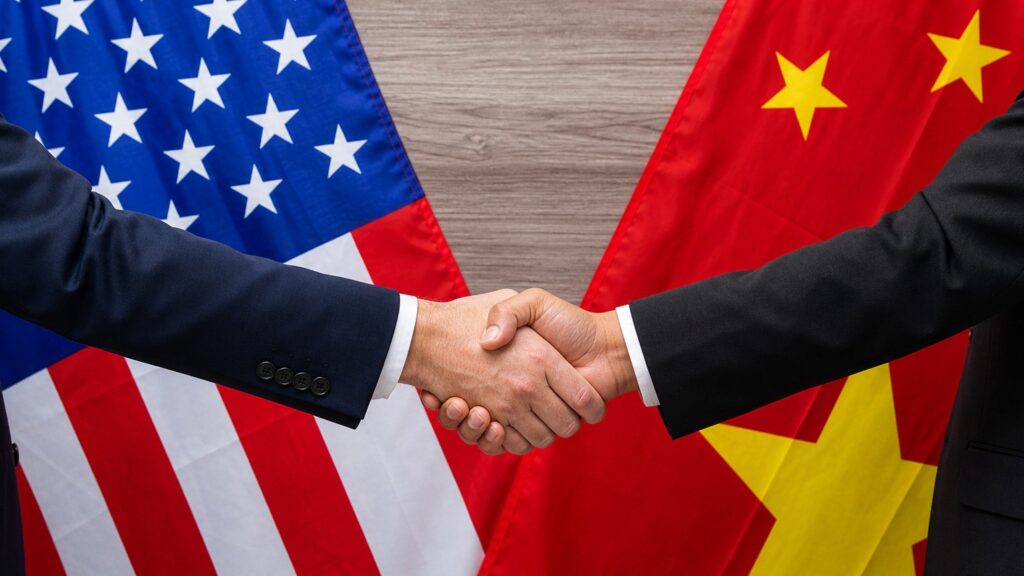
The meeting was tentatively scheduled for May 14 to 15. Beijing had not officially confirmed the dates, but the planned visit signals an effort by both governments to stabilize a relationship strained by overlapping disputes.
Those disputes extend well beyond trade. They include sanctions enforcement, Taiwan, maritime security, and the fallout from conflict linked to the Strait of Hormuz. The latter has become especially important because China is a major oil importer and is highly exposed to energy supply disruptions. At the same time, US sanctions targeting Chinese refiners processing Iranian crude have created another source of friction between Washington and Beijing.
A fragile framework, not a reset
The reported summit does not suggest that the United States and China have resolved their core disagreements. Rather, it points to an attempt to keep competition from becoming even more unstable.
Both sides have reportedly spent months preparing for the meeting, including discussions around a new framework for managing economic ties. These talks build on a one-year trade truce agreed last year, with expectations that the two leaders may meet multiple times in 2026 to preserve a degree of strategic stability.
That matters because the bilateral relationship now operates under several forms of pressure at once:
Trade tension: long-running disputes over tariffs, market access, and industrial policy remain unresolved.
Sanctions pressure: US penalties tied to Chinese purchases or processing of Iranian crude have widened the agenda.
Taiwan and maritime security: these remain among the most sensitive areas in the relationship.
Global energy shocks: turmoil linked to the Middle East has complicated diplomacy and economic planning.
The likely significance of the summit is procedural rather than transformational. If it happens, the meeting could help establish guardrails and reduce short-term escalation risks. But uncertainty remains high, and the relationship is still being tested by sanctions enforcement and wider geopolitical rivalry.
China’s inequality problem is worsening as growth slows
One of the most important domestic developments is the apparent rise in inequality at a time when China’s broader economy is losing momentum. New research presented by economist Li Shi, dean at Zhejiang University, suggests that China’s wealth Gini coefficient rose from 0.45 in 1995 to above 0.7 in 2023. That level points to an extreme concentration of wealth.

The distinction between income inequality and wealth inequality matters here. Income refers to what households earn. Wealth refers to what they own, including property, savings, and financial assets. Wealth concentration can be much more severe than income concentration because assets accumulate over time and can reinforce advantages across generations.
A reading above 0.7 is striking. Internationally, such levels are rare and often associated with highly unequal or fragile economic structures. The broader implication is that China’s growth model may be generating increasingly uneven outcomes even as headline expansion slows.
Why slowing income growth makes the issue more urgent
The new findings also show that income growth has decelerated sharply. Average real income expansion reportedly fell from around 8 percent annually between 2013 and 2018 to below 5 percent in the years since. Lower- and middle-income groups have been hit hardest.
Urban wage inequality has widened as well, while the share of national income flowing to households has declined relative to the government and corporate sectors. This matters because household consumption is one of the weakest parts of China’s economic structure.
China’s consumption-to-GDP ratio stands at just 39 percent, far below the roughly 70 percent often seen in advanced economies. That gap suggests households do not command enough income and confidence to drive stronger domestic demand. When inequality rises and wage growth slows, consumption tends to weaken further because wealthier groups save more of their income while lower-income households have less room to spend.
The economic consequences of high inequality include:
Weaker household spending
Lower social mobility
Greater regional and class-based divides
Potential long-term social and political strain
What happened to “common prosperity”?
Xi Jinping revived the idea of “common prosperity” in 2021 as a way to address inequality and rebalance development. For a period, that campaign appeared to support tighter regulation and greater scrutiny of concentrated private wealth. But the policy drive appears to have softened in recent years, partly because of concern that overregulation could further weaken growth.
The current approach seems more gradual. Rather than aggressive redistribution, policymakers are increasingly emphasizing long-term investment in people through education, healthcare, and skills development. That may help over time, but the latest data suggests inequality is still rising. If that trend continues, structural reform may become harder to postpone.
The policy dilemma is straightforward but difficult: China needs to keep expanding the economy while also making the distribution of gains more balanced. That challenge becomes more severe when growth is slower, jobs are under pressure, and households remain cautious about spending.
New research points to a strategic logic behind Chinese overseas acquisitions
The final major development centers on China’s global investment strategy. A recent Financial Times report highlighted research suggesting that Chinese investors control roughly $3.3 trillion in global corporate assets. The study, led by Luke Levine with academic collaborators from Georgetown University and Nanyang Technological University, mapped ownership structures across more than 160,000 firms in 159 countries.
The findings suggest that China’s overseas corporate footprint is both larger and more targeted than standard foreign direct investment data often indicates. One reason is that nearly 40 percent of these capital flows move through offshore financial centers such as the Cayman Islands, which can obscure the final source and purpose of investment.
What makes the research especially notable is not just the scale of Chinese ownership abroad, but the pattern that follows acquisitions.
More R&D abroad, but more patents back in China
According to the research, firms acquired by Chinese investors tend to increase their research and development spending after the acquisition. Yet these firms do not show much improvement in patent output. Their profitability also tends to decline, with returns on assets falling relative to comparable non-Chinese-owned firms.
At first glance, this could look like poor investment management. But the researchers point to another possibility. While local innovation metrics stagnate at the acquired firms, the Chinese parent companies often experience a sharp increase in patent filings after these deals, in some cases tripling or quadrupling.
This pattern has been described as innovation spillback. The idea is that knowledge, expertise, or technical capability gained through overseas acquisitions may be transferred back to China, where it supports domestic innovation and industrial upgrading, even if the acquired foreign company itself does not become much more productive or profitable.

The research does not prove causation definitively, but it identifies a pattern that stands out, particularly because similar effects are reportedly not observed in outbound investment from other countries to the same degree.
Why governments may pay closer attention
If overseas acquisitions are being used less as profit centers and more as channels for absorbing advanced knowledge, that would have important implications for how Chinese capital is understood globally.
It would suggest that some investments may be motivated by long-term technological gain rather than short-term financial return. It may also support the argument that parts of China’s overseas investment strategy are shaped more by state-influenced industrial priorities than by standard private-sector incentives.
That interpretation is likely to matter in sectors where technology and national security overlap. Governments in Europe and North America have already become more cautious about foreign ownership in strategic industries. Research like this could intensify those concerns, especially where acquisitions involve firms with valuable intellectual property, advanced manufacturing processes, or dual-use technologies.
The main takeaways from the study are:
Chinese global corporate ownership may be much larger than conventional data suggests
Offshore financial centers obscure a significant portion of Chinese investment flows
Acquired firms often spend more on R&D without showing stronger local innovation outcomes
Chinese parent firms may benefit through patent growth after acquisitions
The strategic goal may be knowledge transfer rather than immediate profitability
What these developments reveal about China’s current trajectory
Although these stories span very different areas, they reveal several recurring pressures in China’s current trajectory.
First, there is a clear governance challenge. The Hunan explosion shows that implementation remains a weak point in areas where regulation is supposed to prevent obvious risks. High-profile investigations and official statements are common after disasters, but recurring accidents suggest that enforcement is uneven.
Second, there is a structural economic challenge. Rising inequality and weak consumption point to a deeper imbalance in the growth model. If households receive too small a share of national income, domestic demand remains limited, making the economy more dependent on investment, exports, and state support.
Third, there is a strategic external challenge. China’s relationship with the United States remains central to its outlook, but the relationship is being shaped by more than trade. Energy security, sanctions, Taiwan, and technological competition are increasingly interconnected.
Finally, there is a long-term industrial challenge, or perhaps an industrial strategy. The research on overseas acquisitions suggests that Chinese capital may be serving technological upgrading at home even when foreign assets themselves underperform financially. If that reading is correct, then global investment flows involving China cannot be judged solely by standard commercial metrics.
For anyone following China update news, the common thread is that China is navigating several transitions simultaneously. It is managing slower growth, trying to preserve social stability, competing for technological advantage, and dealing with a more adversarial external environment. Each of those transitions carries its own risks. Together, they form the backdrop for nearly every major policy decision in Beijing today.
FAQ
What happened in the Liuyang fireworks factory explosion?
A fireworks factory in Liuyang, Hunan Province, exploded in the afternoon, killing at least 21 people and injuring 61 others. Rescue teams evacuated residents within a three-kilometer radius, deployed nearly 500 personnel, and used robots to search for survivors because nearby gunpowder warehouses posed a continued risk.
Why is the explosion politically significant?
The blast renewed scrutiny of industrial safety enforcement in China. Similar accidents have occurred repeatedly, including major chemical and fireworks disasters, raising concerns that safety standards are not applied consistently in hazardous sectors.
Is a Trump-Xi summit in Beijing confirmed?
Donald Trump said he expected to travel to China within two weeks for an important meeting with Xi Jinping, with tentative dates reported for mid-May. However, Beijing had not officially confirmed the summit dates at the time of the report.
Why does rising inequality in China matter economically?
Higher inequality can weaken household consumption, reduce social mobility, and increase economic imbalance. In China, this is particularly important because household consumption is already low relative to GDP, which limits domestic demand at a time of slower growth.
What is “innovation spillback” in Chinese overseas investment?
Innovation spillback refers to a pattern in which knowledge or capabilities acquired through foreign acquisitions appear to benefit the Chinese parent company more than the acquired company itself. Research suggests that after some overseas acquisitions, Chinese parent firms file many more patents even when the foreign target shows limited improvement.
Why are offshore financial centers important in understanding Chinese investment abroad?
A large share of Chinese capital reportedly flows through jurisdictions such as the Cayman Islands. This can hide the true scale and destination of investment, meaning conventional foreign direct investment statistics may understate China’s real global corporate footprint.
China update news often appears fragmented when read one headline at a time. Yet the latest developments show how tightly linked China’s domestic governance, economic structure, foreign policy, and industrial strategy have become. A factory explosion raises questions about enforcement. A summit preview highlights the pressure of strategic rivalry. New inequality data points to limits in the growth model. Overseas acquisition research suggests that competition over technology now runs through corporate ownership as much as trade policy.
Those links are likely to define the next phase of China’s development as much as any single event. For that reason, following China update news requires looking not only at what happened, but at what each event says about the larger system behind it.