Several important China developments are converging at once, and taken together they say a great deal about Beijing's current position in the world. On one side, China is trying to present itself as a stabilizing diplomatic power in the Middle East while protecting its own energy security. On another, fresh U.S. investigative material has revived one of the darkest unanswered questions in recent Chinese civil aviation history. And in Europe, patience with China's export model appears to be wearing thin.
None of these stories sits in isolation. They all point to the same underlying theme: China is trying to project strength and control while managing deep external dependencies and political sensitivities at home and abroad.
Table of Contents
- China urges Iran to reopen the Strait of Hormuz
- Beijing's Gulf strategy still aims to reduce U.S. influence
- China's banks may be quietly obeying U.S. sanctions despite public defiance
- New U.S. materials on China Eastern flight MU5735 point to an intentional act
- Why the MU5735 cover-up matters beyond aviation
- Europe may be moving toward a broader trade confrontation with China
- Brussels is preparing broader tools, not just case-by-case tariffs
- The cost of decoupling from China would be immense
- The bigger picture
- FAQ
China urges Iran to reopen the Strait of Hormuz
Beijing has now sent one of its clearest public signals yet that it wants the crisis in the Gulf de-escalated quickly. During talks in Beijing with Iran's foreign minister, Chinese Foreign Minister Wang Yi urged the reopening of the Strait of Hormuz and emphasized the need to restore normal and safe passage through the waterway.
That matters because the Strait of Hormuz is not just another shipping lane. It is one of the world's most important energy choke points. Roughly one fifth of global oil and gas flows had passed through it before the conflict intensified. For China, the world's largest crude importer, that creates an immediate strategic vulnerability.
The Middle East supplies around 40 percent of China's oil imports. Iran itself remains a significant supplier through discounted crude shipments purchased by Chinese refiners. So when Chinese officials call for the strait to reopen, this is not abstract diplomacy. It is about energy security, industrial stability, and avoiding a fresh economic shock.
Wang Yi's language was notable. He said the international community shared a common concern about restoring safe and normal passage and expressed hope that the parties involved would respond to that appeal as soon as possible. This was unusually direct by Beijing's standards.
It also comes at a sensitive moment. A summit between Xi Jinping and Donald Trump in Beijing is expected in mid-May, and neither side appears eager to enter those talks with the Iran crisis spiraling further. If Tehran is seriously considering a framework that would allow a gradual reopening of Hormuz, Beijing would clearly like to be associated with any diplomatic progress.
That gives Xi a possible geopolitical win at a time when genuine success stories are in short supply. Chinese officials have increasingly tried to cast China as a mediator that can deliver stability, especially in contrast to what Beijing describes as decades of failed Western intervention in the Middle East.
But there is an obvious complication. China is not a neutral party in the way it would like to appear. It maintains close strategic ties with Tehran and remains the largest buyer of Iranian oil, despite sweeping U.S. sanctions. That puts Beijing in a difficult position. It wants regional calm, but it also benefits from cheap sanctioned oil and has no interest in being seen as caving to Washington.
This tension has been visible for weeks. U.S. officials have openly pressed China to use its leverage over Iran, while also warning Chinese banks and firms about exposure to secondary sanctions. Marco Rubio put the point plainly this week, saying he hoped Chinese officials would tell Iran that closing the strait was causing it to become globally isolated.
Whether Beijing is willing to apply real pressure remains an open question. Still, Wang's remarks suggest the cost of instability is now high enough that China feels compelled to speak more clearly than usual.
For broader context on how the Hormuz crisis is affecting China's economy and strategic calculations, see this China update news analysis on Hormuz turmoil and mounting economic pressure.
Beijing's Gulf strategy still aims to reduce U.S. influence
Even while calling for de-escalation, China has not stopped advancing its broader regional message. In the same diplomatic exchange, Wang Yi said Middle Eastern countries should "hold their destiny in their own hands" and called for a regional security architecture built by countries in the region themselves.
This is classic Beijing positioning. The idea is to appear constructive and anti-conflict while also implying that U.S. military and political influence is the real source of instability. Iranian media quoted Wang as condemning the "illegal war" and opposing continued use of force, language that fits neatly with China's preferred image as a stabilizing actor rather than an active participant.
That messaging may play well diplomatically, but it also highlights the limits of China's role. Beijing wants the prestige of mediation without assuming the security burdens that have traditionally accompanied power projection in the Gulf. It wants to benefit from the region's energy supplies while criticizing the Western security framework that has long underpinned maritime trade there.
That balancing act becomes much harder when shipping is disrupted and sanctions risks begin hitting Chinese companies directly.
China's banks may be quietly obeying U.S. sanctions despite public defiance
One of the more revealing developments concerns China's financial regulators and several refiners recently sanctioned by the United States for alleged involvement in Iranian oil trade.
According to unconfirmed reporting based on unnamed sources, the National Financial Regulatory Administration verbally instructed major Chinese banks to review their exposure to five sanctioned refiners. Those reportedly include Hongrun Petrochemical and a major Dalian-based refinery. Banks were said to have been told not to issue new yuan-denominated loans to the targeted firms while waiting for further guidance, though existing credit lines were not to be withdrawn.
If accurate, this tells us something important about how Beijing actually manages sanctions pressure. Publicly, Chinese authorities have struck a defiant tone. On 2 May, the Ministry of Commerce told Chinese companies to ignore what it called unjustified U.S. sanctions, marking the first use of China's 2021 anti-sanctions blocking rules. That move was analyzed in more detail in this report on China's blocking-statute order against U.S. sanctions.
Privately, however, Beijing may be doing something very different. The most plausible reading is that Chinese leaders want to sound tough in public while quietly ensuring the country's biggest state-owned banks do not put themselves in the line of fire.
That is because secondary U.S. sanctions are not theoretical. Access to the global dollar system still matters enormously, and China's largest banks would be exposed if Washington escalated. For all the rhetoric about a changing global order, this is a reminder that the U.S.-centered financial system remains deeply powerful.
Historically, this pattern is not new. Chinese banks have often quietly complied with sanctions involving Iran and North Korea even while Beijing publicly condemned those same sanctions. Analysts have long noted that when forced to choose between symbolic resistance and financial stability, Chinese authorities usually choose the latter.
And that is especially likely now, with a major Xi-Trump meeting approaching. Beijing has every reason to avoid a financial confrontation just before high-level talks.
New U.S. materials on China Eastern flight MU5735 point to an intentional act
The most shocking development concerns the 2022 crash of China Eastern Airlines flight MU5735, one of China's deadliest aviation disasters in recent decades.
The Boeing 737-800 crashed on 21 March 2022 while flying from Kunming to Guangzhou, killing all 132 people on board after diving almost vertically into the ground in Guangxi. The visual violence of the crash and the lack of official clarity afterward made it one of the most disturbing incidents in modern Chinese civil aviation.
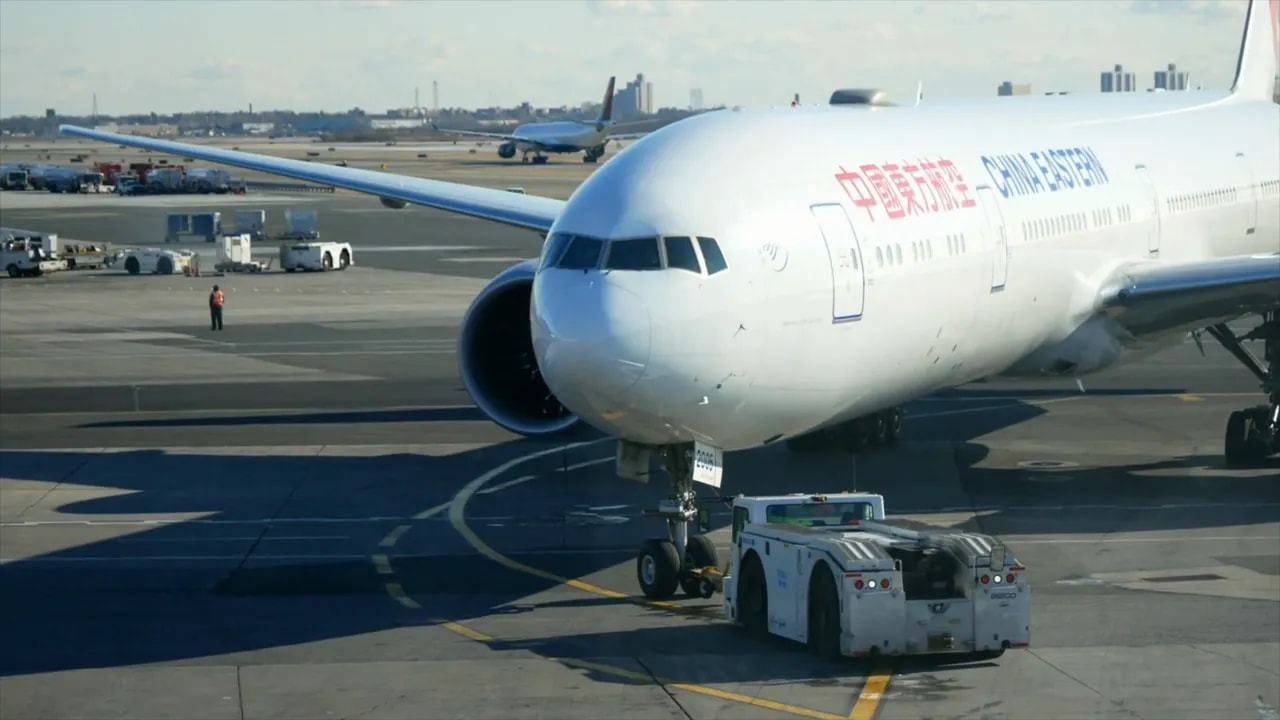
Now newly released U.S. investigative material appears to strongly support the long-running suspicion that the crash was caused by deliberate action inside the cockpit.
Documents released by the U.S. National Transportation Safety Board under a Freedom of Information Act request reportedly show that both engine fuel control switches were moved simultaneously to cutoff shortly before impact. The released data also indicated downward force being applied to the first officer's control column.
Taken together, those findings strongly point away from mechanical failure and toward deliberate human action. In plain terms, the emerging picture is that someone in the cockpit intentionally brought the aircraft down.
That would make the disaster not just an aviation tragedy but one of the largest acts of mass murder by a private individual in decades.
Why the MU5735 cover-up matters beyond aviation
The crash itself was horrific. The official handling of it may be nearly as revealing.
For more than four years, Chinese authorities have refused to publish a final accident report, despite international rules requiring regular updates when investigations extend beyond one year. In 2025, investigators reportedly withheld even an interim report, citing risks to "national security and social stability."
That phrase has become familiar in China. It is broad, politically useful, and often deployed when officials want to suppress information that could trigger public anger, institutional embarrassment, or uncomfortable questions about governance.
In this case, the refusal to publish a full explanation has fueled exactly the sort of speculation authorities presumably hoped to avoid. The secrecy has become part of the story.
There has already been sharp commentary from China analysts noting the obvious question: if an air disaster that killed 132 people can be concealed in the name of social stability, what else can be buried under the same rationale?
The public comparison made by some Chinese commenters to early pandemic-era cover-up behavior is striking. Images of hazmat suits from the zero-COVID years were reportedly shared online as a way of drawing a line between one politically sensitive information blackout and another. Whether authorities like that comparison or not, it points to a deep trust problem.
The issue here is not merely whether a pilot intentionally crashed a plane. It is also whether the Chinese state believed acknowledging that openly would create too much political risk. If that is the case, then the system's first instinct was not transparency, accountability, or lessons learned. It was control.
Europe may be moving toward a broader trade confrontation with China
The final major development comes from Brussels, where frustration with China appears to be hardening into something much more serious.
For years, the European Union tried to balance economic engagement with limited defensive tools such as anti-dumping and anti-subsidy investigations directed at specific products. Increasingly, EU officials seem to believe that piecemeal approach is no longer enough.
One official involved in new planning reportedly put it bluntly: the current situation is not sustainable, and if it does not change, Europe may have no choice but to head into a trade conflict with China.
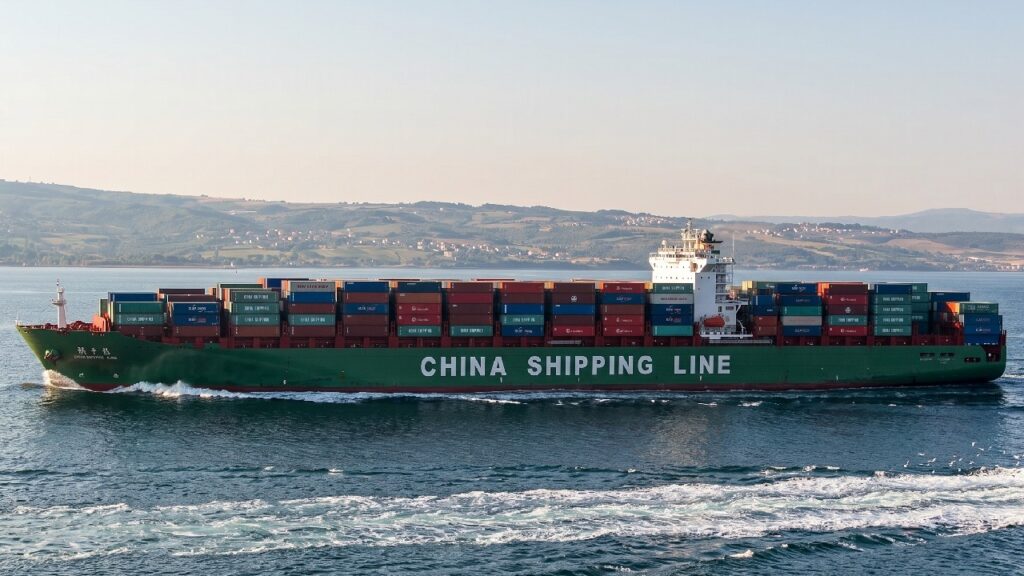
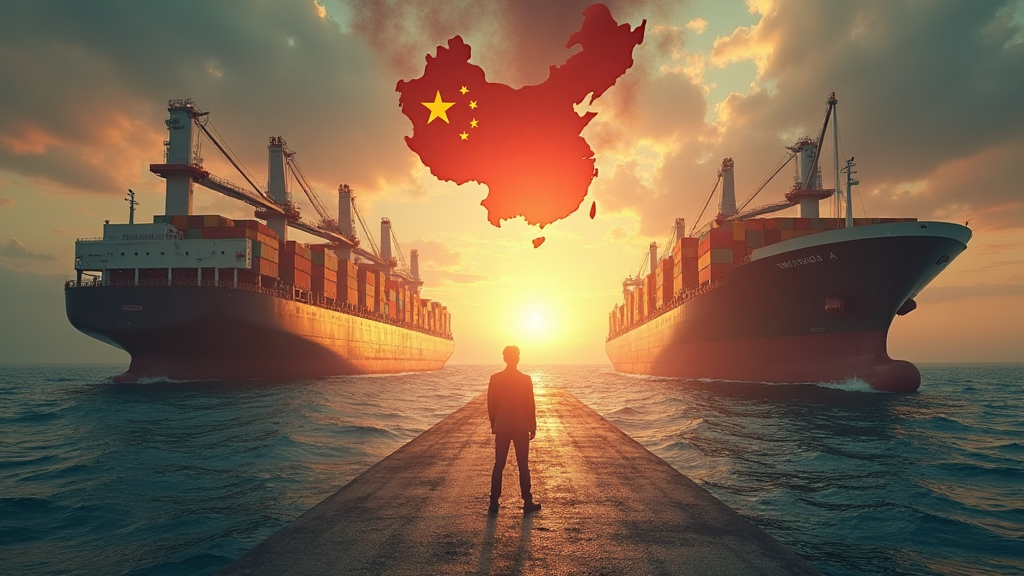
The source of the pressure is clear. China's exports to Europe have continued to surge, while the EU's trade deficit with China reached roughly 360 billion euros last year and reportedly widened further in the first quarter of this year.
European policymakers increasingly argue that China's domestic slowdown, especially the collapse of the property sector, is pushing firms to dump excess subsidized production into overseas markets. That overcapacity argument has moved from debated proposition to mainstream policy concern.
Chemicals are one of the clearest stress points. European chemical producers have filed record numbers of anti-dumping complaints against Chinese imports, accounting for nearly half of all EU trade defense cases. Industry leaders warn that entire sections of Europe's manufacturing base are approaching collapse under the pressure of low-cost imports. In some niches, Europe reportedly has only one domestic producer left.
The warning from industry is stark: the complaint pipeline is full, and the sector is nearing breaking point. China's industrial scale, combined with Europe's high energy costs and heavy regulatory burdens, is creating a very difficult environment for local producers.
Brussels is preparing broader tools, not just case-by-case tariffs
The significance of the current debate is that Europe may be preparing a more systemic answer. Reports indicate that the European Commission is developing a new trade instrument aimed specifically at Chinese industrial overcapacity. The goal would be to allow faster and broader intervention than traditional anti-dumping cases permit.
If political support materializes at the next European Council meeting, this could mark a real shift in how Brussels handles Chinese trade pressure.
At the same time, Europe's concerns are no longer limited to price competition. Strategic dependency is becoming central to the argument.
The EU has already tightened scrutiny of Huawei and ZTE in 5G infrastructure. Now those concerns are spreading into renewable energy systems as well. Brussels recently confirmed that EU funds would be restricted for power projects involving solar inverters from high-risk suppliers, with Chinese firms dominating much of the global market.
The concern is straightforward: if a foreign supplier becomes deeply embedded in energy infrastructure, the risk is not merely commercial. It can also become strategic, including the possibility of remote disruption or coercive leverage.
This broader shift in European thinking fits with a wider pattern of deteriorating China-EU economic confidence, also reflected in recent reporting on EU trade friction and new sanctions pressure.
The cost of decoupling from China would be immense
None of this means Europe can disengage easily. In fact, the economic costs could be enormous.
A study commissioned by the China Chamber of Commerce to the EU estimated that replacing Chinese suppliers across 18 critical sectors could cost Europe nearly 368 billion euros over five years. Germany alone could bear close to half of that burden. Energy, telecommunications, and digital infrastructure would be among the hardest-hit sectors.
That is the core dilemma. European leaders increasingly fear overdependence on Chinese supply chains, but many European businesses still rely heavily on affordable Chinese inputs to stay competitive. A harder trade line may protect strategic resilience in the long run while imposing significant pain in the short to medium term.
Some analysts warn that aggressive restrictions could raise inflation, weaken Europe's manufacturing sector further, and drag on already fragile growth. Those are not trivial concerns, particularly at a time when many European economies are already under pressure.
China, for its part, has responded angrily. Officials and state-backed commentators say Brussels is politicizing trade, weaponizing security concerns, and distorting normal market competition by describing Chinese industrial strength as overcapacity.
But the mood in Europe appears to be shifting anyway. The key question is no longer whether there is frustration. It is whether the EU is truly prepared to absorb the costs of acting on that frustration, and whether it can remain united once Beijing begins retaliating.
The bigger picture
Put these stories together and a common pattern emerges.
- In the Middle East, China wants calm because instability threatens its energy lifelines and complicates summit diplomacy.
- In finance, Beijing talks resistance to U.S. sanctions but may still be quietly respecting the hard realities of dollar-based power.
- At home, the handling of MU5735 raises uncomfortable questions about whether political control still trumps transparency even after mass casualty events.
- In Europe, China's export-led pressure is provoking a potentially more confrontational response from one of its most important markets.
That is why this moment matters. Beijing still wants to shape the narrative as one of growing diplomatic influence and resilient economic strength. But the underlying picture is more constrained. China remains deeply exposed to external energy routes, external financial architecture, external export markets, and internal political sensitivities that it does not fully trust itself to manage openly.
That does not mean China is weak. It does mean the gap between rhetoric and reality is becoming harder to ignore.
FAQ
Why is the Strait of Hormuz so important for China?
China is the world's largest crude importer, and around 40 percent of its oil imports come from the Middle East. The Strait of Hormuz is one of the most important energy chokepoints on earth, so any disruption there directly threatens Chinese energy security, industrial costs, and broader economic stability.
Is China putting real pressure on Iran to reopen Hormuz?
China has publicly urged the restoration of safe passage, which is more direct than usual. However, whether Beijing is willing to use meaningful leverage on Tehran remains uncertain, especially given China's close ties with Iran and its role as a major buyer of Iranian oil.
What do the new MU5735 findings suggest?
The released U.S. investigative materials reportedly indicate that both engine fuel control switches were moved to cutoff shortly before impact and that downward force was applied to the first officer's control column. That strongly suggests deliberate action inside the cockpit rather than mechanical failure.
Why has the MU5735 investigation become so controversial?
Chinese authorities have still not published a full final report despite the time that has passed and international expectations for regular updates. The reported decision to withhold information on grounds of national security and social stability has intensified suspicion and raised broader questions about transparency in sensitive incidents.
Are Chinese banks really following U.S. sanctions despite official opposition?
That appears possible. Reports indicate regulators may have told major banks to stop issuing new loans to certain sanctioned refiners while keeping existing credit lines in place. If true, it would reflect a familiar pattern in which Beijing publicly condemns sanctions but quietly limits financial exposure to avoid secondary U.S. penalties.
Why is the EU becoming more confrontational toward China on trade?
European officials increasingly believe Chinese industrial overcapacity and subsidized exports are damaging local industries. Concerns now extend beyond anti-dumping complaints into strategic dependence on Chinese technology and supply chains, especially in telecoms, energy systems, and digital infrastructure.
Can Europe reduce dependence on Chinese suppliers easily?
No. Replacing Chinese suppliers across critical sectors could be extremely expensive and disruptive. That is why Europe faces a genuine dilemma between improving long-term resilience and avoiding major short-term economic pain.
These are not isolated headlines. They are indicators of where pressure is building around China right now: energy vulnerability, sanctions exposure, opaque crisis management, and worsening trade frictions with major partners. That combination is what makes this stretch of China update news especially important to follow closely.