
The most explosive development in U.S.-China news is not trade, tariffs, or summit choreography. It is the reported guilty plea of an elected American mayor on charges tied to acting as an unregistered agent of the Chinese government. That alone would be remarkable. But the broader implications are even more serious. A mayor working as an illegal Chinese agent is exactly the kind of case that turns a long-running national security concern into something concrete, local, and politically destabilising.
At the same time, Beijing is trying to contain a sprawling local government debt crisis without giving up on ambitious growth targets. Washington and Beijing are preparing for a high-stakes Trump-Xi meeting in Beijing. And Taiwan has just approved a major new defence package as concern grows that it could become entangled in wider U.S.-China bargaining.
Taken together, these developments point to the same reality. U.S.-China competition is no longer confined to one lane. It is now playing out in local politics, debt markets, industrial policy, sanctions, military planning, and summit diplomacy all at once.
Table of Contents
- National Security Shock: An Elected U.S. Mayor Accused of Serving Beijing
- China’s Local Government Debt Crisis Is Still Getting Worse
- Trump Heads to Beijing as Both Sides Search for Deliverables
- Taiwan Approves a Major Defense Package as Anxiety Rises
- The Larger Pattern
- FAQ
- Final Takeaway
National Security Shock: An Elected U.S. Mayor Accused of Serving Beijing
Federal prosecutors say Arcadia Mayor Eileen Wang agreed to plead guilty to acting as an unregistered agent of the Chinese government. The charge carries a maximum sentence of 10 years in federal prison, and she has resigned.
The reason this case is sending shockwaves is straightforward. This was not a business executive, not an academic, not a lobbyist, and not someone operating on the margins of politics. It involved an elected public official in Southern California. That changes the political and intelligence significance of the story immediately.
Coming soon: links to my Youtube Channel China update
According to U.S. authorities, Wang admitted to acting on behalf of the Chinese government without notifying the U.S. attorney general, as required under federal law. Prosecutors allege she worked to advance Beijing’s interests generally, and the interests of the Chinese Communist Party more specifically, while serving in public office.
This is why the phrase 'mayor working as illegal Chinese agent' is not just a sensational headline. It goes directly to an issue that Washington has worried about for years: covert foreign influence at the local level.
Why the Arcadia Case Matters Beyond Arcadia
For a long time, public discussion around Chinese influence operations in the United States focused heavily on Washington. Congress, federal agencies, think tanks, lobbying, and major national institutions got most of the attention.
But counterintelligence analysts have increasingly warned that the more vulnerable terrain may actually be elsewhere:
- Local governments
- Universities
- Diaspora organizations
- Community media platforms
- Regional political networks
The Arcadia case appears to reinforce that concern in dramatic fashion. If prosecutors’ allegations are accurate, it suggests Beijing’s influence efforts are not merely aimed at shaping elite U.S. decision-making from the top down. They may also be working from the ground up, through municipal institutions and local information ecosystems.
That is what makes the idea of a mayor working as an illegal Chinese agent so alarming in strategic terms. It raises the question of how many similar efforts have been attempted and how many have escaped detection.
The Allegations: Media Operations, Messaging, and Direct Instructions
Federal authorities say Wang worked alongside Yao Ning “Mike” Sun to promote pro-Beijing propaganda through a website called US News Center. Prosecutors allege they received instructions directly from Chinese officials regarding what content should be published.
One alleged example stands out. A senior Chinese official reportedly told Wang that a particular article was “what the Ministry of Foreign Affairs wants to send".
Another example involved a June 2021 letter to the editor in the Los Angeles Times written by the Chinese consul general in Los Angeles. The letter rejected reports of persecution, forced labour, and abuse of Uyghurs in Xinjiang, stating there had “never been genocide in Xinjiang” or forced labour in the region’s cotton fields or other sectors. Wang reportedly shared the link within minutes.
The official position of the U.S. government is that what is occurring in Xinjiang amounts to genocide. That detail matters, because the issue here is not simply sharing a foreign government’s perspective. It is the allegation of covertly acting on behalf of that government while holding elected office in the United States.
Why Arcadia Is a Sensitive Location
Arcadia sits in the San Gabriel Valley, about 21 kilometres northeast of Los Angeles. It has a population of roughly 53,000 and a majority Asian population, with a large Chinese community.
That makes the case particularly delicate. Officials have stressed that the charges concern alleged illegal foreign agent activity, not ethnicity and not the legitimacy of local governance itself. That distinction is essential.
Cases like this can quickly inflame suspicion toward broader Chinese-American communities, which would be both unjust and socially corrosive. A criminal allegation against one official is not a judgement on an entire ethnic group. Still, in practical political terms, that is exactly the kind of tension this case risks triggering.
Wang’s legal team has reportedly argued that the conduct was tied to her personal media activities rather than her role running the city. That defence may prove important legally, but politically the distinction is unlikely to calm concerns. The fundamental issue remains the same: a democratically elected mayor is alleged to have secretly served the interests of a foreign authoritarian state.
For U.S. lawmakers already worried about influence operations, the message is clear. This is no longer abstract.
China’s Local Government Debt Crisis Is Still Getting Worse
While Washington absorbs the implications of a mayor working as an illegal Chinese agent case, Beijing is wrestling with another problem entirely: how to stabilise local government finances without killing growth.
China’s leadership has again promised to intensify efforts to manage mounting local government debt risks while supporting economic expansion. A recent State Council meeting chaired by Premier Li Qiang emphasised implementing macroeconomic support measures and strengthening the domestic economic cycle amid a more uncertain global environment.
On paper, the policy line sounds familiar. Authorities say they will continue debt restructuring, improve local governments’ ability to service obligations, ensure repayments are made on schedule, and create long-term mechanisms to stop new hidden borrowing.
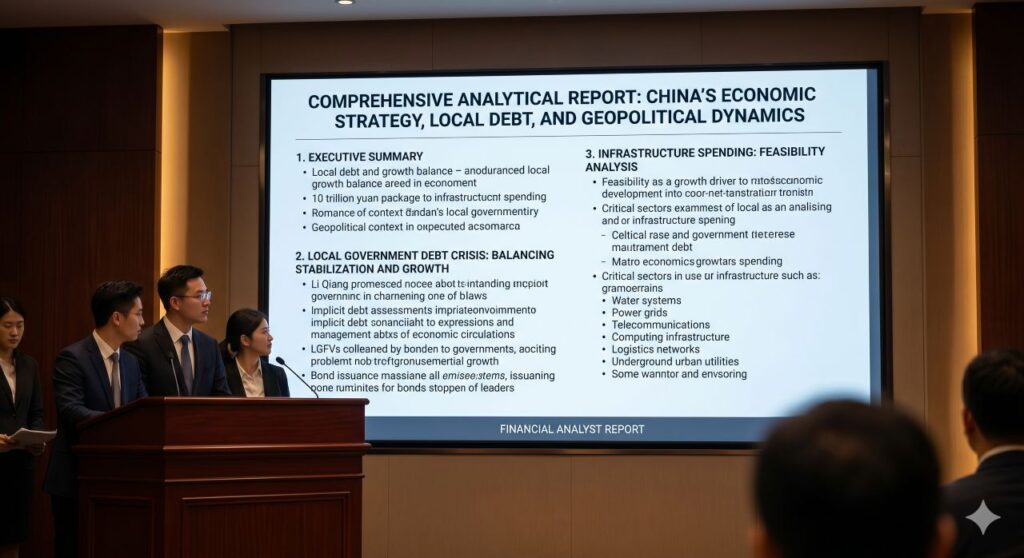
They also signalled that infrastructure investment will remain central, with planned spending across the following:
- Water systems
- Next-generation power grids
- Telecommunications
- Computing infrastructure
- Logistics networks
- Underground urban utilities
That is the core contradiction. China wants less debt risk, but it also wants investment-led momentum. And those two goals increasingly clash.
How Big Is the Problem?
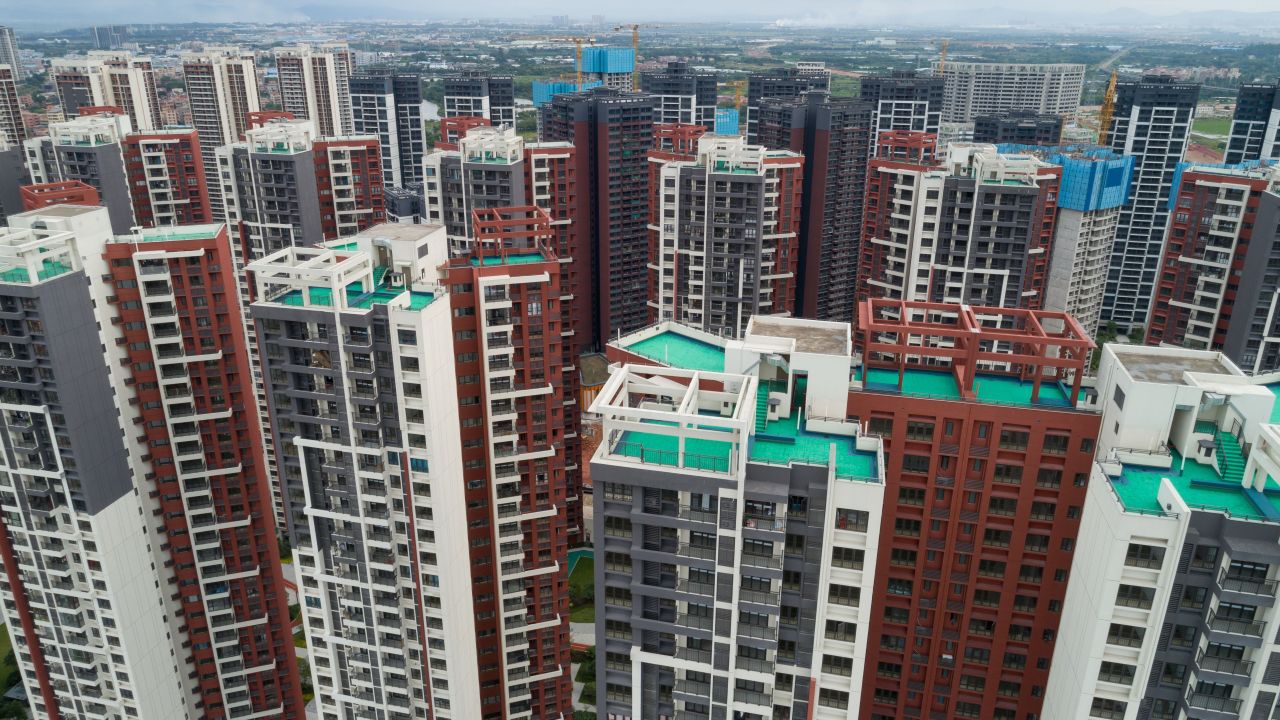
The official figures only tell part of the story. By early 2026, China’s local governments had roughly 47 to 50 trillion RMB in direct outstanding debt, around 6.5 to 7 trillion U.S. dollars.
But the much larger issue is hidden borrowing through local government financing vehicles, or LGFVs. These entities have long been used to fund infrastructure projects, industrial parks, transit systems, and property-related development outside the formal municipal balance sheet.
Analysts estimate LGFV debt alone may range from 60 trillion to 100 trillion RMB, roughly 8 to 14 trillion U.S. dollars.
Combined, many economists believe China’s broader local government-related debt burden could now exceed 110 trillion to 150 trillion RMB, or around 15 to 21 trillion U.S. dollars. That would amount to something like 80 to 120 per cent of GDP.
And to be clear, that is not total public debt. That is just the local public debt problem, broadly defined.
Why the Crisis Became Acute
For years, local governments relied on two major funding engines:
- Land sales to property developers
- Off-balance-sheet borrowing through financing vehicles
When China’s property sector cracked, land sale revenue collapsed. In some provinces, land sales had accounted for 30 to 50 per cent of fiscal income. In practical terms, some local governments saw revenue drop by more than half.
That has produced severe strain, especially outside the wealthier coastal provinces. Some inland and northeastern regions are reportedly delaying contractor payments, cutting civil servants’ salaries, reducing healthcare and other public services, and struggling to repay banks and bondholders.
Some places are effectively in a condition close to insolvency. Guizhou has often been cited as a prime example of local finances reaching a de facto bankruptcy state.
For more on the fiscal stress facing local authorities, this China update news report on tighter local tax enforcement and fiscal strain provides useful additional context.
Can Beijing Fix It Without Sacrificing Growth?
So far, Beijing has prevented outright systemic collapse through debt swaps, bank support, refinancing programmes, and implicit state guarantees. But that comes with costs: slower growth, weaker local spending power, and rising long-term financial risk.
Critics of the current approach argue that China keeps trying to do the impossible. The basic point is simple: if high GDP growth continues to depend on heavy investment, and much of that investment is increasingly non-productive, then debt must keep rising faster than the economic value created by that investment.
In that view, the issue is not whether debt originates from local governments, state-owned enterprises, or the central government. If the country keeps relying on credit expansion to hit growth targets, the debt burden still worsens. The only thing that changes is where the liabilities sit.
That is why many analysts remain sceptical whenever Beijing promises both debt control and strong headline growth. The strategy may buy time, but it does not resolve the structural imbalance.
A related analysis on why export-led and investment-heavy growth is becoming harder to sustain can be found in this China update news piece on unsustainable growth and weakening services momentum.
Trump Heads to Beijing as Both Sides Search for Deliverables
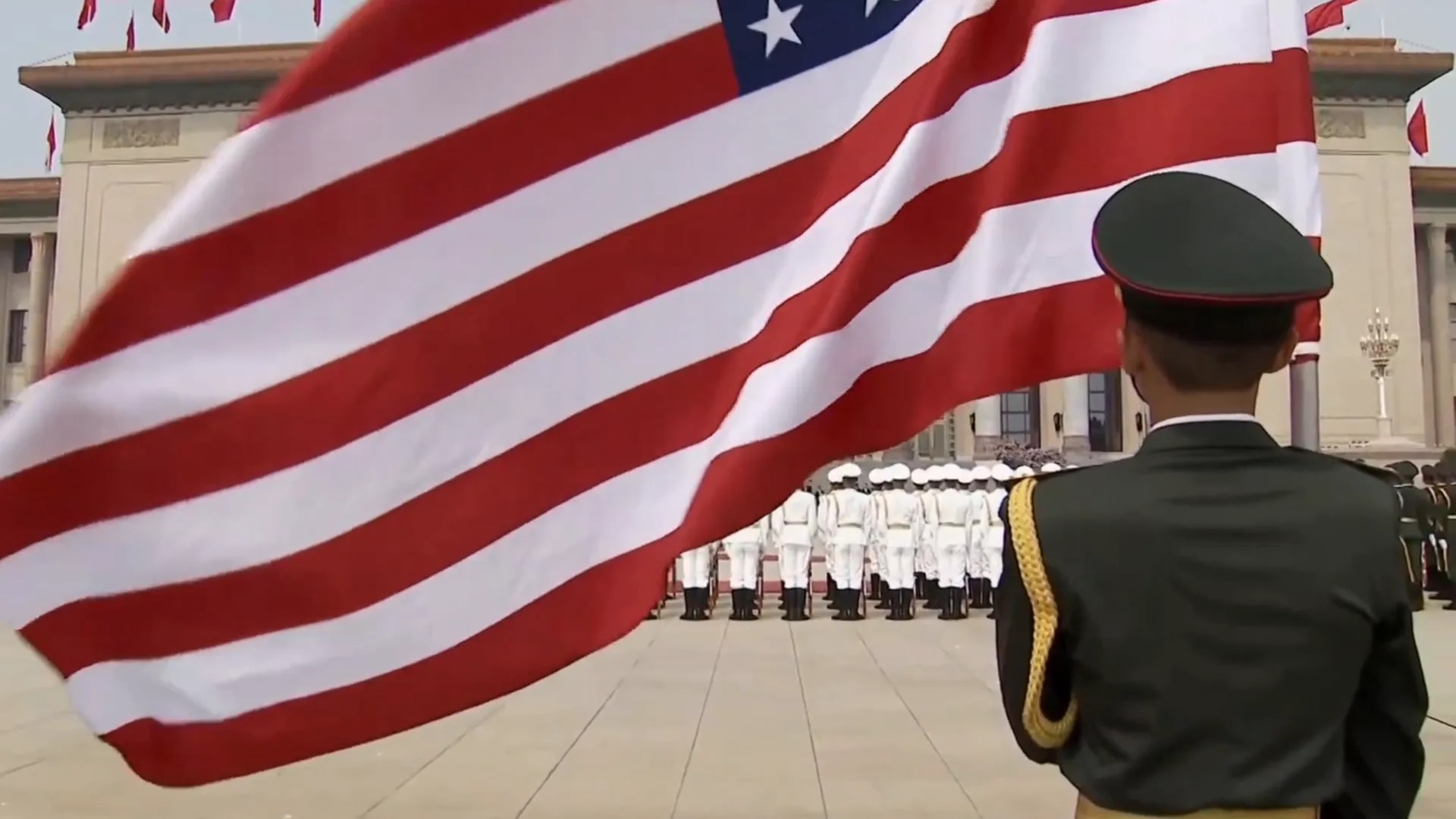
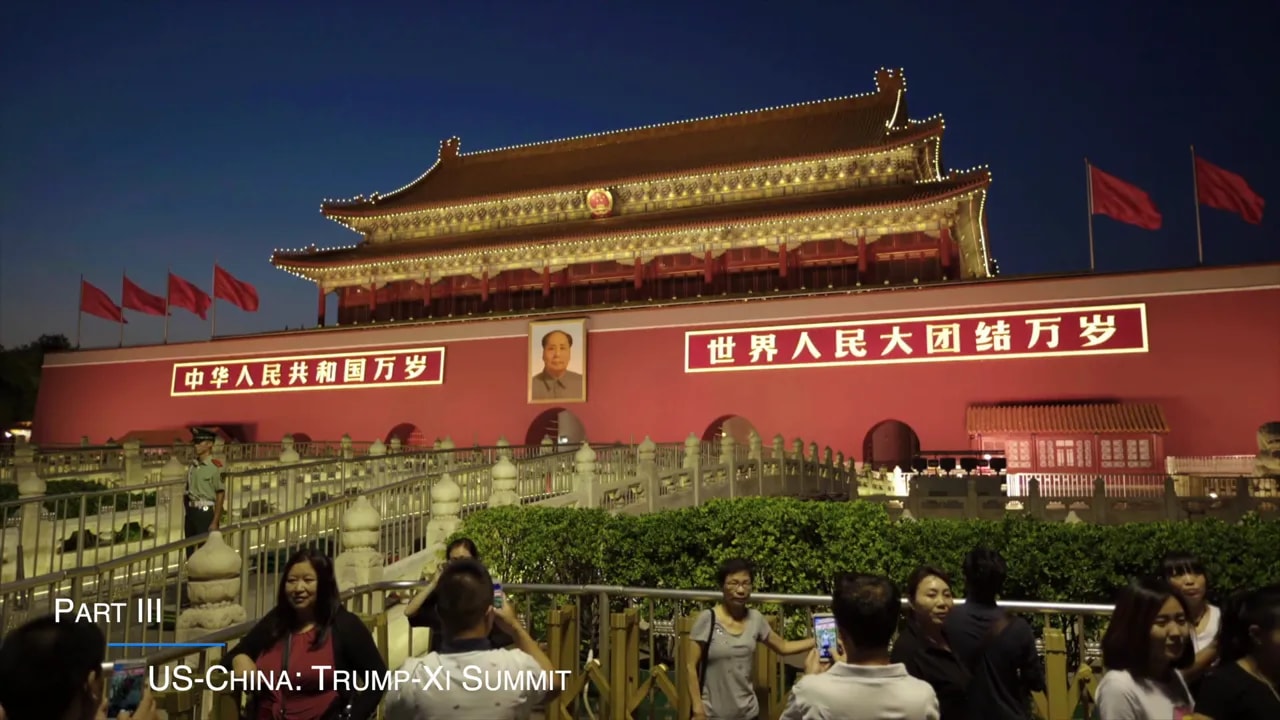
The next major development is diplomatic. Donald Trump is scheduled to arrive in Beijing on May 13 and depart Friday afternoon after meetings with Xi Jinping.
The official Chinese language around the summit has been carefully polished, describing “in-depth exchanges of views on major issues concerning China-U.S. relations and world peace and development". But behind the script, both sides appear to be trying to lock in tangible outcomes before the meeting begins.
Chinese Vice Premier He Lifeng is travelling to South Korea for economic consultations with U.S. Treasury Secretary Scott Bessent just days before the summit. That suggests the negotiation track is still active and unsettled.
Reports indicate Washington and Beijing have discussed mechanisms such as a joint board of trade and a board of investment, alongside possible Chinese purchases of Boeing aircraft, U.S. agricultural products, and American energy exports.
A group of major American CEOs is also expected to accompany Trump, underscoring the economic significance of the trip. Companies reportedly linked to the invitation list include Apple, BlackRock, Boeing, Goldman Sachs, Qualcomm, Tesla, and Visa.
One notable absence is NVIDIA chief Jensen Huang. This fuelled speculation that no major breakthrough is coming on AI chip exports to China. Given the central role of advanced semiconductors in the U.S.-China technology contest, that matters.
The Summit Will Not Be Just About Trade
This meeting is unfolding against a much darker geopolitical backdrop than a standard commercial summit. Iran, sanctions, Taiwan, AI, and rare earths are all expected to shape the agenda.
The Trump administration has continued imposing sanctions on Chinese entities accused of supporting Iran’s military and oil trade. In recent days, the United States sanctioned several Chinese satellite and geospatial intelligence firms accused of assisting Iran during what was described as Operation Epic Fury, including companies allegedly connected to satellite imagery support for Iranian military operations.
The Treasury Department has also targeted networks facilitating Iranian oil sales to China and warned that further sanctions could reach Chinese “teapot” refineries and financial institutions.
That means even if both governments want a more stable tone, they are entering the summit amid active punitive measures and strategic mistrust.
On the Middle East angle and how Iran-related tensions are testing Beijing’s external posture, this China update news article on Taiwan outreach, Iran risks, and China’s regional exposure adds broader context.
Taiwan Will Be Hovering Over Every Conversation
A bipartisan group of U.S. senators has urged Trump to move forward with a 14 billion U.S. dollar arms package for Taiwan before meeting Xi. The idea is to make clear that American support for Taipei is not up for bargaining.
At the same time, both governments are sending some limited signals of stabilisation. Chinese and American authorities announced a successful joint anti-drug operation involving arrests in both countries. Chinese state media has called for keeping the “giant ship” of U.S.-China relations on a steady course.
Still, expectations for a real breakthrough should remain modest. Trade tensions remain unresolved. Distrust over technology and security is worsening. And the global environment is becoming more dangerous, not less.
Taiwan Approves a Major Defense Package as Anxiety Rises
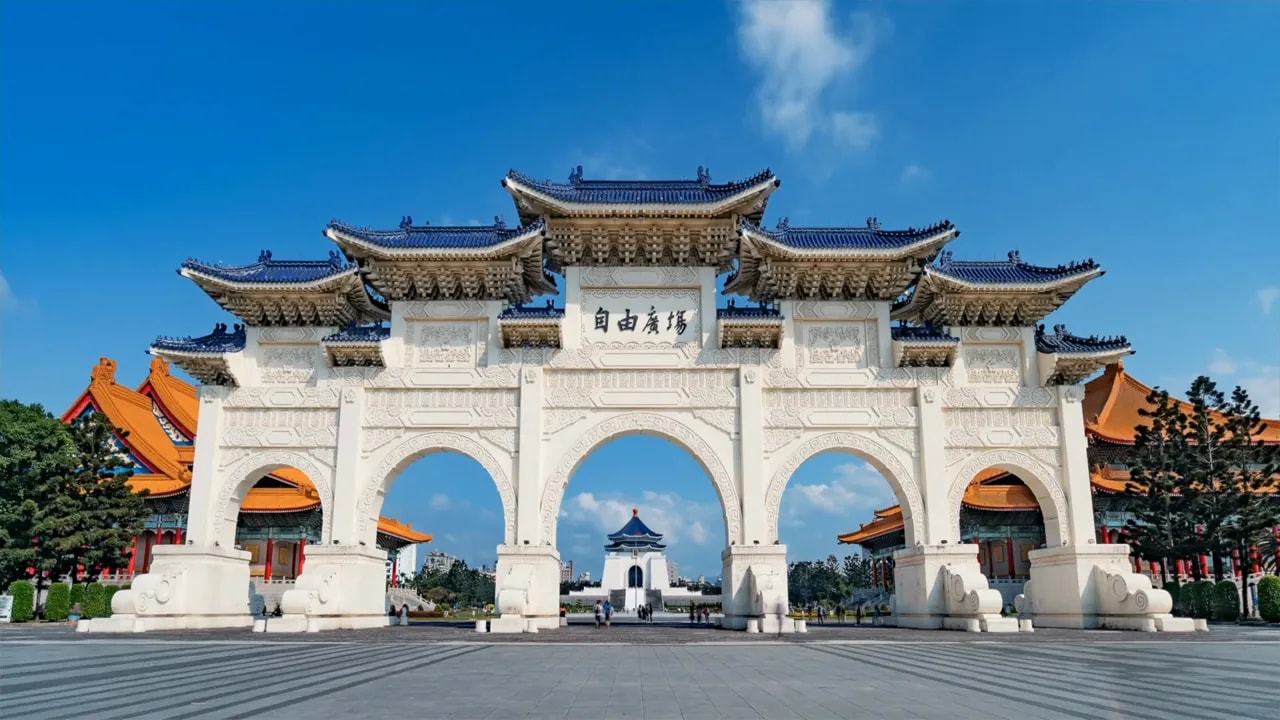
That broader insecurity is one reason Taiwan’s legislature has now approved a substantial new defence package aimed at strengthening the island’s ability to withstand military pressure from China.
Lawmakers voted to approve 780 billion New Taiwan dollars, roughly 24.8 billion U.S. dollars, in supplemental military funding after months of political debate.
The final figure was smaller than the 1.25 trillion New Taiwan dollar request put forward by President William Lai Ching-te, but well above the 380 billion initially backed by the opposition Kuomintang. That gap matters because it suggests concern over Beijing’s threat is spreading across Taiwan’s political spectrum, even if differences remain over the details.
Where the Money Is Going
A large share of the funding will support advanced air defence, including the planned T-Dome system intended to counter missiles, drones, and other aerial threats.
The package also includes:
- 300 billion New Taiwan dollars for previously announced American arms purchases
- Rocket systems and M108 howitzers among those acquisitions
- Additional funding reserved for future anti-drone and missile defense systems
The spending is spread over multiple years and lands at a particularly sensitive moment. China has maintained near-daily air and naval pressure around Taiwan, while uncertainty over future U.S. policy has increased under the current administration.
The Strategic Anxiety in Taipei
Trump has previously questioned America’s willingness to defend Taiwan and argued that Taipei should contribute more to its own security. That has sharpened concern inside Taiwan that it could become a bargaining chip in larger U.S.-China negotiations over trade, technology, or regional security.
The domestic debate around the package also exposed a deeper strategic divide. The ruling Democratic Progressive Party wanted domestically produced systems, including drones and anti-ballistic missile technologies, folded into the supplemental package to accelerate Taiwan’s indigenous defence base. Opposition lawmakers argued those should be funded through the regular annual defence budget instead.
Even so, the final vote still represents one of Taiwan’s most significant recent security investments. The core message is unmistakable: Taipei sees the threat environment worsening and is trying to buy more resilience before the next crisis arrives.
The Larger Pattern
These stories may seem separate at first glance. A mayor working as an illegal Chinese agent in Southern California. A debt crisis in Chinese local government finance. A U.S. president heading to Beijing. A fresh defence package in Taiwan.
But they all reflect the same strategic shift.
China’s rise, and the contest around it, no longer sits neatly in one category. Domestic economics bleeds into geopolitics. Local politics intersects with counterintelligence. Trade negotiations overlap with sanctions, AI restrictions, and military deterrence. Taiwan is no longer a distant regional issue. It is becoming central to the wider shape of global power politics.
The Arcadia case is especially important because it crystallises this convergence in one stark image: a mayor working as an illegal Chinese agent is not just a law enforcement story. It is a warning about how strategic competition increasingly penetrates democratic institutions at the municipal level, where vigilance is often weaker and scrutiny lighter.
At the same time, Beijing’s debt problem shows the domestic limits of Chinese power. A country can project geopolitical confidence abroad while carrying severe structural strain at home. And Taiwan’s defence vote is a reminder that actors around China are adjusting now, not later.
FAQ
Why is the Arcadia case such a major story?
Because it involves an elected U.S. mayor rather than a private individual. The allegation of a mayor working as an illegal Chinese agent makes concerns about foreign influence operations far more immediate and politically serious.
What are prosecutors alleging Eileen Wang actually did?
Federal authorities say she acted on behalf of the Chinese government without registering as required by U.S. law and worked with an associate to promote pro-Beijing messaging through a media platform while receiving direction from Chinese officials.
Does the case implicate Chinese-American communities generally?
No. Officials have emphasised that the charges concern alleged illegal foreign agent activity, not ethnicity. It is important to distinguish a criminal case against an individual from suspicion directed at a broader community.
Why is China’s local government debt problem so hard to solve?
Because local governments lost major land-sale revenue after the property downturn, but the broader economy still relies heavily on investment-led growth. Beijing wants to reduce debt risks while also maintaining growth, and those objectives increasingly conflict.
What should be expected from the Trump-Xi summit?
Probably limited practical agreements rather than a major reset. Trade and commercial deals may be discussed, but sanctions, AI restrictions, Iran, and Taiwan make a broad breakthrough unlikely.
Why did Taiwan approve such a large defence package now?
Because military pressure from China remains intense, and uncertainty about future U.S. policy has increased. Taiwan is trying to strengthen air defence, missile defence, and anti-drone capabilities before the regional environment deteriorates further.
Final Takeaway
There are moments when a series of headlines starts to reveal a deeper pattern. This is one of those moments.
The reported guilty plea of an elected official accused of being a mayor working as an illegal Chinese agent has jolted U.S. politics for good reason. It suggests that strategic rivalry with Beijing is no longer something happening only in federal agencies or faraway summits. It can surface in city halls, community media, and local political systems.
Meanwhile, China’s debt burden continues to test the sustainability of its growth model, and Taiwan is moving to harden itself as major-power diplomacy intensifies around it. The Trump-Xi summit may produce carefully staged symbolism and a few transactional deliverables. But the structural tensions are not going away.
That is the real story at this stage. The competition is widening, the pressure points are multiplying, and each new development is connecting domestic vulnerability with international confrontation in ways that are becoming harder to ignore.