It has been a heavy stretch in Chinese geopolitics, and the week ahead looks even heavier.
Several major storylines are now converging at once: a possible Trump visit to Beijing, growing strain in the U.S.-China relationship, a deeply awkward Chinese tanker incident near the Strait of Hormuz, an extraordinary escalation in Xi Jinping’s military anti-corruption campaign, and mounting concern that China’s nuclear posture is becoming less restrained and more dangerous.
None of these developments exists in isolation. Taken together, they tell a broader story about the current moment: China is trying to stabilise its external environment while simultaneously tightening control at home and preparing for a more contested strategic future abroad.
Table of Contents
- U.S.-China summit planning points to stabilization, not a reset
- Taiwan remains the biggest fault line
- Iran casts a long shadow over summit diplomacy
- A Chinese tanker was struck near Hormuz, and Beijing has a problem
- Xi’s military purge just became much more severe
- China’s nuclear posture is starting to look less restrained
- What all of this means
- FAQ
U.S.-China summit planning points to stabilization, not a reset
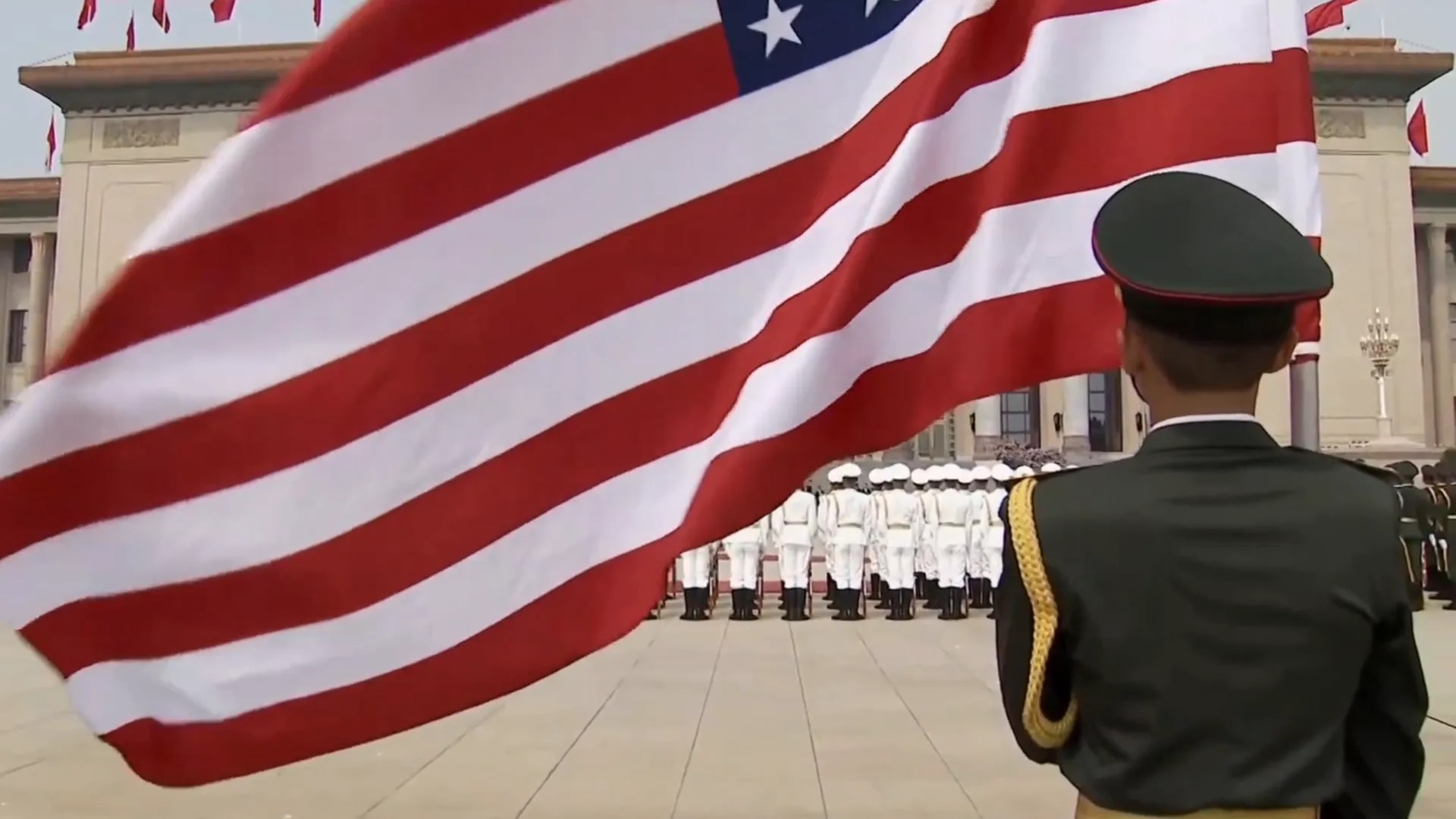
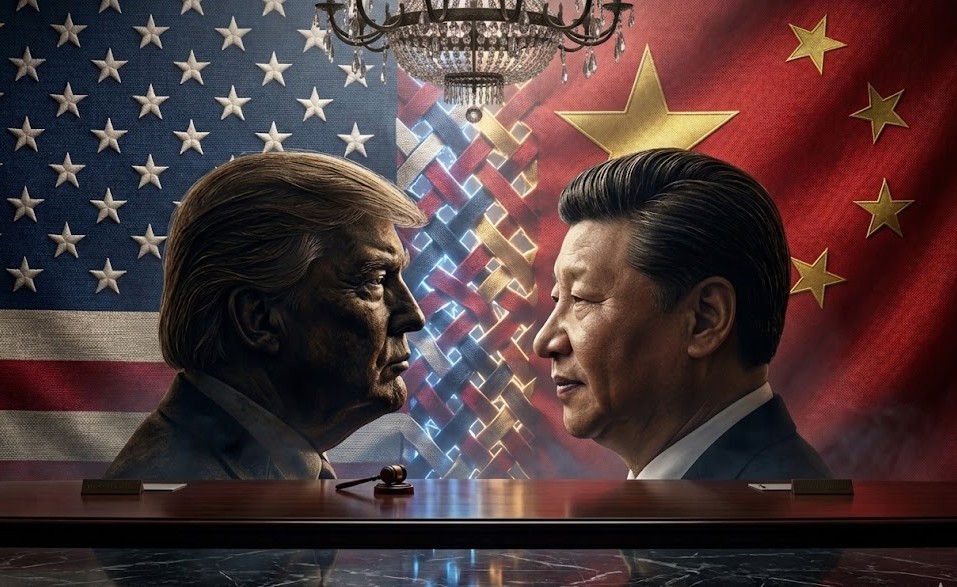
All signs indicate that Donald Trump is still expected to travel to Beijing in the coming days for a high-stakes meeting with Xi Jinping. The symbolism matters, but the more important point is what both sides appear to want from the meeting.
This does not look like an attempt to solve the core problems in the relationship. It looks more like an effort to keep those problems from spiralling.
Reports suggest the U.S. side is assembling an unusually large delegation of major business leaders, including executives from Nvidia, Apple, ExxonMobil, Boeing, Qualcomm, Blackstone, Citigroup, and Visa. That kind of corporate presence is not normal diplomatic window dressing. It signals that economic stabilisation is a central objective.
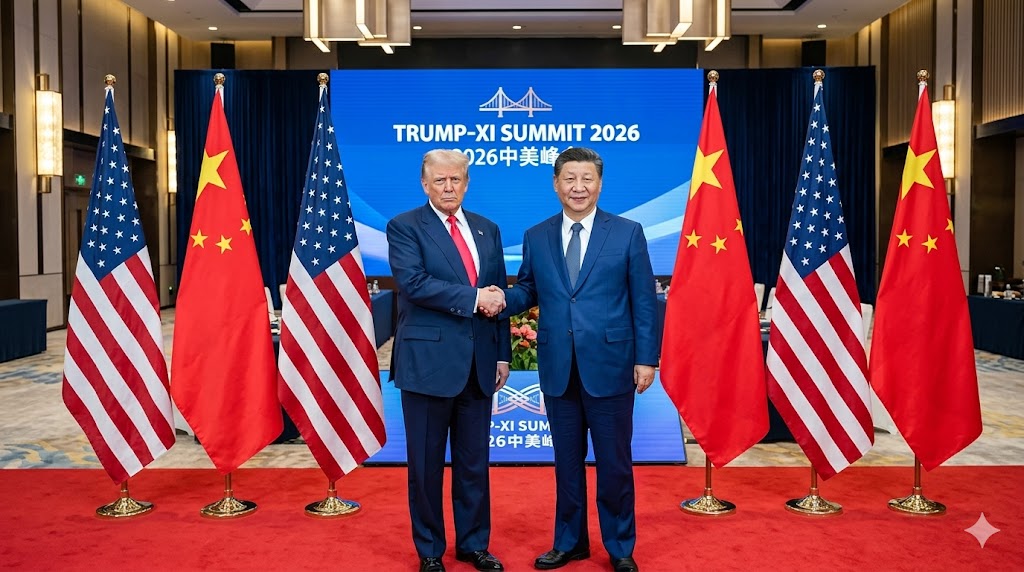
Negotiators are reportedly discussing a package that could include:
- Expanded Chinese purchases of U.S. agricultural goods
- Possible aircraft orders
- Investment-related agreements
- Preliminary artificial intelligence guardrails
The AI angle is particularly notable. At first glance, it may seem surprising that artificial intelligence has become an area for possible cooperation given how intense the technology rivalry has become. But that is precisely why it matters. If both governments believe that AI competition could become destabilising, then even narrow guardrails may be worth pursuing.
There are reports that an official AI discussion could be launched during the summit, potentially on the U.S. side under Treasury Secretary Scott Bessent. Beijing has confirmed continued communication regarding the visit, although it has not publicly laid out what any AI framework would actually look like.
Still, expectations should remain modest. The basic assessment from many officials and analysts is that the U.S.-China relationship now faces structural problems, not just episodic disagreements. That matters because structural problems are harder to negotiate away. They involve incompatible security interests, different economic systems, competing strategic ambitions, and increasingly low trust.
There is also a striking irony here. For years, Washington pushed for changes in China’s economic model. At the same time, China itself faces clear structural economic weaknesses. In theory, some reforms that might ease U.S. concerns could also help China’s own long-term sustainability. In practice, however, that kind of transformation has not materialised at the scale required.
So the likely purpose of the summit is narrower: reduce temperature, manage friction, and produce a few limited deliverables that both sides can point to as evidence that direct confrontation is not inevitable.
Taiwan remains the biggest fault line
If there is one issue that continues to overshadow everything else, it is Taiwan.
Following recent talks between Chinese Foreign Minister Wang Yi and U.S. Secretary of State Marco Rubio, Beijing warned that Taiwan remains the biggest risk in bilateral relations. That language is not casual. It reflects how Chinese policymakers increasingly frame Taiwan not as one issue among many, but as the issue most likely to trigger a crisis.
Analysts read Beijing’s wording as a possible signal that if Washington were to soften its approach on Taiwan, whether through reduced arms sales or a less forward-leaning posture, China might be more willing to compromise in other areas such as trade, sanctions, or regional stability.
But that logic cuts both ways. A weaker Taiwan may not create stability. It may instead create more room for coercion, miscalculation, or escalation. That is one reason Taiwan remains so difficult. Measures that one side describes as de-escalatory can look dangerously permissive to the other.
This is also why any summit headline about improving ties should be treated cautiously. If the underlying disagreement over Taiwan remains unresolved, then broader stabilisation efforts have a ceiling.
Iran casts a long shadow over summit diplomacy
The Middle East is now intruding directly into U.S.-China diplomacy.
Chinese officials are reportedly uneasy about proceeding with summit optics while the U.S.-Iran conflict remains unsettled. No schedule change has been announced, but the concern itself is revealing. It shows how deeply global security flashpoints now affect U.S.-China relations, especially when energy security and sanctions enforcement are involved.
One major point of friction is China’s response to U.S. sanctions targeting Chinese refiners accused of purchasing Iranian oil. Beijing recently issued a blocking order against those sanctions, one of its strongest legal pushbacks against American secondary sanctions to date. At the same time, there were also indications that banks were quietly told to respect those sanctions in practice.
That contradiction captures the reality rather well. Publicly, Beijing wants to signal resistance. Privately, Chinese institutions still have to weigh the costs of crossing the U.S. financial system.
For more background on that sanctions clash, see this report on China’s blocking-statute order against US sanctions on Iranian oil trade.
The war has also sharpened China’s concern over the Strait of Hormuz. A significant share of global oil flows through that corridor, and Beijing has every reason to worry about disruptions there. China remains heavily dependent on Gulf energy imports, and instability in Hormuz quickly becomes a problem for Chinese industry, logistics, and inflation.
That broader economic exposure has already been visible in recent China update news coverage of the region’s energy and supply-chain risks. Related context can be found in this analysis of Hormuz turmoil and its implications for China’s economy and supply chains.
A Chinese tanker was struck near Hormuz, and Beijing has a problem
One of the most remarkable developments of the week was the reported attack on a Chinese oil tanker near the entrance to the Strait of Hormuz.
According to Chinese financial media reporting, the tanker JV Innovation, owned by a Tianjin-backed leasing entity, was hit by a drone while anchored near the strait, causing a fire on deck. Chinese crew members were aboard, though there were no casualties.
The immediate significance was obvious. By one account, this was the first Chinese oil tanker targeted during the conflict. The political significance was even greater because of the timing.
The attack reportedly occurred on the same day that Iran’s foreign minister was in Beijing for high-level talks. Wang Yi was hosting him while China publicly reiterated support for Iran’s sovereignty and called for negotiations and safe passage through the strait.
That is not just awkward. It is diplomatically humiliating.
Beijing has tried to present itself as both a strategic partner of Iran and a comparatively neutral advocate of regional stability. But when a Chinese-linked vessel, reportedly marked as China-owned and China-crewed, is struck anyway, it exposes the limits of that balancing act.
This matters for three reasons.
- First, it damages the idea that close ties with Tehran give Beijing special protection or influence in wartime conditions.
- Second, it highlights how quickly commercial shipping can become collateral in a wider military contest.
- Third, it underlines China’s vulnerability to energy route disruption, even when it is not a direct combatant.
Iran has reportedly intensified attacks on maritime traffic in response to U.S.-led escort operations, and commercial shipping through Hormuz has nearly collapsed. That has serious implications for China, not only because of crude imports but also because ports such as Fujairah have become important export hubs for shipments heading into Asia.
Chinese officials have publicly warned about instability in one of the world’s most important maritime corridors and the growing number of stranded vessels. But concern is not the same thing as control. This episode reinforces a harsh reality of wartime escalation: once violence starts spilling into trade routes, diplomatic relationships often offer far less protection than states expect.
Xi’s military purge just became much more severe
At home, Beijing has delivered one of the most dramatic anti-corruption signals in years.
Two former Chinese defence ministers, Wei Fenghe and Li Shangfu, have been handed suspended death sentences. Under China’s legal system, a death sentence with a two-year reprieve is typically commuted to life imprisonment, often without parole. Even so, the political message is unmistakable.
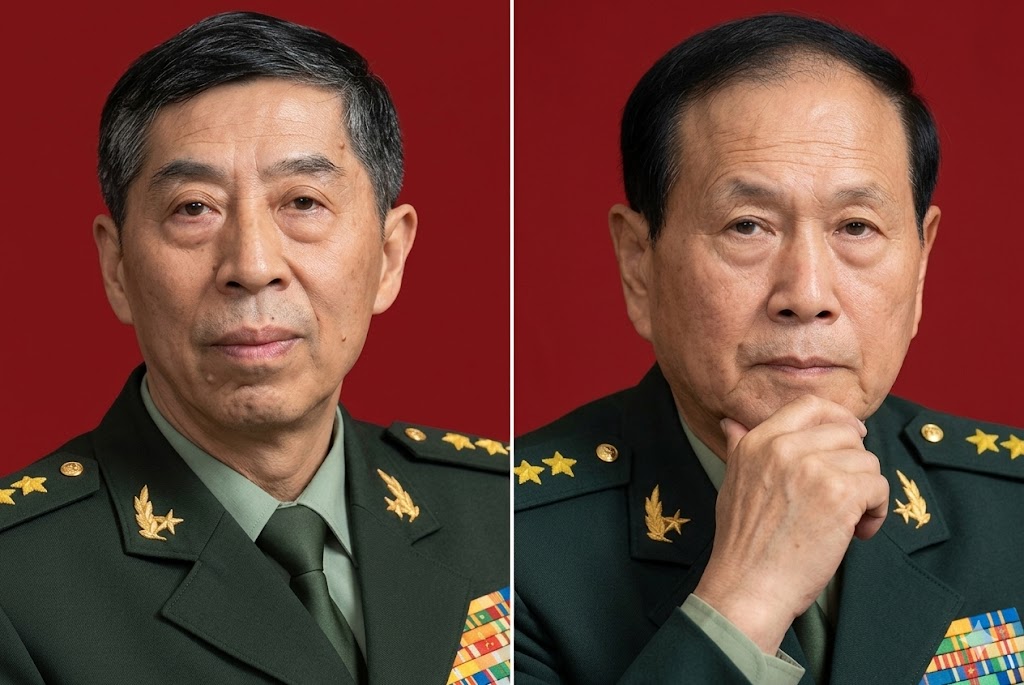
Wei was convicted of accepting bribes. Li was found guilty of both accepting and offering bribes. State media reported that both men would face lifetime incarceration, loss of political rights, and confiscation of all personal property.
These are not middling officials. Both men served at the very top of China’s military-political structure, including positions as state councillors and members of the Central Military Commission, the Communist Party body that oversees the People’s Liberation Army.
The severity of the sentences says several things at once.
- Xi Jinping’s military anti-corruption campaign is far from finished.
- Corruption and political loyalty are being treated as overlapping threats.
- The leadership wants to send a message deep into the PLA hierarchy.
Li Shangfu’s case is especially interesting because it included the charge of offering bribes, but authorities did not specify to whom those payments were allegedly made. That omission has fuelled speculation about wider patronage networks and whether more senior figures could still be vulnerable.
That uncertainty matters because the PLA is not simply a national military in the conventional sense. It is the Communist Party’s military. In that system, corruption is not just a financial crime. It can be interpreted as a threat to party control, command discipline, and ultimately Xi’s authority.
The broader concern is whether this scale of purging creates new instability inside the command structure. If senior officers are increasingly unsure who is safe, who is under investigation, and what relationships may become liabilities, then trust inside the institution can erode even as formal discipline increases.
That is an uncomfortable dynamic at a time when China faces rising tensions in the Taiwan Strait, a sharpening rivalry with the United States, and a wider push to modernise the armed forces.
There is also speculation that the punishments may not bode well for other senior generals still serving in leadership roles. Whether that proves correct remains to be seen, but the direction of travel is clear: Xi is continuing to reshape the military around tighter central control and personal loyalty.
That broader pattern has been a recurring theme in China update news, where external pressure and internal political consolidation increasingly move together rather than separately.
China’s nuclear posture is starting to look less restrained
The final and perhaps most unsettling development concerns China’s nuclear trajectory.
A recent review by nuclear policy expert Tong Zhao argues that Beijing is moving away from its traditionally restrained approach to nuclear deterrence and toward something much closer to the behaviour of other major nuclear powers.
This is significant because for years, China was often described as a comparatively minimalist nuclear power. Its arsenal was smaller, its declared doctrine emphasised no first use, and its deterrent posture was generally framed as limited rather than expansive.
Tong’s argument is that this older picture no longer fully holds. In his assessment, China’s nuclear development appears to be driven by many of the same forces that shaped U.S. and Russian nuclear behaviour:
- Strategic competition
- Military-industrial interests
- Bureaucratic momentum
- The preferences of strong political leaders
Xi Jinping appears central to this shift. The view presented is that Xi increasingly sees nuclear weapons as important to China’s rise as a global power and to what the PLA Rocket Force calls a 'strategic counterbalance' against the United States.
That would represent a real break from earlier eras. Under Mao Zedong and later Deng Xiaoping, China largely maintained a smaller arsenal built around minimal deterrence. The newer trend points toward a bigger, more assertive force posture.
Even more concerning is the possibility that internal Chinese thinking on nuclear use may be changing in ways that are not fully visible from the outside. Tong notes that some military planning documents discuss threatening nuclear use to deter conventional attacks. If that reflects live thinking within parts of the PLA, then the practical spirit of no first use may already be under pressure, whatever the official doctrine still says.
Opacity makes all of this more dangerous. Reports suggest that even senior Chinese diplomats, along with experts outside Xi’s innermost circle, may lack access to the core strategic discussions shaping nuclear policy. When a system becomes more centralised and less transparent, the risk of misreading intentions rises for both domestic actors and foreign governments.
That concern lands at a particularly sensitive time. U.S.-China rivalry is worsening, military technology competition is accelerating, and both sides are now thinking more seriously about AI-related command, control, and escalation risks.
For that reason, even limited summit discussions on AI guardrails or nuclear communication channels would matter. They would not solve the rivalry. But they might help reduce the odds of catastrophe born from miscalculation.
There is, of course, a grim tension here. China appears to be expanding and hardening its strategic posture at the same moment it is undertaking its largest military purge in decades. A more powerful arsenal inside a less transparent and more politically charged command environment is not a comfortable combination.
What all of this means
Put the pieces together and a fairly coherent picture emerges.
China wants a more stable relationship with Washington, but not on terms that require major concessions on its core strategic interests. The United States wants practical economic gains and guardrails, but it is no longer operating under the illusion that China’s system can be fundamentally reshaped from outside.
That is why the likely outcome of the coming summit, if it proceeds as expected, is not a grand bargain. It is something narrower and more temporary:
- Carefully managed optics
- Selective economic deals
- Possible talks on AI or strategic risk reduction
- No meaningful resolution of the deepest disputes
At the same time, the Hormuz tanker incident shows that China’s external environment is becoming harder to control. Its partnerships do not guarantee security. Its trade routes remain exposed. And its energy dependence gives distant conflicts immediate domestic consequences.
Internally, the sentencing of two former defence ministers shows that Xi is still consolidating power through punishment and fear inside the military system. Externally, the nuclear buildup suggests that Beijing is preparing for a harsher strategic era, one in which deterrence, leverage, and military signalling play a larger role.
That combination should be taken seriously. Not because war is inevitable, but because the safeguards that once limited escalation are under strain.
FAQ
Why is the Trump-Xi summit important if no breakthrough is expected?
Because even limited stabilisation matters when tensions are high. The meeting could produce practical economic agreements, open channels on AI and strategic risk, and reduce immediate friction. But the underlying disputes, especially over Taiwan and long-term strategic competition, are still likely to remain unresolved.
Why was the Chinese tanker incident near the Strait of Hormuz so significant?
It highlighted the limits of China’s leverage over Iran and exposed Beijing’s vulnerability to maritime disruption. The political embarrassment was amplified by the fact that the attack reportedly occurred while Iran’s foreign minister was in Beijing for talks.
What does the sentencing of Wei Fenghe and Li Shangfu tell us about Xi’s military purge?
It shows that the campaign is still expanding and that even the most senior military figures are not immune. The harsh punishments suggest that Xi sees corruption, loyalty, and party control as deeply connected issues inside the PLA.
Is China changing its nuclear doctrine?
Officially, China still maintains a no first-use policy. The concern is that its force buildup, strategic rhetoric, and some reported internal military thinking may indicate movement toward a more flexible and potentially more coercive posture, even if the formal doctrine has not yet changed.
Why are AI talks between the U.S. and China getting attention?
Because AI is becoming a major factor in military competition, crisis management, and strategic stability. Even limited guardrails could help reduce the risk that technological rivalry feeds directly into escalation or miscalculation between the two powers.