China Update News this week centers on three fast-moving developments with implications far beyond China’s borders: Beijing’s response to the Hormuz crisis and a seized Iran-linked vessel, a major food safety enforcement campaign targeting China’s largest online platforms, and a fresh deterioration in China-Japan relations spanning history, trade, and military signaling.
Taken together, these stories show how China is navigating overlapping pressures. In the Middle East, Beijing is trying to protect energy security while avoiding strategic overexposure. At home, regulators are responding to a politically sensitive consumer safety scandal with unusually broad penalties. In East Asia, symbolic disputes and hard security competition are becoming more tightly connected.
Table of Contents
- China and the Hormuz crisis: diplomacy, energy dependence, and a suspicious cargo seizure
- Food safety scandal triggers a sweeping e-commerce crackdown
- Japan-China tensions: history, rare earths, and military signaling
- What ties these three stories together
- FAQ
- Conclusion
China and the Hormuz crisis: diplomacy, energy dependence, and a suspicious cargo seizure
China has intensified its diplomatic messaging as tensions around Iran and the Strait of Hormuz rise. Xi Jinping, in a call with Saudi Crown Prince Mohammed bin Salman, urged an “immediate and comprehensive ceasefire” and stressed that disputes should be handled through political and diplomatic channels.
The most notable part of Beijing’s message was the emphasis that the Strait of Hormuz should remain open to normal passage. That wording matters. The strait is not only a regional chokepoint but one of the most important energy corridors in the world. Any threat to commercial transit there quickly becomes a global economic issue.

For China, the concern is especially acute because of its deep reliance on imported energy. Beijing buys oil from a wide range of suppliers, including Iran, Saudi Arabia, Iraq, Kuwait, Qatar, and Russia. A disruption in Hormuz would hit not just one trade lane, but a key pillar of China’s industrial and economic stability.
The vessel that raised the stakes
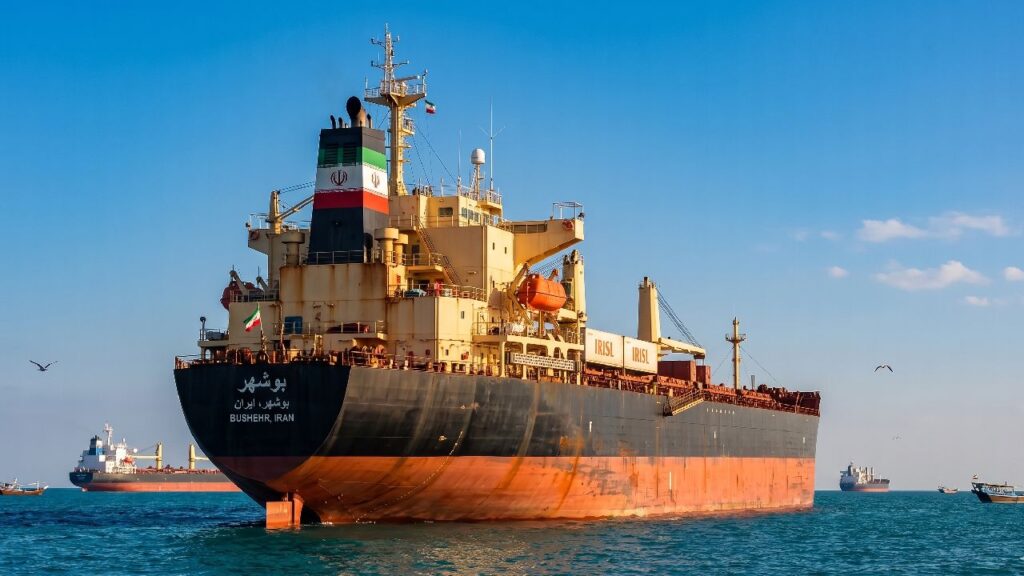
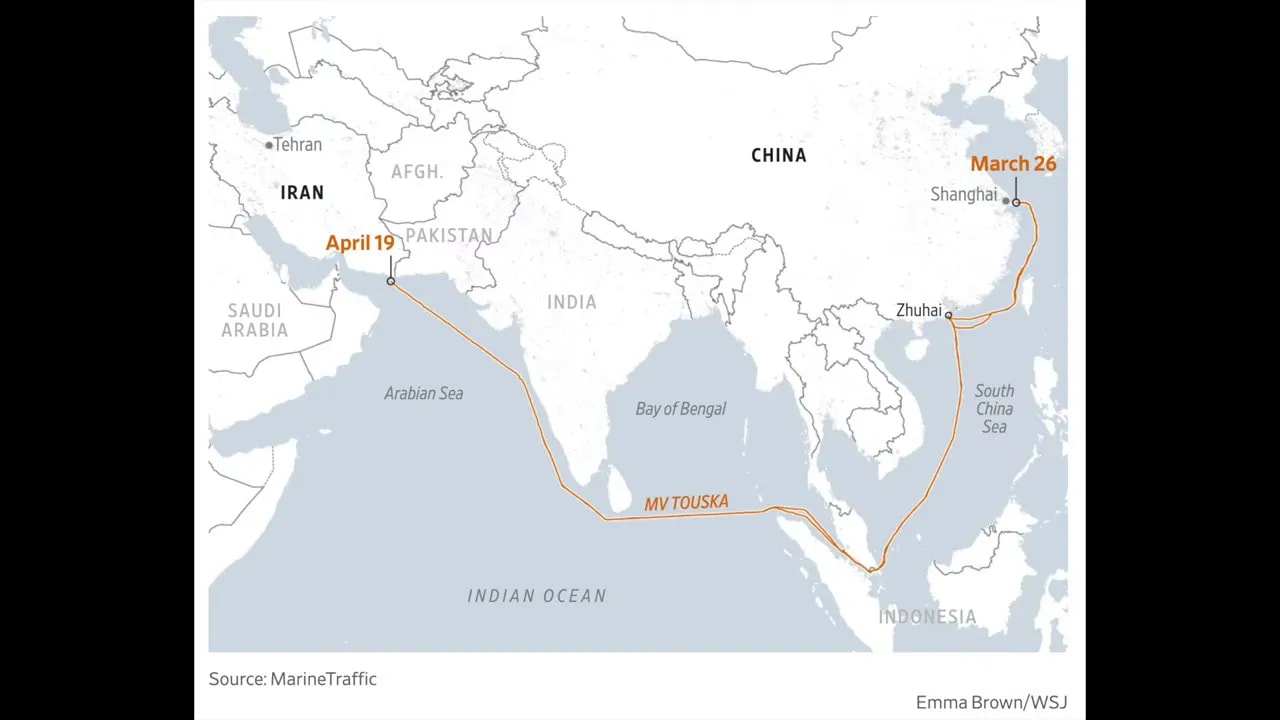
The diplomatic pressure increased sharply after a dramatic maritime interception in the Gulf of Oman. Over the weekend, U.S. forces disabled and boarded an Iranian-flagged cargo vessel identified as the MV Tulska after a prolonged standoff. Reports indicated that the ship had been traveling from China to Iran.
According to cited maritime security reporting, the vessel may have been carrying dual-use materials, goods that can serve both civilian and military purposes. Analysts also linked the ship to networks previously accused of transporting chemicals connected to Iran’s missile program. Shipping data reportedly showed that the vessel had recently made multiple stops at Zhuhai in southern China.
That combination of facts makes the episode highly sensitive. This is no longer just a story about regional conflict. It raises uncomfortable questions about trade routes connecting China and Iran, the nature of cargo moving through those routes, and how much scrutiny Beijing may face if evidence emerges that restricted or strategically sensitive goods were involved.
Iran condemned the seizure as “armed piracy” and warned it was prepared to respond, though it also indicated that civilians on board constrained its options. China responded more cautiously, expressing concern over the interception and calling on all parties to respect the ceasefire and avoid escalation that could destabilize the region or disrupt shipping.
Why Beijing is in a difficult position
China’s regional posture depends on balancing multiple relationships that do not naturally align. It is the largest buyer of Iranian crude and an important economic partner for Tehran. At the same time, it has major energy and strategic ties with Gulf Arab states, especially Saudi Arabia.
This creates a familiar but increasingly fragile diplomatic structure:
- With Iran, China benefits from discounted energy and a partner resistant to U.S. influence.
- With Saudi Arabia and other Gulf states, China needs stable long-term energy supplies and broader commercial ties.
- With the United States, China wants to avoid direct confrontation while resisting any expansion of U.S. pressure on its trade networks.
If the seized ship is shown to have carried sensitive materials from China to Iran, Beijing’s balancing act becomes harder. It would increase pressure from Washington and potentially unsettle Gulf partners that want de-escalation but remain wary of Iran’s military capabilities.
The economic fallout is already visible
The story is not only about strategy. It is already affecting trade flows. Chinese customs data showed sharp drops in crude imports from several major Gulf suppliers in March. Imports from Saudi Arabia, Iraq, Kuwait, and Qatar reportedly fell by roughly 30 percent to more than 60 percent.
China has tried to compensate by buying more from alternative sources. Imports from Russia, already China’s largest oil supplier, rose more than 13 percent during the same period. Shipments from Indonesia also surged, making it one of China’s top suppliers for the month.
Liquefied natural gas data told a similar story. Total LNG imports into China fell by nearly 20 percent in March, while shipments from Qatar dropped by more than 40 percent. Higher imports from Russia did not fully make up for the shortfall.
The practical implication is straightforward. Energy disruption means higher costs, tighter supply, and harder macroeconomic management. China is already dealing with weak domestic demand and lingering deflationary pressure. Stable, affordable energy matters more in that environment, not less.
That is why Beijing’s call for open passage through Hormuz carries more than rhetorical weight. It reflects a convergence of foreign policy and economic necessity.
Food safety scandal triggers a sweeping e-commerce crackdown
The second major story in this edition of China Update News comes from the domestic regulatory front, where a single consumer complaint escalated into one of China’s largest recent crackdowns on online platform compliance.
China’s State Administration for Market Regulation, or SAMR, announced total fines and confiscations of 3.5 billion yuan against seven major platforms. Those named included Pinduoduo, Meituan, JD.com, Ele.me, Douyin, Taobao, and Tmall. In addition, company legal representatives and food safety directors were fined a combined 19.7 million yuan.

The case reportedly began in July 2025 with a complaint in Beijing about a birthday cake purchased from an online shop called “Sweet Words Love Letter Cake.” The product raised alarms after fresh flowers had been inserted directly into the cake, prompting food safety concerns.
What looked like a one-off complaint quickly exposed a much broader system failure. The store advertised hundreds of locations, strong monthly sales, and what appeared to be valid licenses. But when inspectors checked more than 20 listed Beijing addresses, they found no physical stores at all. The business licenses tied to the operation were forged.
The “ghost delivery” problem
Authorities then uncovered a wider network of so-called ghost delivery businesses. These were online food vendors operating without real storefronts or verified production facilities. They could still attract consumers, process orders, and appear legitimate on major delivery and e-commerce platforms.
That matters because platform trust is supposed to fill the gap created by distance. When consumers order food online, they cannot inspect the kitchen, staff, or storage conditions themselves. The platform’s merchant verification process becomes the primary safeguard.
Regulators concluded that those safeguards had failed badly.
SAMR escalated the case by deploying more than 200 enforcement officers nationwide in a coordinated investigation. Regulators found that platforms had not adequately vetted merchants, and in some cases had even obstructed the investigation. One penalty decision said Pinduoduo repeatedly refused to provide materials or submitted false information during the probe.
Why this case became politically important
Food safety in China is not a narrow consumer issue. It is politically sensitive because of the country’s long history of food scandals, some involving severe illnesses and child deaths. Those past crises have made the subject especially emotionally charged.
When a scandal resurfaces, public reaction is often immediate because food safety is widely seen as a basic test of governance. The state is expected not just to punish bad actors after the fact, but to prevent dangerous products from reaching households in the first place.
That helps explain why the penalties went beyond fines. Platforms were ordered to rectify violations and new cake shop registrations were suspended for up to nine months. The message was clear: regulators are prepared to impose direct business costs when platforms fail to police basic safety standards.
What the crackdown says about China’s digital economy
This episode highlights a structural tension in China’s platform economy. Fast growth in delivery, social commerce, and low-cost online retail has created convenience and scale. But speed and scale can also produce weak verification, low barriers to entry, and incentives to prioritize transactions over compliance.
The broader takeaway is that regulators increasingly want platforms to function not just as intermediaries, but as accountable gatekeepers. That shift has several consequences:
- Higher compliance burdens for online platforms and merchants
- Greater legal risk for company executives and designated safety officers
- More frequent investigations into categories linked to health and public trust
- Potential disruption for smaller online sellers who cannot easily meet tighter standards
In other words, this was not simply a cake scandal. It became a test case for platform accountability in one of China’s most expansive consumer sectors.
Japan-China tensions: history, rare earths, and military signaling
The third major development involves worsening China-Japan relations, where symbolic politics and strategic competition are now reinforcing each other.
The latest friction followed Japanese Prime Minister Sanae Takaichi’s decision to send a ritual offering, described as a sacred tree, to Tokyo’s Yasukuni Shrine during its spring festival. She did not make a personal visit, but the gesture still drew attention because of what the shrine represents in regional memory politics.
Yasukuni honors Japan’s war dead, including convicted World War II war criminals. China and South Korea see it as a potent symbol of Japanese militarism. Defenders of the shrine argue that it is a broad war memorial and that countries have a right to honor their dead. But Beijing’s position remains firmly negative.
Takaichi’s own political profile added to the sensitivity. She is associated with conservative and hawkish positions, including strong views on defense and China. She has visited Yasukuni in the past and has previously argued that such acts should not be treated as diplomatic issues.
Under calmer regional conditions, a ritual offering might have remained a contained controversy. That is no longer the case. Relations have already been strained by comments suggesting that a Chinese move on Taiwan could, in theory, justify Japanese military involvement. Beijing reacted sharply at the time, including through trade measures and travel warnings.
Rare earth exports become another pressure point
Economic data now suggest the bilateral strain may be spilling into strategic supply chains. China’s exports of rare earth magnets to Japan fell 17 percent in March, reaching a nine-month low. Exports of oxides reportedly plunged 90 percent. Shipments of rare earth compounds dropped 40 percent month on month, while metal shipments fell by more than 50 percent.
Analysts said the decline may reflect tighter Chinese export controls on dual-use materials introduced after earlier tensions. Seasonal effects linked to the Lunar New Year may also have played some role, but the scale of the drop has raised concerns in Japan.
These concerns are serious because Japan remains heavily dependent on China for rare earth processing and supply, especially heavy rare earths used in high-performance magnets. Those materials are essential for advanced manufacturing, including motors, electronics, and defense-related systems.
Japan has made diversification efforts, including sourcing from Australia’s Lynas Rare Earths, but alternatives remain limited. That leaves Tokyo vulnerable to export controls even if there is no formal embargo.
Military movements deepen the strategic signal
At the same time, military developments are sharpening the sense of confrontation. China announced that it had dispatched a naval destroyer group into the Western Pacific for what it described as routine training. The flotilla, led by a Type 052D destroyer, passed through a waterway between islands in southwestern Japan and closer to the Japanese mainland than is typical.
Beijing said the drills were not aimed at any specific country. Even so, the timing was notable. The deployment coincided with Japan’s first participation with ground troops in the large-scale Balikatan military exercises alongside the United States and the Philippines.

This year’s Balikatan exercises involve around 17,000 troops and are part of a broader effort to strengthen regional deterrence against China. Japan’s role was especially significant. Tokyo sent about 1,400 troops, as well as naval vessels, aircraft, and Type 88 surface-to-ship missiles.
From a strategic standpoint, these moves fit into a larger pattern. Japan is increasingly contributing to the reinforcement of the so-called first island chain, a key geographic concept in efforts to constrain China’s maritime expansion. China, in turn, views such activity as encirclement and has protested Japanese naval operations in the Taiwan Strait, accusing Tokyo of sending the wrong signals to pro-independence forces in Taiwan.
Why the relationship is becoming harder to stabilize
The danger in current China-Japan tensions is that multiple layers of conflict now overlap:
- Historical memory through disputes over Yasukuni and wartime legacy
- Economic leverage through rare earths and trade restrictions
- Taiwan contingency planning and arguments over military involvement
- Naval signaling through drills, transits, and alliance exercises
When these layers reinforce each other, even symbolic gestures can carry strategic consequences. A shrine offering is no longer just about memory. A naval transit is no longer just a training event. Each act is interpreted through a broader framework of rivalry.
What ties these three stories together
The Middle East crisis, the food safety crackdown, and the Japan dispute may appear unrelated, but they reveal a common pattern in current Chinese policymaking.
First, economic security is now central to foreign policy. China’s concern about Hormuz is inseparable from its dependence on imported energy. Trade routes are strategic assets.
Second, domestic legitimacy still depends heavily on basic governance performance. Food safety failures can trigger powerful public reactions, which is why regulators moved with such force against major platforms.
Third, regional diplomacy is increasingly shaped by hard power realities. In the Japan case, history and identity disputes are unfolding alongside export controls, military exercises, and contingency planning around Taiwan.
For anyone tracking China Update News, these developments underscore a broader point: China’s challenges are no longer compartmentalized. Economic management, diplomatic signaling, supply chain control, and domestic regulation are all feeding into one another.
FAQ
Why is the Strait of Hormuz so important to China?
China relies heavily on imported oil and gas, much of it from Gulf producers. If shipping through Hormuz is disrupted, China can face reduced energy supplies, higher import costs, and broader economic pressure.
Why was the seized vessel significant?
The ship was reportedly traveling from China to Iran and may have carried dual-use materials. Because of alleged links to networks associated with Iran’s missile program and its recent port calls in Zhuhai, the case could intensify scrutiny of China-Iran trade routes.
What triggered China’s e-commerce crackdown?
A complaint about a birthday cake led regulators to uncover forged licenses and fake storefronts tied to an online seller. The case then expanded into a nationwide probe of platform verification failures and “ghost delivery” merchants.
Which platforms were penalized in the food safety case?
SAMR announced penalties involving major platforms including Pinduoduo, Meituan, JD.com, Ele.me, Douyin, Taobao, and Tmall.
Why does Yasukuni Shrine create tension with China?
China sees the shrine as linked to Japan’s wartime militarism because it honors war dead including convicted World War II war criminals. Japanese conservatives often argue it is a legitimate memorial, but the issue remains diplomatically sensitive.
Why are rare earth exports to Japan strategically important?
Japan depends heavily on China for rare earth materials, especially heavy rare earths used in advanced magnets. These are critical for manufacturing, electronics, and some defense applications, so export restrictions can quickly become a national security concern.
Conclusion
This set of developments captures the breadth of the challenges facing Beijing. A maritime crisis in the Gulf threatens energy security and raises questions about trade with Iran. A domestic food safety complaint escalates into a multibillion-yuan regulatory response against the country’s biggest platforms. A shrine offering in Japan connects directly to supply chain pressure and military maneuvering in the Western Pacific.
Each story stands on its own. Together, they show a China confronting external risk, internal accountability pressures, and intensifying regional competition at the same time. That is the bigger takeaway from this round of China Update News: the lines between domestic governance, strategic commerce, and geopolitics are becoming harder to separate.