China Update News is rarely just about one headline. This week, three separate developments connected by a single theme are reshaping China’s external posture: the geopolitics of energy, the tightening of internal controls in Hong Kong, and a continuing slide into managed rivalry with Japan.
Across the Middle East, Beijing is urging negotiations even as the fighting disrupts global oil flows. In Hong Kong, authorities are expanding enforcement under national security laws, including against publishing and distribution. And in Northeast Asia, a security incident at a Chinese embassy in Tokyo has added fuel to already fraying Japan-China relations, with diplomatic language shifting toward suspicion rather than interdependence.
Table of Contents
- China and the Iran War: Negotiations Become a Supply-Chain Issue
- Hong Kong Arrests: Article 23 Enforcement Expands to Publishing
- Hong Kong Wealth Comeback: Money Returns Despite Crackdowns
- Japan-China Relations: Embassy Incident Raises the Temperature
- A Broader Shift: From Partnership Talk to “Managed Rivalry”
- What to Watch Next
- FAQ
China and the Iran War: Negotiations Become a Supply-Chain Issue
China’s diplomatic engagement in the escalating Iran conflict is growing more visible, and the direction is consistent: Beijing is positioning itself as a facilitator of dialogue and a proponent of de-escalation.
The key signal came from a phone call between China’s top diplomat Wang Yi and Iran’s foreign minister. Wang urged Tehran to pursue dialogue with the United States “as soon as possible,” stressing a familiar diplomatic principle: “talking is better than fighting.”
That might sound like standard messaging, but the emphasis matters because it reflects a core Chinese incentive. The most immediate concern is not simply diplomatic optics. It is energy disruption.
Why ceasefire talk matters more than distraction
China has no interest in Middle East instability for its own sake. The region’s shipping routes and chokepoints sit on the path of energy imports that support China’s industrial economy.
In practice, Beijing’s drive for negotiations aligns with the risk profile Chinese planners now assume: flare-ups around major transit routes can quickly translate into higher prices and logistical constraints.
Even if major powers are competing strategically, China’s stance suggests the energy dimension is treated as a primary constraint. That is why ceasefire rhetoric is not being used lightly.
What is happening on the ground
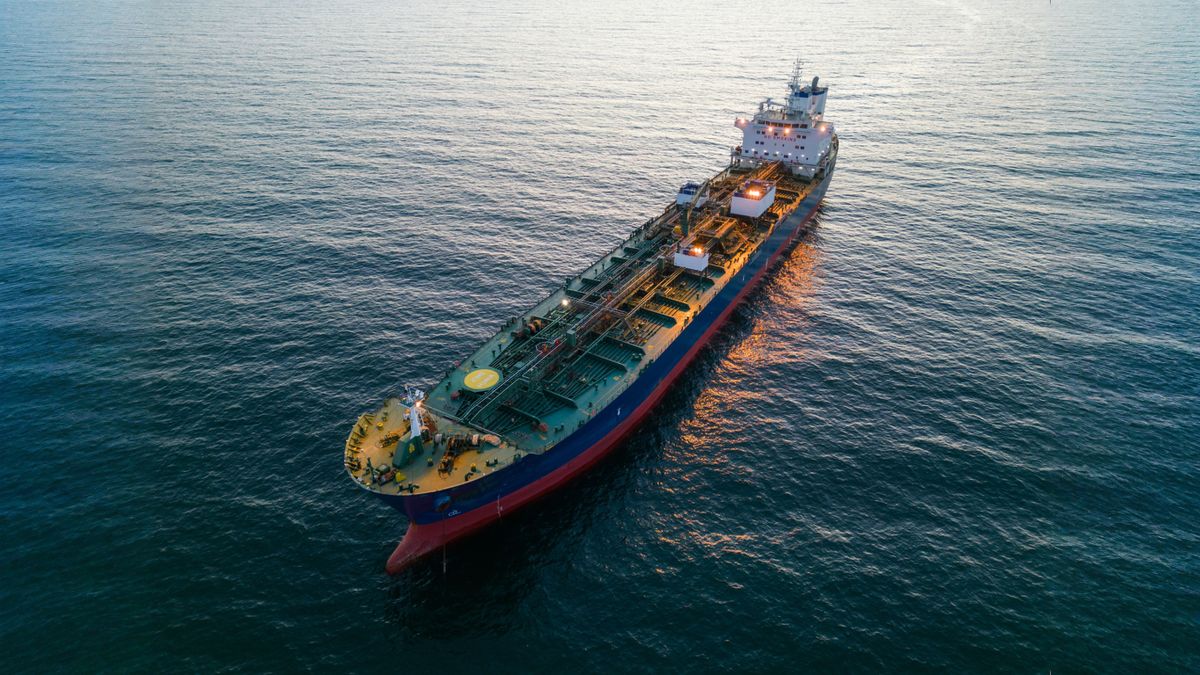
Despite diplomatic calls, there are few signs of de-escalation. Iran has continued to maintain control over the Strait of Hormuz, a critical artery for global oil and gas flows, especially for energy demand in East Asia.
The disruption has been measurable. Since late 2020, the number of vessels transiting the strait has been limited, reflecting the heightened risks and uncertainty in the area.
So China’s policy posture is also being matched by operational adaptation. Chinese shipping firms have adjusted routes to reduce exposure to conventional lanes.
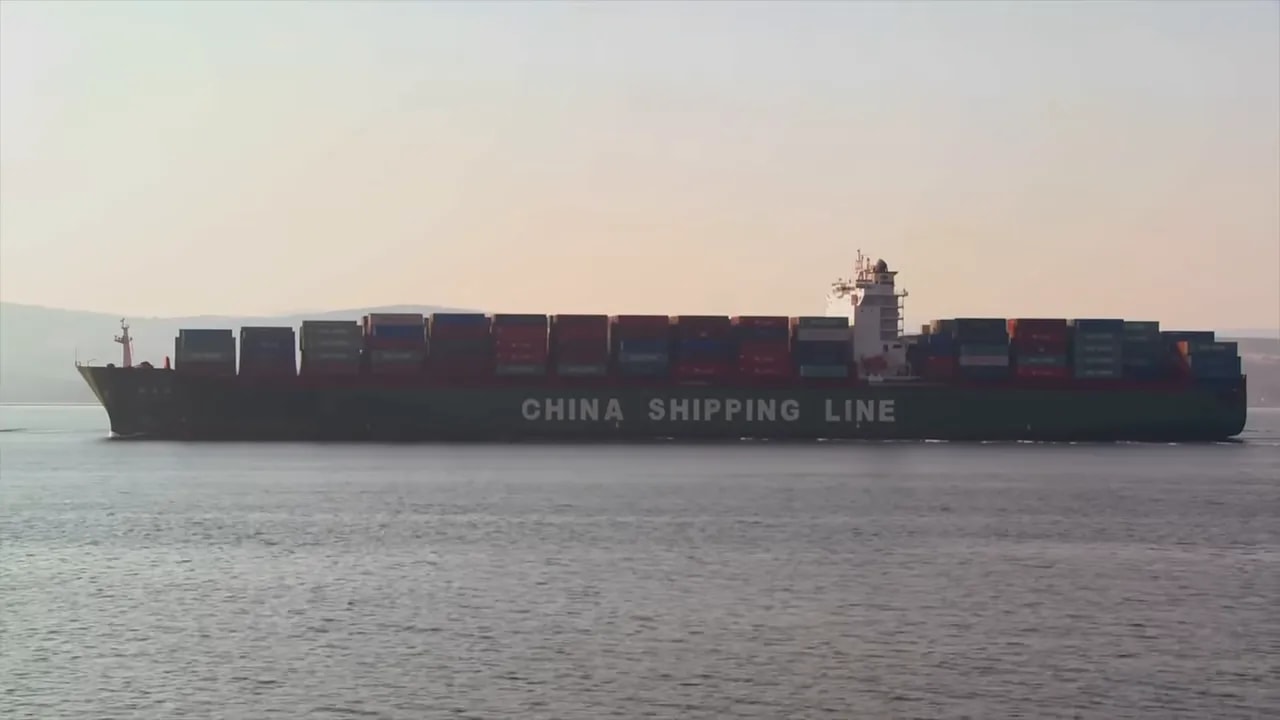
Evidence of adaptation: a “safe corridor” through Iranian waters
In one example of operational adjustment, a Chinese-owned cargo vessel navigated a newly established “safe corridor” through Iranian territorial waters, bypassing traditional shipping routes.
This matters for two reasons:
- It shows how companies are working within the new risk environment rather than assuming the old logistics pattern will return.
- It signals that supply chain continuity is being treated as a strategic priority even when geopolitical conditions worsen.
China’s balancing act: diplomacy without confrontation
China’s approach has complexity. Publicly, Beijing urges peace and negotiations. Privately, some Chinese analysts appear increasingly confident in the resilience of the Iranian regime, even while acknowledging pressure from domestic and economic challenges in Tehran.
That dual assessment reflects a pragmatic framework:
- Hope for a quick resolution because stability would reduce energy and shipping costs.
- Prepare for a prolonged conflict scenario to protect long-term strategic interests in the Middle East.
Beijing is also trying to avoid direct confrontation with the United States while keeping constructive channels with Iran open. The aim is to be seen as a responsible actor, but also to protect core national priorities.
Uncertainty remains around “behind-the-scenes talks”
The timing of Wang Yi’s call is notable because it followed closely on public statements suggesting U.S.-Iran discussions might be underway. However, there is no confirmed clarity. Iran has denied negotiations are happening, and other regional players have floated mediation roles, underscoring a fragmented diplomatic landscape.
So the question is not whether China wants negotiations. The question is whether parties on the ground are willing to shift from confrontation to compromise.
Hong Kong Arrests: Article 23 Enforcement Expands to Publishing
While the Middle East story highlights how external shocks affect China’s strategic calculus, Hong Kong shows how internal security priorities are tightening. This week, Hong Kong authorities arrested an independent bookseller, Pong Yat-Ming, and three staff members over alleged sales of “seditious publications.”
The case is framed as another sign that the city’s national security framework is being actively enforced, particularly in areas related to publishing and the circulation of politically sensitive material.
What authorities say happened
According to local reporting, national security police detained one man and three women on suspicion of knowingly selling publications with “seditious” intent, an offense under the Safeguarding National Security Ordinance, also known as Article 23.
Police reportedly raided Pong’s bookshop and seized a number of titles.
Why this case is symbolically important
Among the publications cited was “The Troublemaker,” a 2024 biography of jailed media tycoon Jimmy Lai, written by Mark Clifford. The biography’s focus on a central pro-democracy figure makes it politically sensitive in the context of Hong Kong’s security enforcement environment.
From a policy perspective, the arrest signals that enforcement is not limited to high-profile protests or overt political activity. It extends into the information ecosystem itself, including:
- Book retail and distribution
- Publishing content with political framing
- How authorities interpret “seditious intent”
Hong Kong Wealth Comeback: Money Returns Despite Crackdowns
Political tightening does not erase economic incentives. In fact, the most striking contrast in this set of China Update News developments is how quickly Hong Kong’s wealth sector appears to be re-accelerating.
Competition among global banks for Hong Kong’s roughly $1 trillion private wealth market is intensifying. Several major institutions are expanding their private banking teams and planning to hire hundreds of relationship managers.
Hiring signals and pay competition
Recruitment data suggests a talent shortage. Top candidates are reportedly commanding pay increases of up to 25%, reflecting that demand is outpacing supply.
This hiring surge follows a rebound in Hong Kong’s wealth sector after multiple disruptions: the protest period, pandemic-era impacts, and national security law-driven outflows.
More recently, renewed capital inflows, a revival in IPO activity, and increased trading among high-net-worth clients have improved the city’s appeal.
Where the capital is coming from
A pipeline of more than 300 companies preparing to list is expected to further support wealth creation. But the composition of capital is also important. Geopolitical instability in the Middle East and regulatory tightening in Singapore have redirected capital toward Hong Kong, particularly from mainland China.
That helps explain hiring strategies. Banks are prioritizing Mandarin-speaking advisers to serve a growing base of mainland clients, not just international wealth.
In other words, Hong Kong’s comeback is not purely a global investor story. It is increasingly a China-connected capital story.
Japan-China Relations: Embassy Incident Raises the Temperature
The final segment of China Update News focuses on security tensions between Japan and China, highlighting how incidents on the ground can quickly feed into broader narratives about national direction and strategic posture.
Chinese officials say a man claiming to be an active member of Japan’s Self-Defense Forces scaled a wall of the Chinese embassy in Tokyo and threatened to kill diplomatic personnel, invoking “in the name of God.”
Beijing described the incident as “extremely egregious,” saying it posed a serious threat to the safety of diplomats and the security of Chinese facilities. Chinese officials logged a formal protest and demanded:
- a full investigation
- accountability for those involved
- assurances the incident would not be repeated

Japan’s response: cautious while information remains unclear
Japan’s initial reaction has been cautious. Officials from Japan’s Ground Self-Defense Force said they were gathering information, while the foreign and defense ministries had not provided detailed public comment at the time of reporting.
Local police also declined to confirm specifics, leaving uncertainty regarding the suspect’s identity and motivations.
That uncertainty does not prevent Beijing from drawing broader conclusions. It also does not prevent the incident from changing the diplomatic tone immediately.
Beijing’s framing: far-right ideologies and neo-militarism
Beyond the immediate security implications, Chinese officials used the incident to reinforce a larger narrative about Japan’s political trajectory. The language pointed to the “rampant spread of far-right ideologies” and the “resurgence of neo-militarism,” linking the episode to long-standing disputes over history and Taiwan.
This approach matters because it is designed to resonate beyond bilateral relations. It can influence how other Asian powers interpret Japan’s security posture, and it can shape regional perceptions of who is escalating and why.
At the same time, Beijing’s framing is politically charged. Chinese state media and officials have historically argued that violence and nationalism-driven episodes in China are isolated incidents rather than part of a broader trend. That contrast in narrative styles tends to harden mistrust on all sides.
A Broader Shift: From Partnership Talk to “Managed Rivalry”
This embassy incident arrives amid a backdrop of escalating tensions since late 2025, including debate over Japan’s role in a potential Taiwan contingency.
Chinese officials point to remarks by Japan’s prime minister suggesting Japan could become militarily involved, describing it as a departure from Tokyo’s traditionally cautious stance. Japan’s current administration pushed back, arguing this reflects the restatement of a long-held policy position.
Meanwhile, Beijing’s response has included diplomatic pressure and economic measures, including blacklisting Japanese companies and tightening scrutiny on trade flows. Those steps have been presented as part of a broader campaign to reduce Japanese strategic momentum.
Japan adjusts language in its own diplomatic blueprint
Another sign of the relationship hardening is how Japan is recalibrating its formal diplomatic posture. A draft of Japan’s 2026 diplomatic blueprint reportedly downgrades how it describes China.
Specifically, the draft reportedly shifts language from “one of Japan’s most important bilateral relations” to “an important neighbor.”
Even if the blueprint keeps wording about a “mutually beneficial relationship based on common strategic interests,” the tonal shift is significant.
It signals a more guarded, interest-driven framework for engagement, reflecting growing mistrust.
Security competition over economic interdependence
The blueprint draft also accuses China of escalating coercive behavior, citing incidents such as Chinese military aircraft targeting Japanese planes and radar activity, alongside tighter controls on exports of dual-use goods to Japan.
All of this points toward a relationship increasingly defined by security competition rather than economic interdependence.
What to Watch Next
The developments across Iran, Hong Kong, and Japan-China relations point to a common lesson. When geopolitical stress increases, governments do not rely on slogans. They rely on logistics, law enforcement tools, and strategic framing.
- In the Middle East: watch whether negotiations move from rhetoric to credible steps that reduce shipping and price risks around Hormuz.
- In Hong Kong: watch how broadly authorities interpret “seditious intent” and whether enforcement extends further into cultural and publishing spaces.
- In Japan-China relations: watch how incidents like the embassy threat are investigated and whether diplomatic language continues to shift toward “managed rivalry.”
FAQ
Why is China pushing for negotiations in the Iran conflict?
China’s push is closely linked to energy and shipping risk. Disruptions around the Strait of Hormuz can quickly raise costs and constrain supply chains. Beijing is also trying to reduce the chance of escalation that would worsen regional instability.
What does the Hong Kong arrest case under Article 23 suggest?
It suggests enforcement under Hong Kong’s national security framework is expanding beyond protests and into publishing and distribution. Authorities are treating certain books and their sales as potentially “seditious” under the Safeguarding National Security Ordinance.
How is Hong Kong’s wealth sector rebounding despite political crackdowns?
Bank hiring and wealth management expansion indicate renewed capital inflows, stronger IPO activity, and increased trading among high-net-worth clients. A significant share of that momentum appears to come from mainland Chinese capital.
What is the significance of the embassy incident in Tokyo?
Beyond immediate security concerns, it is being used to reinforce broader narratives about Japan’s political trajectory and security posture. It also contributes to already deteriorating relations, with formal diplomatic language reportedly shifting toward a more guarded stance.
What does “managed rivalry” mean in the Japan-China context?
It describes a relationship where direct partnership framing gives way to structured competition. Engagement continues, but it is increasingly shaped by security concerns, political signaling, and deepening strategic suspicion rather than economic interdependence.