China Update News covers how major geopolitical, economic, and industrial trends are colliding at once. This week’s themes connect across regions: a more flexible China posture toward Taiwan, intelligence warnings about possible Chinese arms support to Iran, strategic exposure created by China’s massive Middle East investment footprint, and a domestic demand slowdown that is reshaping China’s auto sector.

Table of Contents
- 1) China signals “goodwill” to Taiwan while keeping leverage
- 2) U.S. intelligence warns: possible China support for portable air defenses to Iran
- 3) China’s Middle East bet: exposure grows as investments approach $270 billion
- 4) China’s auto market: weak end to 2026 and a structural EV slowdown
- What to watch next across these developments
- FAQ
1) China signals “goodwill” to Taiwan while keeping leverage
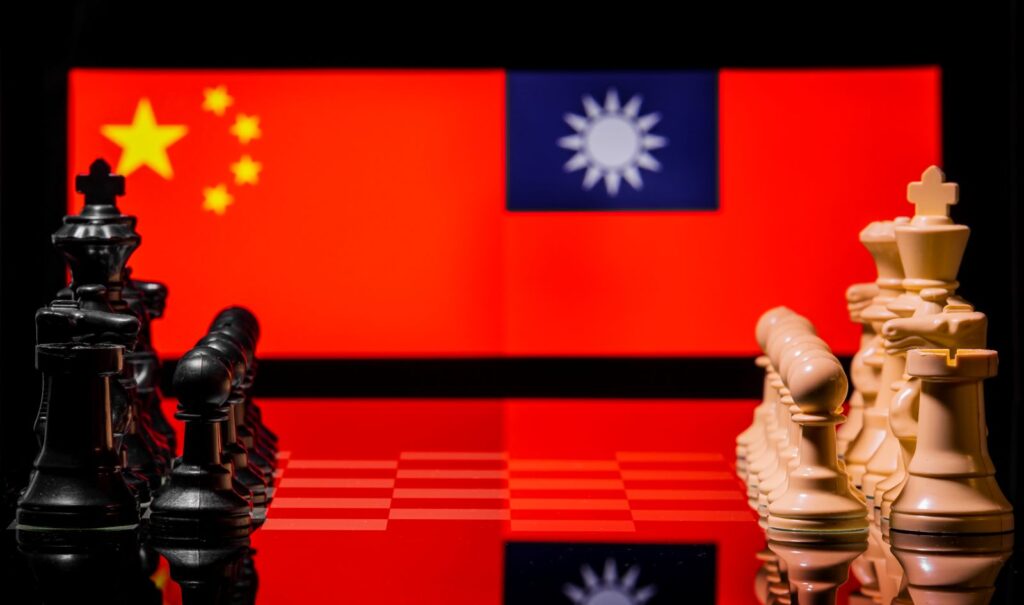
China announced a set of measures intended to ease tensions with Taiwan after a high-profile meeting between Xi Jinping and Taiwan’s opposition leader, Cheng or Zheng Li Wen (as referenced in the coverage). The package focuses on economic facilitation, investment encouragement, and incremental resumption of travel.
What China is offering
- Facilitating imports of Taiwanese agricultural and fishery products into the mainland.
- Encouraging investment into the mainland, implying more room for cross-strait business activity.
- Promoting gradual resumption of cross-strait travel, framed as a step-by-step normalization rather than immediate full reopening.
- Proposing a regular communication mechanism with the KMT, signaling that Beijing would prefer engagement with Taiwan’s opposition rather than only with the ruling administration.
The overall pattern is often summarized as “small carrots, big sticks.” Even as Beijing offers economic incentives, official cross-strait relations remain “frozen” in the sense that formal official channels are still limited, and broader political and military pressure continues.
Taipei’s cautious response
Taipei responded carefully. Officials warned that Beijing’s incentives could be withdrawn at any time, describing them as a mechanism of pressure rather than a stable goodwill measure. The response also emphasized that any formal dialogue must respect Taiwan’s laws and its democratic system.
Another interpretation raised in the analysis is that Beijing may be attempting to build influence by backing a party that is likely to be more favorable to closer engagement with China than the current administration.
2) U.S. intelligence warns: possible China support for portable air defenses to Iran
Another major development involves the Middle East and potential military escalation. Recent U.S. intelligence assessments suggest China may be preparing to supply Iran with portable air defense systems within weeks.
What type of weapons are being discussed?
The systems described are MANPADS (man-portable air defense systems), specifically shoulder-fired surface-to-air missiles (SAMs) designed for mobility and concealment. They target low-flying aircraft, which can make them particularly consequential in conflicts where aircraft operate at lower altitudes or during tactical phases.
Concerns about proliferation are longstanding in Washington because such systems represent an asymmetric threat. During a recent conflict, similar systems were believed to have been used against U.S. aircraft, illustrating potential battlefield impact even when forces are not directly aligned.
China’s denial and the diplomatic risk
China’s embassy spokesperson in Washington strongly denied the allegations, calling them “untrue” and stating that China has not provided weapons to any party in the conflict.
If confirmed, however, the reported transfer would represent a notable shift. The framing in the analysis is that Beijing could move from being a diplomatic broker to taking a more direct policy role, even if it remains deniable.
Why timing matters
The timing is especially sensitive because U.S. President Donald Trump was expected to meet Xi Jinping in the coming weeks. Meanwhile, the Iran-U.S. conflict was ongoing, with the analysis noting that perceptions of Chinese military support to Tehran could undermine negotiations and potentially trigger retaliation from Washington.
Strategic balancing: economic ties versus security calculations
China’s position is complex. The analysis highlights a “balancing act” in which Beijing has deep economic ties with Iran, including Iran-related oil purchases, while also seeking stable relations with the U.S. and the broader international community.
Defensive weapons could be positioned by Beijing as support for security needs rather than offensive action. The analysis describes this as an attempt to support Iran while maintaining plausible deniability. At the same time, it could also allow China to inflict “some pain” on the U.S. by keeping Washington focused on Middle East challenges.
Implications for Iran and for future air operations
For Iran, the reported move could strengthen its air defenses during a ceasefire window after sustained military pressure. Analysts cited in the coverage also note that such systems would complicate future air operations by the U.S. or Israel, raising the cost and risk of renewed conflict.
More broadly, the situation is presented as part of the increasing “tanglement” of major powers in regional conflicts, where even limited or indirect military support can shift strategic balances and increase the risk of miscalculation.
3) China’s Middle East bet: exposure grows as investments approach $270 billion
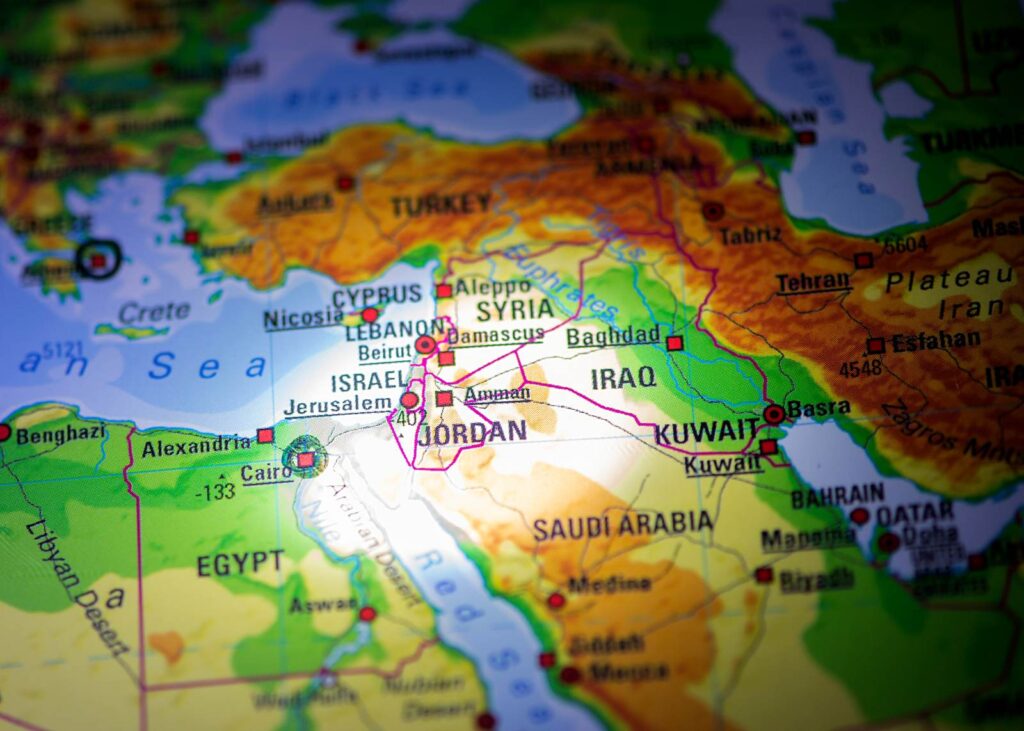
Beyond military risk, China faces a separate strategic dilemma tied to economics. Data cited in the analysis, drawn from U.S.-based Bloomberg, frames China’s Middle East engagement as a $270 billion bet.
How China built influence through capital and construction
Over the past decade, Chinese economic engagement in the Middle East deepened rapidly. After the pandemic and a domestic slowdown, Chinese firms reportedly turned outward and found opportunities in Gulf states seeking to diversify away from oil.
These investments were aligned with sectors such as:
- Renewable energy
- Infrastructure
- Tourism
This alignment became a central pillar of China’s Belt and Road Initiative. The analysis states that total investments in construction projects have exceeded $270 billion.
Why the war threatens China’s financial and human interests
Economic growth and project expansion now collide with the risks of active conflict. The analysis emphasizes that war threatens not only regional stability but also the safety of Chinese assets, workers, and supply chains.
It also notes that at least three Chinese-backed infrastructure projects have already been targeted, while more than a dozen more sit in high-risk zones. Thousands of Chinese nationals remain in the region, increasing the human and financial stakes.
Energy dependence makes neutrality harder
The conflict also intersects with energy dependence. China remains a major buyer of Iranian oil, while also maintaining extensive commercial ties with Saudi Arabia and the United Arab Emirates.
This creates a delicate balancing requirement: Beijing must support Iran diplomatically while avoiding actions that alienate Gulf partners or jeopardize broader economic cooperation.
Limited leverage: “neutral partner” image under stress
One of China’s advantages had been its image as a neutral economic actor. The analysis recalls that China helped broker a 2023 agreement between Iran and the United States with Saudi Arabia elevated diplomatically. However, renewed violence exposed the limits of that influence.
In the renewed conflict, China’s role is described as largely confined to calls for de-escalation. In other words, growing economic presence does not necessarily translate into security influence.
Short-term risks and potential long-term opportunities
Economically, disruptions to shipping lanes, energy infrastructure, and investor confidence could reduce the profitability of projects and delay future investments. The analysis also suggests that the Gulf, once seen as a safer destination for large-scale capital, is increasingly evaluated through a geopolitical uncertainty lens.
That said, there may be long-term opportunities if the conflict subsides. Possible upside includes lower asset valuations and reconstruction-driven demand, which could allow Chinese firms to expand their footprint again. Another potential factor mentioned is the increasing use of the yuan in regional trade, especially energy transactions, which could strengthen China’s financial influence.
These are presented as “big ifs.” The key takeaway is that economic power does not automatically produce geopolitical control. China’s priority appears to be protecting investments and partnerships, even if it means maintaining a cautious and reactive posture.
4) China’s auto market: weak end to 2026 and a structural EV slowdown
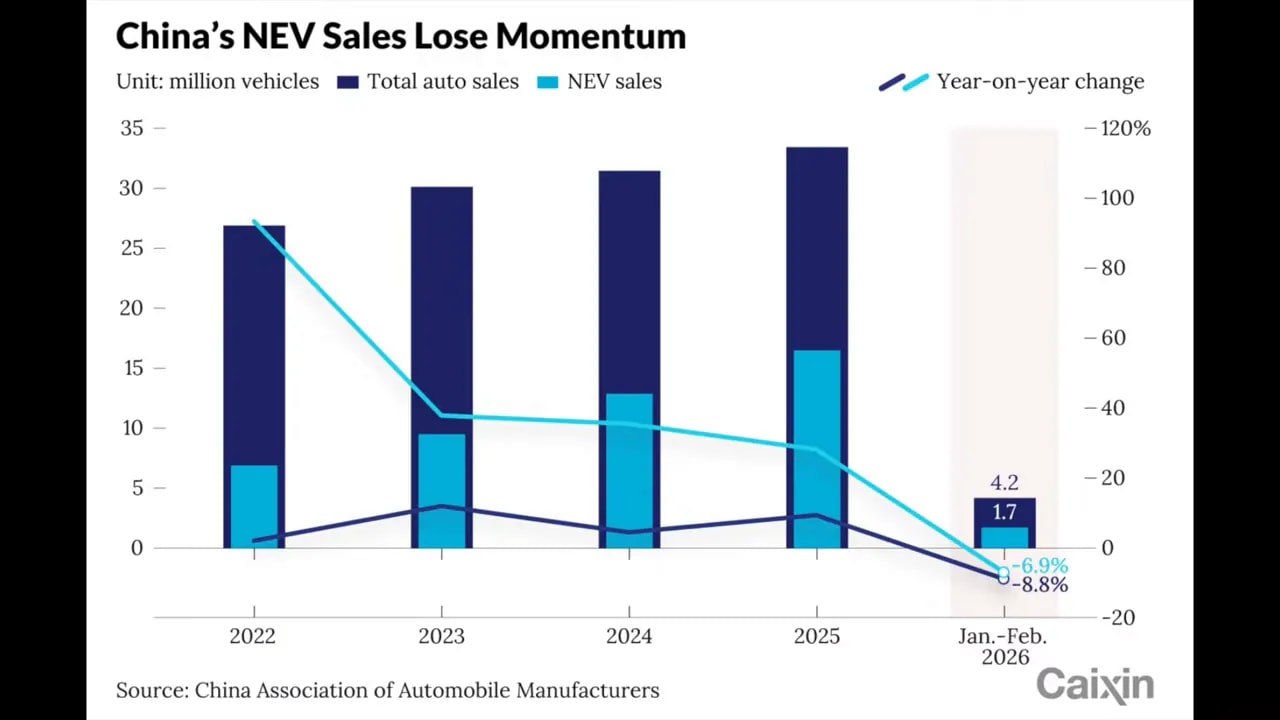
The final major section shifts from geopolitics to domestic economics. China’s auto sector is described as ending 2026 on a weaker footing, with sales falling sharply and especially hard hit in the electric vehicle (EV) segment.
Sales declines and the subsidy effect
According to the China Association of Automotive Manufacturers, domestic vehicle sales dropped 23.1% year on year in the first two months, reaching about 2.8 million units.
EV performance fell even more:
- New energy vehicles (NEVs): down 27.5% year on year to roughly 1.1 million units
The slowdown is linked to a shift in subsidy policy. Beijing scaled back generous incentives that previously fueled rapid EV adoption.
The analysis also points to policy changes including reduced rebates and the introduction of a 5% purchase tax on new energy vehicles. These changes raised upfront costs, particularly affecting lower-priced models and price-sensitive consumers.
A structural turning point
The coverage frames the policy change as a structural shift. For more than a decade, subsidies and tax exemptions supported the rapid expansion of China’s EV boom. With those supports reduced, the market’s demand dynamics appear less robust.
As a result, the competitive landscape is reshaping. The analysis notes that:
- BYD (previously dominant) has lost its sales crown.
- Traditional automakers like SAIC Motor have regained ground.
- Industry sentiment has shifted from optimism to caution, with automakers reassessing growth strategies.
Exports as an offset and the push overseas
Even with domestic demand softening, exports have emerged as a key offset. Overseas shipments reportedly surged 48.4% year on year, supported by global demand for Chinese EVs.
This has accelerated the push for international expansion, including investments in overseas production, supply chains, and sales networks. At home, automakers are also responding with promotional activity such as financing incentives and discounts, alongside product shifts toward higher margin vehicles like larger SUVs.
Competition increasingly depends on technology
As subsidies become less central, technological innovation and differentiation become more important. The analysis notes that battery performance and charging infrastructure are now central battlegrounds for Chinese makers trying to maintain global competitiveness.
The export dilemma under tariffs and barriers
China’s automakers face a strategic dilemma. They rely on international markets more than ever at the same time that trading partners push back through tariffs and other barriers. This occurs as domestic demand weakens, increasing the pressure to grow overseas even under tougher trade conditions.
What to watch next across these developments
Though these topics span different domains, they share a common theme: uncertainty is rising, and leverage is shifting.
- Taiwan policy appears to combine incentives with ongoing political and military pressure. The willingness to keep dialogue channels with specific political factions may shape near-term cross-strait economics.
- Middle East risks may intensify if reports of portable air defense transfers are substantiated. The timing relative to potential high-level U.S.-China engagement increases diplomatic volatility.
- Middle East investments highlight the limits of economic influence in wartime. The safety of assets, workers, and supply chains may become a decisive constraint.
- China’s auto sector illustrates how policy changes can quickly alter demand and competitive structure, pushing firms toward exports and technology-led differentiation amid tariff uncertainty.
FAQ
What measures did China announce to ease tensions with Taiwan?
China announced steps focused on facilitating imports of Taiwanese agricultural and fishery products, encouraging investment into the mainland, promoting gradual resumption of cross-strait travel, and proposing a regular communication mechanism with the KMT.
Why is Taipei described as cautious about China’s Taiwan incentives?
Taipei officials warned that incentives could be withdrawn at any time and characterized them as pressure. They also emphasized that any formal dialogue must respect Taiwan’s laws and democratic system.
What did U.S. intelligence suggest China might provide to Iran?
The analysis states that U.S. intelligence assessments suggest China may be preparing to supply portable air defense systems, described as MANPADS, within weeks.
How does China’s Middle East investment exposure relate to the Iran-related risks?
The coverage links the potential escalation of regional conflict to threats against Chinese assets, workers, and supply chains. It also notes that China depends on Iranian oil while maintaining deep commercial ties with Gulf partners, creating difficult balancing pressures.
What happened to China’s auto market and EV sales?
Domestic vehicle sales reportedly fell 23.1% year on year to about 2.8 million units in the first two months, and new energy vehicle sales fell 27.5% to roughly 1.1 million units. The slowdown was linked to reduced government incentives and higher upfront costs.
China Update News shows how policy changes, security risks, and investment exposure can reinforce one another. The next phase will likely depend on whether China can manage escalation pressures in the Middle East while sustaining confidence in its broader economic footprint, and whether its automakers can offset domestic demand weakness with exports and technology.