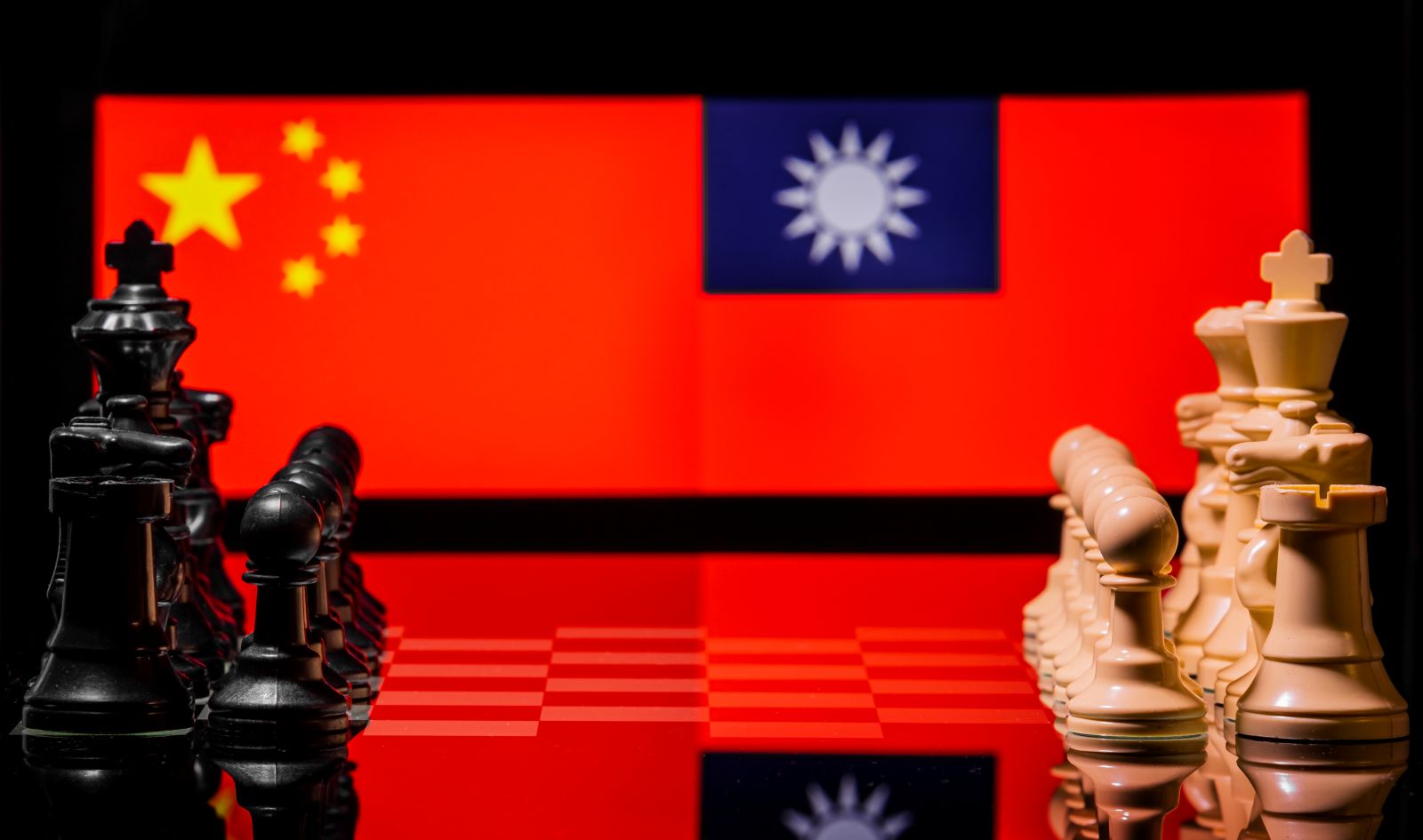

China Update News this week centers on four developments that together offer a useful snapshot of China’s current trajectory: a headline 5% first quarter growth figure, reports that Iran acquired a Chinese-built surveillance satellite, a high-level visit by Vietnam’s top leader to Beijing, and a striking statement of how China’s national security elite view the world.
Each issue points to the same broader reality. China is trying to sustain growth under pressure, expand its influence through technology and regional diplomacy, and frame a turbulent international environment as a direct challenge to Communist Party rule and national security. Read together, these developments reveal not just isolated events, but the strategic logic increasingly shaping Beijing’s decisions.
Table of Contents
- China’s Q1 Economy: Stronger Headline Growth, Weak Domestic Demand
- Reports of a Chinese-Built Satellite in Iranian Military Use
- Vietnam in Beijing: Partnership, Caution, and Strategic Balance
- Beijing’s Security Worldview: A System Under Siege
- What These Developments Suggest About China’s Direction
- FAQ
- Conclusion
China’s Q1 Economy: Stronger Headline Growth, Weak Domestic Demand
China officially reported that gross domestic product grew 5% year on year in the first quarter of 2026. That was above economist expectations of 4.8% and marked the fastest pace in three quarters. On a quarter to quarter basis, growth came in at 1.3%, which if sustained would put the economy on track for slightly more than 5% annual expansion.
Those numbers immediately drew skepticism. Independent analysts and research groups have long argued that China’s official growth figures should be treated cautiously. Some respected outside observers responded with open sarcasm, while others maintained that real growth may be significantly lower and structurally unhealthy.
Even so, the official data still matter. They help identify which parts of the economy Beijing wants to emphasize and which pressures remain difficult to hide.
What appears to be supporting growth
The strongest support came from industrial activity and exports. Industrial output rose 5.7% in March, beating expectations. Manufacturing remains a near-term anchor for the economy, especially in sectors where overseas demand is still robust.
The standout export-linked industries mentioned were:
- Electric vehicles
- Lithium batteries
- Shipbuilding
These sectors align closely with Beijing’s industrial policy priorities. They also reflect China’s strategy of offsetting weak domestic demand by scaling up manufacturing capacity and selling into foreign markets.
The imbalance remains the main story
The problem is that headline growth still sits on a very uneven foundation. Retail sales, often used as a rough indicator of consumer demand, rose just 1.7% in March. That was slower than earlier in the year and below forecasts.
This matters because China has been trying for years to rebalance away from investment- and export-heavy growth toward stronger household consumption. The latest figures suggest that shift remains elusive.
Several forces continue to weigh on consumption:
- A prolonged property downturn
- Falling household confidence
- Weak income expectations
- Persistent caution among private businesses
Real estate investment fell 11.2%, and housing prices in many places remain under pressure. Since property has long been the main store of wealth for many Chinese households, declining real estate conditions have an outsized effect on confidence and spending behavior.
Investment is still doing the heavy lifting
Fixed asset investment edged lower, which suggests private sector sentiment remains fragile despite strong government-backed infrastructure spending. This gets to the core criticism of China’s current growth model: the state can still push investment volumes higher, but it cannot easily guarantee that such investment is productive.
That distinction is crucial. Growth driven by debt-funded, state-directed spending can stabilize headline numbers in the short run, but it also risks worsening long-term inefficiencies.
As one Peking University finance professor observed, Beijing may no longer fully control the quality of investment, but it can still control the quantity, and increase it by whatever amount is needed to hit the annual growth target.
The trade-off is rising debt. If growth is sustained mainly by low-productivity investment, then the economy may look stable on paper while underlying balance sheet pressures continue to build.
Deflationary pressure is not gone
Another important signal is that pricing remains subdued. Producer prices turned positive in March for the first time in more than three years, which may suggest some recovery in industrial pricing power. But broader deflationary pressure still appears entrenched.
The GDP deflator fell for a 12th consecutive quarter, indicating weak demand across the economy. This is a significant warning sign. Persistent deflation makes debt burdens heavier in real terms, discourages investment, and can reinforce consumer hesitation if households expect lower prices later.
There are also signs of external strain. Rising input costs are beginning to squeeze some manufacturers, especially those reliant on plastics and chemicals. At the same time, imports have surged in areas such as semiconductors, partly tied to China’s effort to expand artificial intelligence and data center capacity. That is narrowing the trade surplus in some areas even while exports remain a key support.
The broad takeaway is straightforward: China’s economy may be growing faster than expected on the surface, but the composition of that growth remains deeply unbalanced.
Reports of a Chinese-Built Satellite in Iranian Military Use
A second major story in China Update News involves reports that Iran obtained a Chinese-built surveillance satellite that materially improved its military intelligence capabilities during the recent conflict in the Middle East.
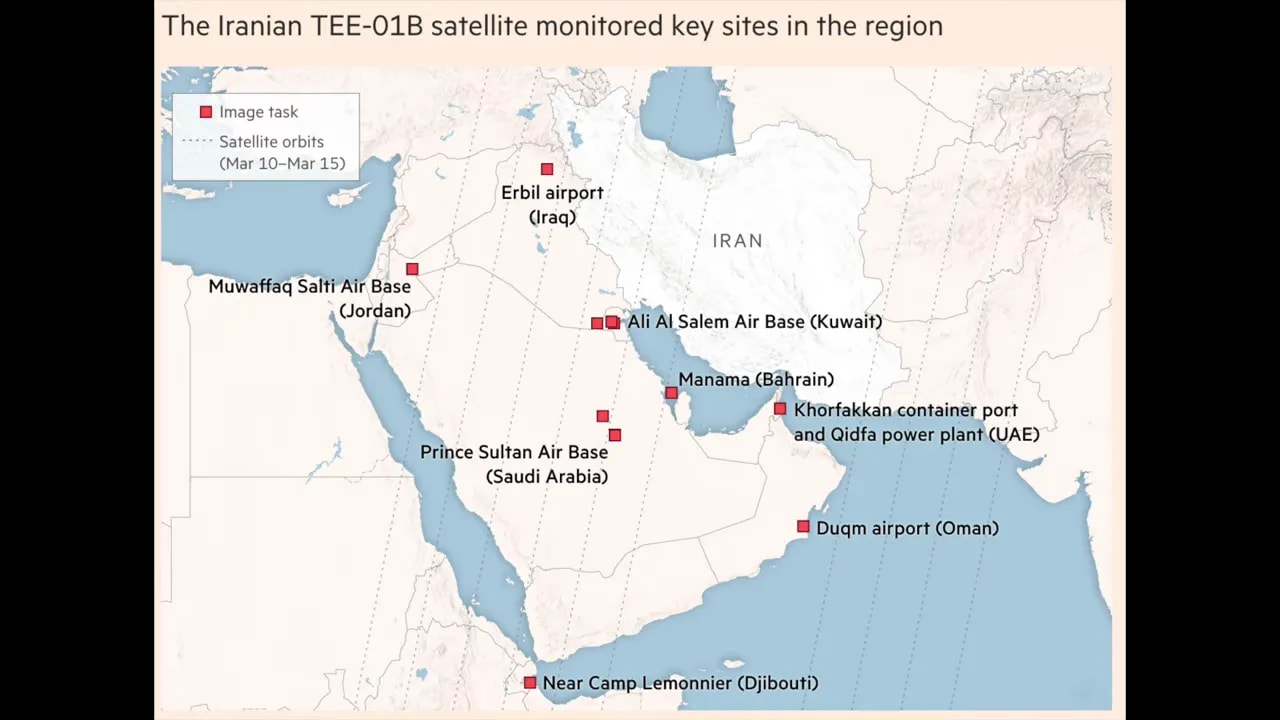
According to a Financial Times investigation cited in the report, the satellite, identified as TEE 01B, was acquired by the Islamic Revolutionary Guard Corps Aerospace Force in late 2024 after being launched from China.
Why this report matters
The concern is not simply that Iran gained another satellite. The issue is that this platform reportedly offered a meaningful upgrade in imaging quality and battlefield utility.
The satellite was said to provide imagery at roughly 0.5 meter resolution, allowing for relatively precise identification of:
- Aircraft
- Vehicles
- Infrastructure
- Military facilities
That would represent a major leap over Iran’s earlier satellite capabilities. If accurate, it would improve Tehran’s ability to monitor regional military positions and support strike planning.
Reported links to attacks on US sites
The report stated that leaked documents and orbital data suggest the satellite was used to observe key US military sites across the Middle East during the recent war. Locations reportedly surveilled included bases in:
- Saudi Arabia
- Jordan
- Bahrain
- Iraq
Some imaging activity reportedly coincided with Iranian-linked drone and missile strikes. One example highlighted was Prince Sultan Air Base, where imagery timing reportedly aligned with confirmed damage to US aircraft.
If those details are correct, the episode would underline how commercial or quasi-commercial space assets can become operationally relevant in conflict very quickly.
The “in-orbit delivery” model
The satellite was reportedly built by Chinese company EarthEye and transferred to Iran through an in-orbit delivery arrangement, meaning ownership changed after launch. Iran also reportedly gained access to ground infrastructure operated by a Beijing-based firm, allowing remote control of the satellite.
This setup matters for strategic reasons. Access to foreign-based ground stations can make such systems less vulnerable than purely domestic facilities, since those control points are harder for an adversary to disable directly.
The broader strategic implication
The larger issue is the increasingly blurred boundary between civilian and military use in China’s commercial space sector. Beijing has strongly denied the report, but analysts cited in the discussion pointed to links between the involved firms and state-backed institutions.
That ambiguity is becoming a recurring feature of geopolitical competition. Technologies once treated as commercial infrastructure are now embedded in military planning. High-resolution satellite imagery, dual-use drones, data platforms, and logistics software all sit in this gray zone.
For Washington and its allies, Iran’s reported access to such capabilities would represent more than a technical upgrade. It would suggest a shift in battlefield awareness and strike coordination, especially when combined with missile forces, drones, and human intelligence networks.
Notably, the US response has so far appeared relatively muted, at least publicly. Even with these reports circulating, President Donald Trump’s planned visit to Beijing next month was described as unaffected. That may indicate either caution, competing priorities, or uncertainty about how much can be proven publicly.
Vietnam in Beijing: Partnership, Caution, and Strategic Balance
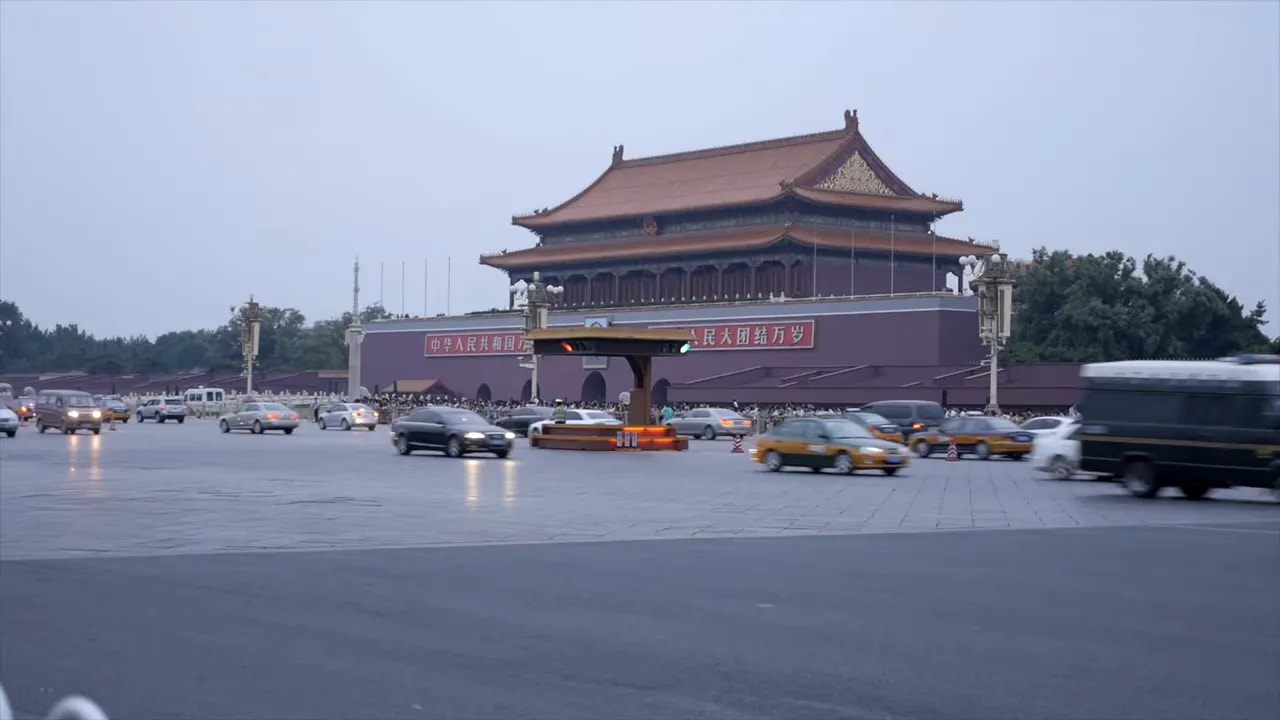
Vietnam’s top leader, To Lam, visited Beijing this week in a trip that underscored the growing weight of China-Vietnam ties even as both countries operate in an increasingly competitive regional environment.
The visit included meetings with several of China’s most senior leaders, including Xi Jinping, Wang Huning, Li Qiang, and Zhao Leji. It also produced a broad range of agreements covering infrastructure, energy, telecommunications, aviation, and urban transport.
Economic cooperation is widening
One notable area under discussion was a potential aircraft deal involving VietJet and China’s state-backed plane maker COMAC. The arrangement could involve purchases or leasing of Chinese-made aircraft.
Additional cooperation is expected in metro construction in Ho Chi Minh City, fitting China’s broader effort to export infrastructure capacity and deepen its economic role across Southeast Asia.
For Beijing, such agreements serve multiple purposes:
- They expand Chinese industrial and infrastructure influence
- They create commercial outlets for Chinese firms
- They reinforce regional dependence on Chinese supply chains and financing
Beijing’s message was ideological as well as economic
The political messaging from Xi Jinping was unusually direct. He framed defense of the socialist system and preservation of Communist Party rule as the greatest shared strategic interest between China and Vietnam.
He also urged both countries to reform without changing direction and transform without changing color. That language was clearly about ideological continuity. It signaled that Beijing sees ties with Hanoi not only through trade and diplomacy, but through regime security and political alignment.
Xi also called for joint opposition to unilateralism and protectionism, an apparent reference to ongoing trade tensions with the United States.
To Lam, for his part, reaffirmed that relations with China remain Vietnam’s top priority. He also reiterated support for Beijing’s core political positions, including the one-China policy and Xi’s signature international initiatives.
But Vietnam is balancing, not aligning blindly
This is where the relationship becomes more interesting. Vietnam has strong reasons to cooperate with China, but it also has strong reasons to avoid overdependence.
Historically, Vietnam has viewed China as both a necessary partner and a potential threat. That duality remains in place today. Hanoi’s strategy is not simple alignment. It is managed proximity.
Several facts illustrate this balancing act:
- Vietnam is expanding security and political channels with China, including through a “3+3” dialogue on diplomacy, defense, and public security
- At the same time, Vietnam has moved aggressively to deepen trade ties with the United States
- It recently reached an early trade deal with the Trump administration despite Beijing’s objections
This approach makes strategic sense. The US market is much larger than China’s as an export destination for Vietnam, even though China remains critical as a source of imports and industrial inputs.
Vietnam is also benefiting from long-term shifts in manufacturing geography. As some lower-value manufacturing moves out of southern China, Vietnam has become an increasingly attractive destination. In that sense, Hanoi occupies a valuable middle position in the restructuring of Asian supply chains.
Southeast Asia’s bigger role in supply chains
The report also highlighted a related regional trend: China has sharply increased imports of semiconductor manufacturing equipment from countries such as Singapore and Malaysia. That reflects, at least in part, the expansion of US-linked production and tool supply in Southeast Asia.
Firms such as Lam Research, Applied Materials, and KLA have expanded their footprint in the region. One implication is that China may be gaining indirect access to critical manufacturing tools despite formal export restrictions.
This makes Southeast Asia more than a passive bystander. It is becoming a central arena where supply chain diversification, great power competition, sanctions policy, and industrial strategy all intersect.
Vietnam’s visit to Beijing should therefore be read in two ways at once: as a sign of deepening China-Vietnam political engagement, and as evidence that regional states are still carefully hedging between major powers.
Beijing’s Security Worldview: A System Under Siege
The final development may be the most revealing over the long term. For China’s National Security Day, State Security Minister Chen Yixin published an article in Qiushi, the Communist Party’s leading ideological journal. The article offers a window into how China’s security establishment interprets the international environment.

The tone is stark. The world is presented as increasingly dangerous, unstable, and openly hostile to China’s political system, territorial claims, overseas interests, and technological ambitions.
The key themes in Chen Yixin’s framework
Several themes stand out from the published remarks.
- Great power rivalry drives the global situation, and changes in the international balance of forces directly affect China’s domestic development.
- Emerging markets and developing countries are rising collectively, reshaping the global political and economic order.
- Some major powers are acting out of hegemonic thinking and strategic anxiety, using war, coercion, sanctions, and political manipulation.
- The world is growing more chaotic, with geopolitical conflicts and local wars undermining stability.
- China’s sovereignty and territorial integrity are under direct threat, especially regarding Taiwan.
- Economic issues are being weaponized, including trade, technology, strategic resources, energy, and financial systems.
- Ideological struggle remains central, with anti-China forces allegedly trying to westernize and split China.
- Technology competition is now close-quarters and existential, especially in areas such as artificial intelligence.
How Beijing links external pressure to internal control
This worldview matters because it connects foreign policy, domestic repression, economic planning, and ideological discipline into one framework.
Under this logic, sanctions are not just trade policy. Taiwan policy is not just diplomacy. Debate over Hong Kong, Xinjiang, or Tibet is not treated as criticism of governance. Instead, all of it becomes part of a single contest over regime survival and national rejuvenation.
That helps explain why China’s leadership often responds to outside pressure by tightening internal control rather than loosening it. If policymakers believe they are facing coordinated external efforts to weaken Communist Party rule, then domestic surveillance, censorship, industrial self-reliance, and security mobilization become rational responses within that system.
Technology is now treated as a battlefield
One of the most striking parts of Chen’s description concerns technology. He argues that competition in advanced technologies has entered the most intense, demanding, and critical period, describing it in near-military terms as close-quarters fighting to the death.
That wording is important. It shows how deeply China’s security elite now view technological development as inseparable from national security.
This perspective reinforces current priorities such as:
- Semiconductor self-sufficiency
- Artificial intelligence expansion
- Data center investment
- Control over strategic materials and supply chains
- Reduced dependence on foreign systems
In that sense, the earlier economic data and the satellite story connect back to the same security logic. Industrial policy, dual-use technology, and geopolitical competition are no longer separate categories in Beijing’s thinking.
What These Developments Suggest About China’s Direction
Taken together, these four stories point to a China that is trying to manage simultaneous pressures on several fronts.
Economically, Beijing still relies on industrial strength and state-directed investment to keep growth near target, even as consumption lags and debt concerns deepen.
Geopolitically, Chinese-linked technologies are increasingly surfacing in conflict-sensitive environments, raising questions about the military implications of commercial exports.
Regionally, China is working to tighten political and economic ties with neighbors such as Vietnam, even as those same neighbors hedge through broader engagement with the United States and other partners.
Ideologically, China’s security establishment appears convinced that the international system is entering a harsher and more adversarial phase, one in which economic competition, technological rivalry, and political struggle are merging.
That is the larger frame behind this cycle of China Update News. The common thread is not simply tension. It is integration. Economic management, diplomacy, technology policy, and state security are being fused more tightly than before.
FAQ
Why is China’s reported 5% growth figure being questioned?
The official number beat forecasts, but many independent analysts argue that China’s published GDP data often overstate underlying performance. The main concern is that growth appears heavily dependent on industrial output, exports, and state-led investment, while consumer demand, private sector confidence, and property activity remain weak.
What makes the reported Iran satellite case significant?
The reported significance lies in the satellite’s imaging resolution and possible operational use. If Iran gained access to a Chinese-built platform capable of roughly 0.5 meter resolution, it would markedly improve surveillance of military targets and support strike coordination across the region.
Why is Vietnam strengthening ties with China while also expanding ties with the United States?
Vietnam is pursuing a balancing strategy. China is geographically and economically indispensable, but Hanoi also wants to avoid overdependence and maintain strategic autonomy. Stronger trade links with the United States help diversify markets and reduce vulnerability.
What does Chen Yixin’s article reveal about Beijing’s worldview?
It shows that China’s security leadership sees the global environment as increasingly hostile and unstable. In this view, geopolitical conflict, sanctions, ideological pressure, and technology restrictions are all part of a broader struggle that directly threatens China’s sovereignty, development, and Communist Party rule.
Why does Southeast Asia matter so much in current China strategy?
Southeast Asia has become central to manufacturing shifts, export rerouting, semiconductor supply chains, and geopolitical competition. Countries such as Vietnam, Singapore, and Malaysia now occupy an increasingly important place in how China, the United States, and multinational firms organize production and technology flows.
Conclusion
The latest set of developments paints a picture of a country navigating growth challenges, strategic rivalry, and an increasingly securitized worldview. China’s official economic strength is still underpinned by real industrial capacity, but domestic weakness remains evident. Its commercial technologies are now entangled with military and geopolitical concerns. Its regional diplomacy is active but meets equally active balancing from its neighbors. And its national security leadership sees the world in increasingly zero-sum terms.
For anyone following China update news, the main lesson is that China’s domestic and external policies can no longer be understood in isolation. Growth targets, export controls, satellite sales, Vietnam diplomacy, and ideological warning signals all belong to the same strategic picture.
That picture is becoming sharper, and more consequential, by the month.