
China Update News this week centers on a sharp convergence of geopolitical stress and economic weakness. Beijing is trying to present itself as a force for stability as conflict in the Middle East disrupts energy markets, global shipping, and diplomatic alignments. At the same time, new Chinese trade data suggests that one of the country’s most important growth supports, exports, is losing speed just as import costs rise.
The combination matters. China remains deeply tied to global demand, global energy flows, and the broader international trading system. When war threatens a major energy choke point and Washington signals fresh tariffs or sanctions, the effects show up quickly in China’s external accounts, manufacturing costs, and policy messaging.
This article breaks down three major developments: Xi Jinping’s unusually blunt warning that the international order is falling into disorder, the latest signs of strain in China’s trade data, and the renewed escalation in US-China tensions ahead of a possible top-level summit.
Table of Contents
- Beijing’s message: the global order is under strain
- China’s trade data sends a warning signal
- Middle East conflict is now a direct China economic issue
- US-China tensions are rising again
- Public opinion is softening slightly, but rivalry still dominates
- What this means for China and the global economy
- FAQ
Beijing’s message: the global order is under strain
During talks in Beijing with Spanish Prime Minister Pedro Sanchez, Xi Jinping used some of his strongest recent language to describe the state of world affairs. He warned that the international order is “crumbling into disarray,” a phrase that signaled more than temporary instability. It conveyed Beijing’s view that the current system is facing deeper structural stress from war, trade confrontation, and shifting power balances.
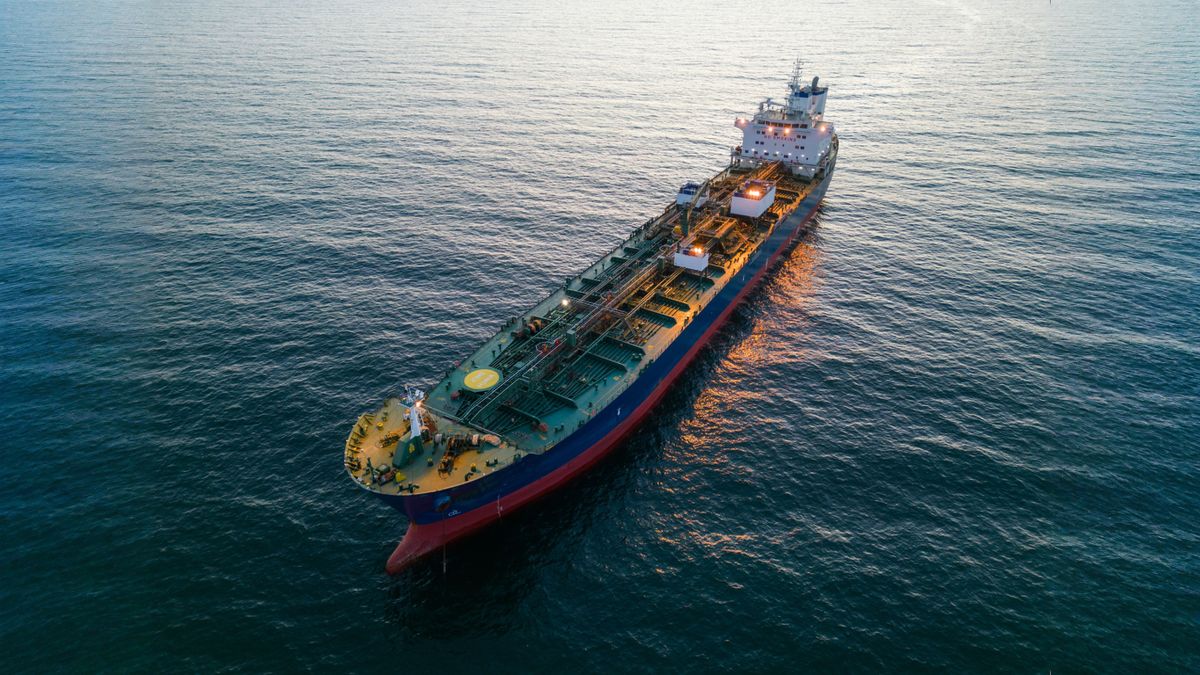
This was significant not only because of the wording, but because it came as the conflict involving Iran and the US-led blockade of the Strait of Hormuz intensified pressure on global trade. The Strait is one of the world’s most important energy choke points. Any serious disruption there affects oil flows, shipping costs, industrial input prices, and inflation expectations across multiple economies, including China.
Xi linked China’s position to the language of international law and order. In separate remarks during a meeting with the Crown Prince of Abu Dhabi, he said the world could not return to the “law of the jungle.” He also argued that respect for international rules cannot be selective, meaning they should not be used when convenient and discarded when inconvenient.
The criticism was not named directly in every instance, but the implication was clear. Beijing is using the current crisis to contrast its own diplomatic messaging with that of the United States. Chinese officials have criticized the US naval blockade as dangerous and irresponsible, arguing that it risks worsening instability in both the region and the global economy.
Why this language matters
China often presents itself as a defender of stability in periods of international turmoil. What was unusual here was the directness. Xi’s comments amounted to one of his clearest public responses yet to the widening regional conflict and its international repercussions.
There are several reasons Beijing has chosen this line:
- Diplomatic positioning: China wants to appear as a constructive actor in the Middle East, especially as supply shocks spread.
- Economic self-interest: China is highly exposed to imported energy and global shipping disruptions.
- Strategic messaging: Beijing sees value in portraying the Western-led order as weakened by inconsistency and coercion.
- European outreach: China is trying to deepen ties with receptive European governments as tensions with Washington rise.
Sanchez’s visit underlined that last point. Spain has emerged as one of the more China-friendly countries inside the European Union, advocating stronger China-EU cooperation even as skepticism remains high in other parts of the bloc. For Beijing, this matters. Building political and economic relationships within Europe can provide both diplomatic cover and practical leverage when relations with the United States become more adversarial.
Spain’s position does not represent the entire EU, and many European governments remain cautious or openly critical of deeper engagement with China. Still, repeated high-level meetings between Sanchez and Xi show that Beijing sees openings inside Europe and is determined to use them.
China’s trade data sends a warning signal
The second major development is economic. China’s March trade figures showed a mixed but increasingly concerning picture. On the surface, exports still grew year over year. But the pace of growth slowed sharply, while imports surged. That combination significantly narrowed China’s trade surplus.
Exports rose 2.5 percent in March from a year earlier, far below the nearly 40 percent growth recorded in February. Imports, by contrast, jumped about 28 percent, their fastest pace since late 2021. The result was a trade surplus of roughly $51 billion, the smallest in more than a year.
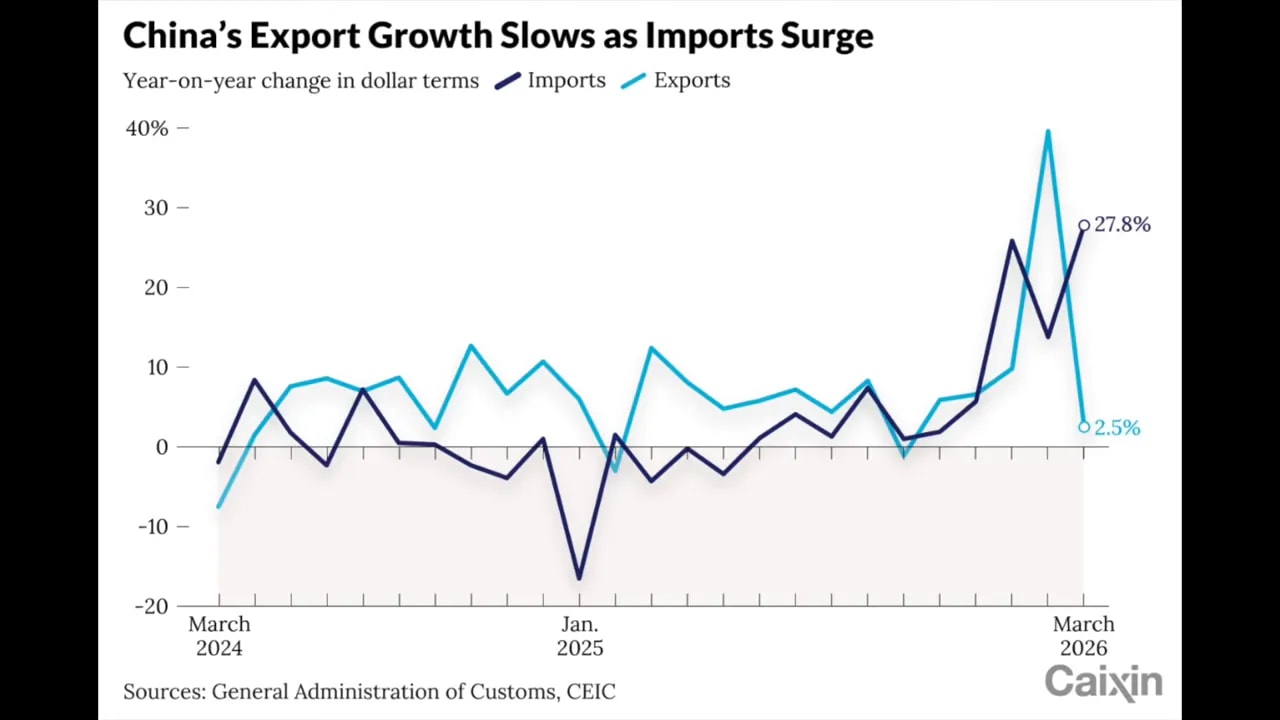
Part of this volatility can be explained by timing effects. The Lunar New Year can distort production and shipping schedules, shifting trade activity between February and March. There was also a high comparison base from the previous March, when exporters had rushed shipments ahead of US tariff measures.
But even after accounting for those factors, the data suggests that external shocks are beginning to weigh more heavily on China’s export model.
Why exports matter so much for China
China’s domestic demand has remained weak relative to the size of its industrial system. That means exports continue to play an outsized role in supporting growth, employment, and factory utilization. When export momentum fades, the broader economy becomes more vulnerable.
The latest figures matter because they imply that one of China’s last reliable growth drivers may be softening at the same time other pressures are building.
Those pressures include:
- Higher energy-related input costs caused by disruption in the Strait of Hormuz
- Rising prices for industrial materials such as plastics and fibers
- Squeezed margins for export-oriented manufacturers
- Weak domestic demand that limits China’s ability to offset external softness at home
In other words, even if foreign orders do not collapse, exporters may still struggle because the cost of producing goods is rising faster than many firms can pass on to customers.
Imports tell a different story
The surge in imports was not necessarily a sign of broad-based consumer strength. Much of it reflected strong demand for high-tech components, especially integrated circuits. Imports of semiconductors rose more than 50 percent and accounted for nearly 40 percent of total import growth.
That suggests at least part of the import increase came from continued manufacturing demand in electronics and machinery rather than a consumption rebound. China is still importing key components to sustain industrial output, even as the profitability of that output becomes more uncertain.
For the first quarter as a whole, the picture looked stronger than March alone. Exports were up 15 percent year over year, while imports climbed 23 percent. Those numbers imply that the broader quarter was not disastrous. Yet monthly turning points often matter, especially when they coincide with new geopolitical shocks.
Why some analysts are worried
Some economists argue that the March data may prove more important than the quarterly averages. Michael Pettis of Peking University highlighted the key concern: if the lower trade surplus reflects a durable change rather than temporary volatility, it would be negative for China because the country depends heavily on large external surpluses to compensate for weak internal demand.
“If sustained this will be good for the world but bad for China, which relies on huge trade surpluses to balance weak domestic demand.”
That observation goes to the heart of the problem. A smaller Chinese trade surplus may ease some global trade tensions, but it also removes an important source of support for Chinese growth.
Pettis also pointed to another warning sign: weaker-than-expected credit demand in March. If both trade and credit soften at the same time, first-quarter GDP growth could come in below the 4.8 percent that many economists had expected.
Much now depends on commodity prices. If oil and related input costs remain elevated, Chinese producers will either absorb the hit through lower profits or pass some of it on through higher prices. Either outcome is difficult in a fragile economy. Lower profits weaken investment and hiring. Higher prices can erode already-cautious household demand.
Middle East conflict is now a direct China economic issue
The war involving Iran is no longer just a distant geopolitical concern for Beijing. It is becoming a direct economic issue. China imports substantial amounts of energy and depends on predictable sea lanes to support its export machine. Any prolonged disruption in the Gulf can quickly feed into shipping delays, higher factory costs, and reduced external competitiveness.

This helps explain why Beijing’s diplomatic tone has become more urgent. China is calling for coordination to preserve fragile ceasefire efforts and emphasizing a “constructive role” in the Middle East. That language is partly normative, but it is also practical. Stability in the region supports Chinese energy security and protects a vulnerable growth model.
The same logic also connects foreign policy to domestic economics. If China’s exports slow while imported energy becomes more expensive, Beijing faces a difficult balancing act:
- Support industry without worsening debt problems.
- Protect households from inflation without distorting prices too heavily.
- Defend external trade interests while avoiding deeper strategic confrontation.
That is why developments in the Gulf, Europe, and Washington are increasingly part of one single story for Chinese policymakers.
US-China tensions are rising again
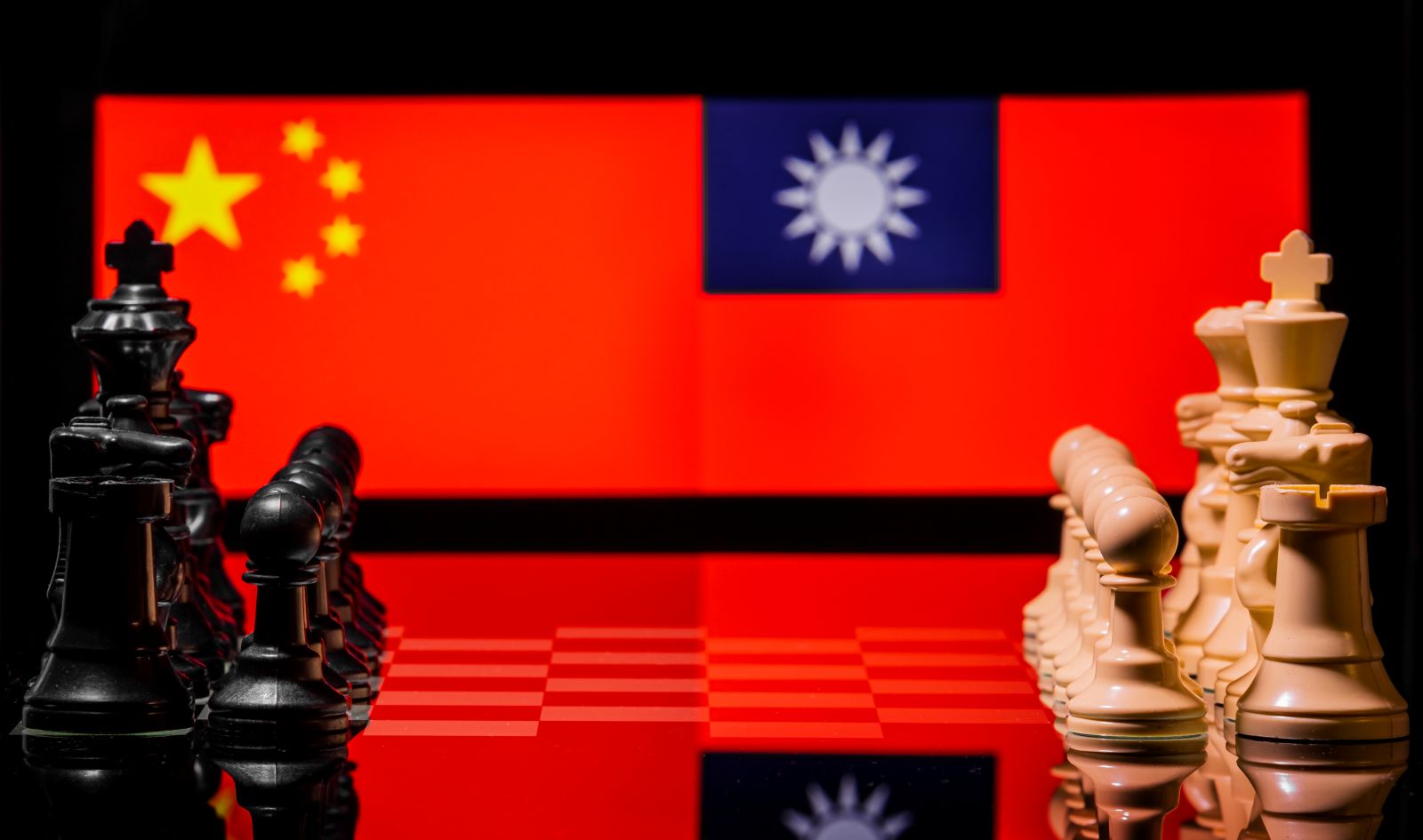
The third major story in this edition of China update news is the renewed escalation in US-China tensions. The immediate trigger is Washington’s warning that tariffs of up to 50 percent could be imposed on Chinese goods if Beijing is found to be supplying military equipment to Iran.
China has rejected those allegations outright. Its foreign minister described them as completely fabricated and warned that Beijing would respond with resolute countermeasures if the United States moved ahead.
This creates a difficult policy problem for Washington. If the US follows through aggressively, it risks derailing already fragile diplomatic progress. If it does not, it could appear weak after issuing a major threat.

The dispute is unfolding during an already unstable period in bilateral relations. Trade disputes, technology restrictions, industrial competition, and security concerns were already in place before the latest Middle East crisis. Now those tensions are being layered onto energy disruption and the threat of sanctions linked to wartime conduct.
Possible next steps from Washington
US officials are reportedly considering more than tariffs. Sanctions on financial institutions, including Chinese banks, are also being discussed. That would represent a major escalation because financial restrictions can have much broader spillover effects than product-specific tariffs.
At the same time, US Treasury Secretary Scott Bessent has accused China of acting as an unreliable global partner, alleging that Beijing hoarded oil supplies and restricted exports of important goods during the crisis. The accusation echoes complaints made during the pandemic, when supply chain dependencies became politically and economically explosive.
Such claims reinforce a broader American narrative: that strategic dependence on China creates vulnerabilities in times of crisis. That narrative has already driven tariff policy, export controls, investment restrictions, and industrial subsidies. The Iran-related allegations could strengthen the political coalition in Washington in favor of even tougher measures.
Industrial rivalry remains intense
Electric vehicles remain a particularly sensitive area. US industry figures, including Ford’s chief executive, have warned that broad access for Chinese manufacturers to the American market could undermine domestic production. This supports the political logic behind existing 100 percent tariffs on Chinese-made EVs.
The underlying issue is not only trade volume. It is industrial strategy. Washington increasingly sees Chinese manufacturing strength in sectors like EVs, batteries, and advanced components as a challenge to US industrial capacity and national resilience.
For Beijing, these tariffs and restrictions feed a larger story of containment. For Washington, they are a form of defensive economic statecraft. That basic disagreement makes compromise difficult even when both sides want to avoid a full rupture.
Public opinion is softening slightly, but rivalry still dominates
One of the more interesting details in recent polling is that American public sentiment toward China appears to be improving modestly. A March 2026 Pew survey found that 27 percent of Americans held a favorable view of China, up six percentage points from the year before and nearly double the level seen in 2023.
The share of Americans describing China as an enemy also fell, from 33 percent in 2025 to 28 percent. Meanwhile, 60 percent now describe China primarily as a competitor.
That shift is meaningful, but it should not be overstated. It does not imply trust. Confidence in the US president’s handling of China policy has declined, and confidence in Xi Jinping’s global leadership remains very low.
The larger takeaway is that attitudes may be softening at the margins while strategic rivalry remains the dominant frame. China is seen less as an immediate enemy than before, but still very much as a major challenger.
What this means for China and the global economy
The big picture from this round of China update news is that China is entering a more difficult phase. Its leadership is trying to present the country as a stabilizing diplomatic actor just as the international system becomes more fragmented. But rhetoric alone cannot shield the economy from higher energy costs, weaker export growth, or renewed pressure from Washington.
Several risks now overlap:
- Geopolitical risk: conflict in the Middle East and friction in US-China relations
- Trade risk: slower export growth and possible new tariffs
- Financial risk: potential sanctions involving Chinese banks
- Domestic economic risk: weak demand and soft credit growth
If these pressures intensify together, they could amplify one another. Higher commodity prices raise costs for Chinese industry. Slower exports weaken growth. New US measures could hit confidence and trade flows. In that environment, Beijing may find it harder to rely on external demand as a cushion.
The next few weeks will therefore be unusually important. Diplomatic decisions around tariffs, sanctions, and Middle East de-escalation could all influence whether current stress becomes a temporary setback or something more serious.
FAQ
Why did Xi Jinping say the international order is in disarray?
He used unusually strong language to describe a world system under pressure from war, trade disputes, and shifting power dynamics. The remarks also served a diplomatic purpose by positioning China as a supporter of stability and international law during a period of widening conflict.
What did China’s latest trade data show?
March data showed exports rising only 2.5 percent year over year, a sharp slowdown from February, while imports surged about 28 percent. That reduced China’s trade surplus to roughly $51 billion, the smallest in more than a year.
Why is a smaller trade surplus a problem for China?
China relies heavily on large trade surpluses to offset weak domestic demand. If exports slow and the surplus narrows for a sustained period, overall economic growth becomes harder to maintain.
Why are imports rising if the economy is under pressure?
A large part of the increase came from imports of high-tech components, especially integrated circuits. That suggests industrial demand in electronics and machinery remained strong even as broader economic conditions became more challenging.
How is the Iran conflict affecting China?
The conflict and the blockade of the Strait of Hormuz have raised energy and shipping risks. For China, that means higher input costs for manufacturers, pressure on supply chains, and more uncertainty for an export-dependent economy.
What is driving the latest US-China tensions?
Washington has warned of tariffs up to 50 percent on Chinese goods if Beijing is found to be supplying military equipment to Iran. Additional sanctions, including measures targeting Chinese financial institutions, are reportedly being considered.
Has American public opinion toward China changed?
Recent polling suggests a modest improvement in favorability toward China and a decline in the share of Americans calling China an enemy. However, most still see China as a competitor, and trust remains low.
What is the main takeaway from this China Update News cycle?
China is facing simultaneous geopolitical and economic pressure. Its leaders are presenting Beijing as a stabilizing force internationally, but slowing export growth, rising import costs, and renewed US threats show that the external environment is becoming more difficult.
China Update News at this moment is less about a single headline than about convergence. Diplomatic conflict, trade friction, and energy insecurity are colliding at the same time. For China, that means the external conditions that once supported growth are becoming less reliable, and the costs of geopolitical instability are becoming much more immediate.