
Welcome to China Update News coverage for this Wednesday. Today’s story is not one single headline. It is three overlapping pressures that, together, help explain where China’s economy and strategy may be heading next: fiscal stress at the local level, mounting external costs for export manufacturing, and a shifting security environment in Asia as Japan fortifies its southwestern islands.

Table of Contents
- 1) China Intensifies Efforts to Extract More Tax Revenue
- 2) China’s Export Manufacturing Faces New Strain as War-Driven Costs Rise
- 3) How Chinese Analysts Frame the Iran War: Escalation Risks and Skepticism Toward U.S. Strategy
- 4) Japan Accelerates a Southwestern Military Shift Amid Taiwan Contingency Concerns
- What to Watch Next
- FAQ
1) China Intensifies Efforts to Extract More Tax Revenue
The biggest domestic development is fiscal. China is tightening the tax collection system as local governments face deepening budget stress. In some regions, conditions are increasingly described as close to de facto bankruptcy, and authorities are moving beyond traditional revenue streams.
Reports indicate that provincial authorities, including Jiangsu, and major cities such as Shenzhen are stepping up scrutiny of offshore trusts. These vehicles have long been used by wealthy individuals to hold overseas assets. The new push focuses on disclosure and enforcement.
What is being targeted
Tax bureaus are seeking detailed information on dividends and capital gains. In some cases, the disclosures requested span multiple years. The enforcement posture is also described as more aggressive, with levy proposals reported at levels that could reach 20% on investment gains, along with penalties.
The underlying logic is straightforward: local governments need cash, and in many places the old revenue engine has weakened.
Why local finances are under strain
Several long-running problems are converging:
- Slowing economic growth reduces taxable activity and related revenues.
- Declining land use revenue has removed a major funding source for local budgets.
- Rising debt burdens increase repayment and servicing pressures.
When budgets tighten, authorities typically broaden the tax base and intensify compliance checks. Offshore wealth becomes attractive to target because it may sit outside the reach of past collection approaches.
Policy reform also matters: Beijing is reshaping local taxation
Alongside enforcement, Beijing is advancing structural tax reforms intended to stabilize local finances. One idea under consideration is a local surtax that would consolidate several smaller levies. More importantly, it would allow local governments to set rates within a defined range.
That would be a rare expansion of local fiscal autonomy. But autonomy is not the same as solvency. There are concerns that some local authorities, already under extreme pressure, may try to extract too much from residents and businesses, which can worsen local economic conditions over time.
Extreme enforcement risks rising during desperation
History suggests that fiscal stress can lead to overreach. In other reports tied to earlier phases of enforcement, some local governments have taken extreme steps such as unlawful fines on businesses, and in rare and alarming cases, actions against business owners to extract payment. Even if such cases are not the norm everywhere, they show the stakes: when enforcement becomes urgent, mistakes and abuses become more likely.
Consumption tax is another lever being considered
Another part of the fiscal picture is changes to the consumption tax. A proposal discussed in policy circles is a partial shift of the tax to the retail level, with incremental proceeds redirected to local governments.
Taken together, these measures signal a broader theme: traditional revenue streams are under pressure, and local authorities are being pushed toward new sources and stronger enforcement. That means the next months could include more compliance scrutiny and policy experimentation.

2) China’s Export Manufacturing Faces New Strain as War-Driven Costs Rise
The second major storyline in China Update News is economic. Manufacturing activity shows signs of strain, especially for export-oriented firms. March data reflects mounting external pressures, including costs linked to the conflict in the Middle East.
PMI signals momentum loss despite “expansion”
The manufacturing PMI that tracks activity for manufacturers slipped to 50.8 in March, down from February’s 52.1 level, which was described as a multi-year high. The PMI staying above 50 still indicates expansion, but the drop points to fading momentum.
A key nuance is that official data on factory activity has been improving. That divergence matters: it suggests that not all segments of manufacturing are experiencing the same conditions, and support mechanisms may be shielding certain firms.
Large state-backed producers vs smaller exporters
Analysts note a growing split between:
- Large state-backed manufacturers, which receive significant state support.
- Smaller, more market-driven export firms, which are more exposed to shipping delays, input inflation, and global demand shifts.
This divide is important because export manufacturing has been one of China’s main growth engines. When the cost base rises and supply chains become less predictable, smaller firms typically feel the squeeze first.
What is driving pressure: higher oil, freight, and disrupted routes
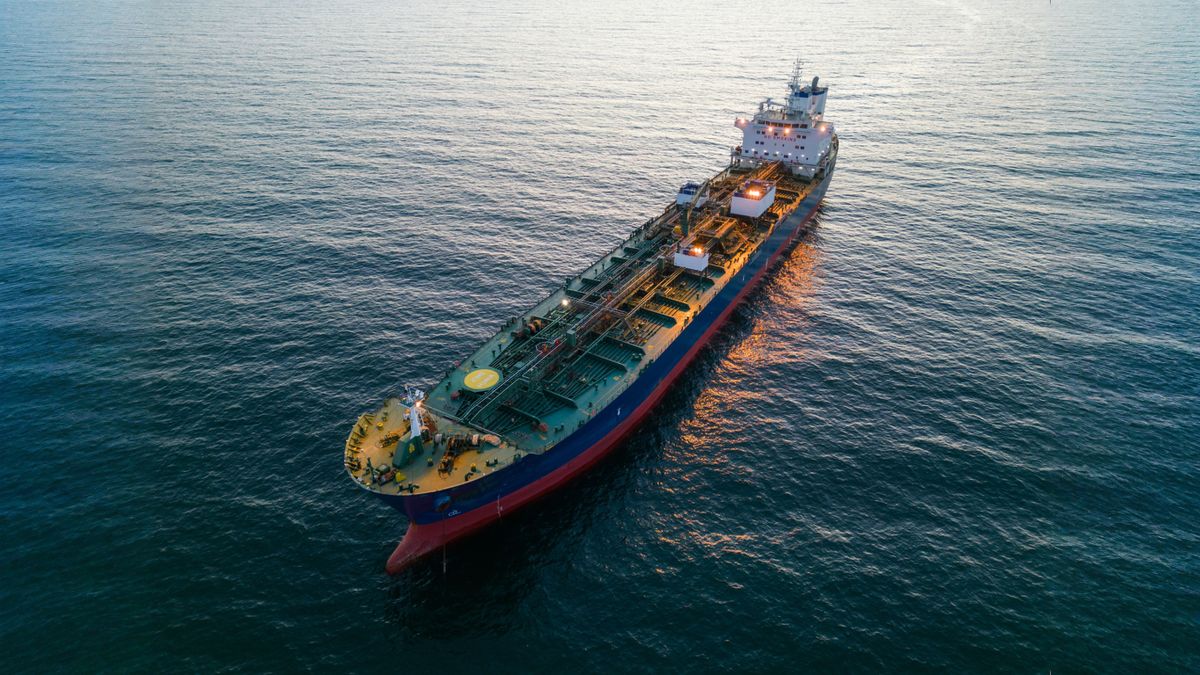
The pressure is described as largely external. The conflict in the Middle East has pushed up oil prices, increased freight costs, and disrupted shipping routes. Those impacts do not land evenly.
Exporters that rely on faster or more complex logistics are usually hit harder. In addition, the supply chain effect is showing up in industrial input costs and delivery times.
Input inflation accelerates and delivery times lengthen
Input price inflation reportedly surged at its fastest pace since March 2022. Delivery times lengthened, consistent with strained supply chains.
Importantly, the data still shows growth: output, new orders, and employment all continued to rise. But each did so at a slower pace, which is often the sign that the “easy” part of growth is over and the real constraints are arriving.
Downside risks may not be fully captured yet
Economists warn that the full effect of the conflict may not yet be reflected in the official metrics. If disruptions persist, the downside risk to China’s export outlook could intensify.
The broader regional picture mirrors this: manufacturing across Asia remains in expansion, but momentum is weakening as high energy costs spread through supply chains.
3) How Chinese Analysts Frame the Iran War: Escalation Risks and Skepticism Toward U.S. Strategy
Beyond the immediate economic impact, there is also the question of how Chinese policy elites interpret the Iran War. A useful way to understand this is to look at recurring themes in Chinese commentary reported from state-linked and academic voices.
The dominant narrative is not simply about the battlefield. It is about system-level instability and the geopolitical consequences that could follow.
Consistent themes in Beijing-linked commentary
Across different outlets, a consistent set of concerns appears:
- Deep concern about escalation, including warnings that the conflict might approach a “point of no return.”
- Skepticism toward U.S. strategy, with arguments that Washington misjudged both internal dynamics in Iran and Tehran’s resilience.
- Expectation that the conflict could accelerate multipolarity by further exposing weaknesses in U.S.-led global leadership.
Instability, not containment
Beijing’s longstanding preference is regional stability, especially in energy-critical regions such as the Middle East. From that perspective, the conflict is framed as less like a contained military operation and more like a destabilizing shock with global consequences.
Since China depends heavily on energy imports, instability in the Middle East is not just a geopolitical abstraction. It is tied directly to shipping routes, energy pricing, and industrial costs.
Who gets blamed: U.S. and Israel in the prevailing framing
Notably, most commentary avoids placing primary blame on Iran. Some acknowledges mutual strikes on infrastructure, but the prevailing view is that U.S. and Israeli actions triggered and escalated the conflict, and Iran responded defensively.
This aligns with a broader diplomatic posture: positioning China as a neutral actor advocating de-escalation, while still attributing escalation to Washington whenever possible.
Second-order effects may matter more than immediate outcomes
Chinese analysts also focus on unintended consequences:
- Regional fragmentation
- Strengthened Iranian domestic cohesion
- Shifting geopolitical alignments
In this framing, these second-order effects could be more consequential than the short-term military picture.
A system under strain and more space for competing powers
Another layer is structural. The Iran War is interpreted as part of a gradual transition away from an American-led global order. Rather than being an isolated crisis, it is described as evidence of a system under strain.
The implication is that competing powers, including China, may find greater room to shape emerging norms and partnerships.
There is also an important caveat: Chinese analysts understand that today’s trading system helps China both import inputs and export final goods. If the global system breaks down completely, China may not yet be in a position to recreate a replacement system that still supports these flows.
4) Japan Accelerates a Southwestern Military Shift Amid Taiwan Contingency Concerns
The third story is strategic and regional. Japan is accelerating a major military shift toward its southwestern islands. The stated concern is growing confidence in China’s expanding power, combined with rising risks of conflict around Taiwan.
Why the southwest matters so much
Japan’s island chain spans across the East China Sea and sits just dozens of miles from Taiwan. That geography places Japan on the front line of any Taiwan-related crisis.
From a north-focused defense posture to a more layered deterrence network
For decades, Japan’s defense posture focused northward, shaped by Cold War concerns over the Soviet Union. China’s rapid military buildup has shifted priorities.
Reported figures suggest Beijing’s defense spending exceeds $300 billion annually, roughly six times Japan’s. Combined with expanding naval and missile capabilities, this has intensified pressure across the region.
Japan’s response is described as a layered defense network across its southwest. Over the past decade, it has established new military bases on previously unfortified islands such as Yonaguni, Miyako, and Ishigaki.
What systems are being positioned
The positions are reported to host:
- Anti-ship missiles
- Air defense systems
- Radar installations
- Electronic warfare units
The design goal is not only monitoring. It is also countering Chinese movements if needed.
Defense by denial: increasing the cost and risk
Japan’s strategy is characterized as defense by denial. Rather than aiming for dominance, it seeks to complicate China’s ability to project power beyond the so-called first island chain.
In practical terms, positioning strike-capable systems along key maritime choke points, including areas such as the Miyako Strait, raises the cost and risk for any military action.
Taiwan contingency becomes inseparable from Japan’s security
The geopolitical implication is direct: Japan increasingly signals that a Taiwan contingency is tied to its own national security. Legal and political constraints still limit direct involvement in conflict scenarios, but the reality is that any conflict over Taiwan would likely draw Japan in, whether through defense of territory, protection of U.S. bases, or broader regional stability concerns.
U.S. integration and domestic sensitivities
The U.S. is described as deeply embedded in the evolving posture. Joint exercises and deployments, including missile units and amphibious forces, highlight growing integration of U.S.-Japan operations in the southwest.
At the same time, local resistance on smaller islands underscores domestic sensitivities around militarization. That tension is likely to remain politically salient as Japan continues to expand capabilities.
China’s perspective: suspicion of “neo-militarism”
From Beijing’s viewpoint, the buildup is viewed with suspicion. Japanese changes are often framed as a departure from Japan’s traditionally defensive posture.
There have been tensions and accusations in both directions, including language about so-called neo-militarism.
Deterrence, not dominance, becomes the operating logic
Japan’s strategic calculus is framed as geography-driven: there is little room for strategic distance. If China were to control Taiwan, Japan would face a dramatically altered security environment, with Chinese forces positioned closer to Japanese territory and in a better position to influence the Western Pacific.
Ultimately, this southwestern pivot reflects a broader shift in the Indo-Pacific balance: as tensions rise and capabilities expand, the region is entering a more contested and uncertain era where deterrence, not dominance, is the stated objective.
What to Watch Next
Taken together, these developments suggest a complex near-term picture. Fiscal stress is pushing China toward more aggressive revenue measures and higher enforcement risk. External shocks are raising costs for export manufacturing and threatening momentum. Meanwhile, regional defense planning is becoming more tightly coupled to a Taiwan contingency.
- Tax enforcement expansion: Look for additional disclosures and scrutiny targeting offshore structures, especially those used to hold overseas assets.
- Consumption tax and local surtax proposals: Rate-setting autonomy could change the incentives for local budgets, with potential knock-on effects for businesses.
- Export cost trends: If freight disruption and input inflation persist, PMI momentum could weaken further even if activity remains positive.
- Japan’s southwestern deployments: Monitor new bases, radar and missile-related upgrades, and the frequency of U.S.-Japan joint exercises.
- Policy narrative shifts around the Iran War: Watch for changes in how Chinese analysts interpret escalation risks and unintended consequences.
FAQ
Why are Chinese local governments intensifying tax enforcement?
Local governments face worsening fiscal stress driven by slowing growth, declining land-related revenues, and rising debt burdens. With traditional revenue under pressure, authorities are broadening the tax base and tightening compliance, including scrutiny of offshore wealth structures.
What is the concern with the proposed local surtax?
The reform could give local governments more room to set rates within a range. However, if some regions are already under extreme budget pressure, there is a risk they may push burdens onto local taxpayers and businesses, which could further strain local economic conditions.
How does the Iran War affect China’s manufacturing sector?
The conflict has contributed to higher oil prices, increased freight costs, and disrupted shipping routes. For export-oriented manufacturers, that raises input and logistics expenses, lengthens delivery times, and can weigh on order momentum, even if factory activity continues to expand.
What is meant by “defense by denial” in Japan’s southwest?
It refers to strategies designed to increase the cost and risk of an opponent’s actions, rather than seeking outright dominance. By deploying systems such as anti-ship missiles, radar, and air defenses along key areas, Japan aims to complicate China’s ability to project power beyond the first island chain.
How do Chinese analysts generally frame the Iran War?
Many Beijing-linked analysts emphasize escalation risks and instability, express skepticism toward U.S. strategy, and often attribute triggering and escalation to U.S. and Israeli actions. They also focus on second-order effects like regional fragmentation and shifts in geopolitical alignments.