China Update News comes with a packed set of headlines: the Iran conflict is intensifying into a global energy and security stress test for China, a Chinese motorcycle startup is scoring a rare top-level sporting win, and Beijing is launching a sweeping audit after a corruption scandal involving Ming-era artwork. Put together, the stories point to a single theme that keeps repeating in China’s policy world: shocks are inevitable, but preparation, industrial upgrades, and tighter governance are how the system tries to absorb them.
Table of Contents
- 1) Iran War Escalates Into a Strait of Hormuz Pressure Test
- 2) Why China May Be Less Vulnerable Than Other Asian Economies, But Not Invulnerable
- 3) The Diplomatic and Economic Consequences Beijing Can Not Fully Sidestep
- 4) ZX Moto’s Superbike Wins Signal a High Performance Manufacturing Shift
- 5) Museum Corruption Fallout: Beijing Launches a Nationwide Audit of State Collections
- FAQ
- Key Takeaway
1) Iran War Escalates Into a Strait of Hormuz Pressure Test
The war in Iran is shifting from a regional conflict into what analysts describe as a structural shock for the global economy. For China, it is also increasingly a test of long-term strategic planning and crisis management.
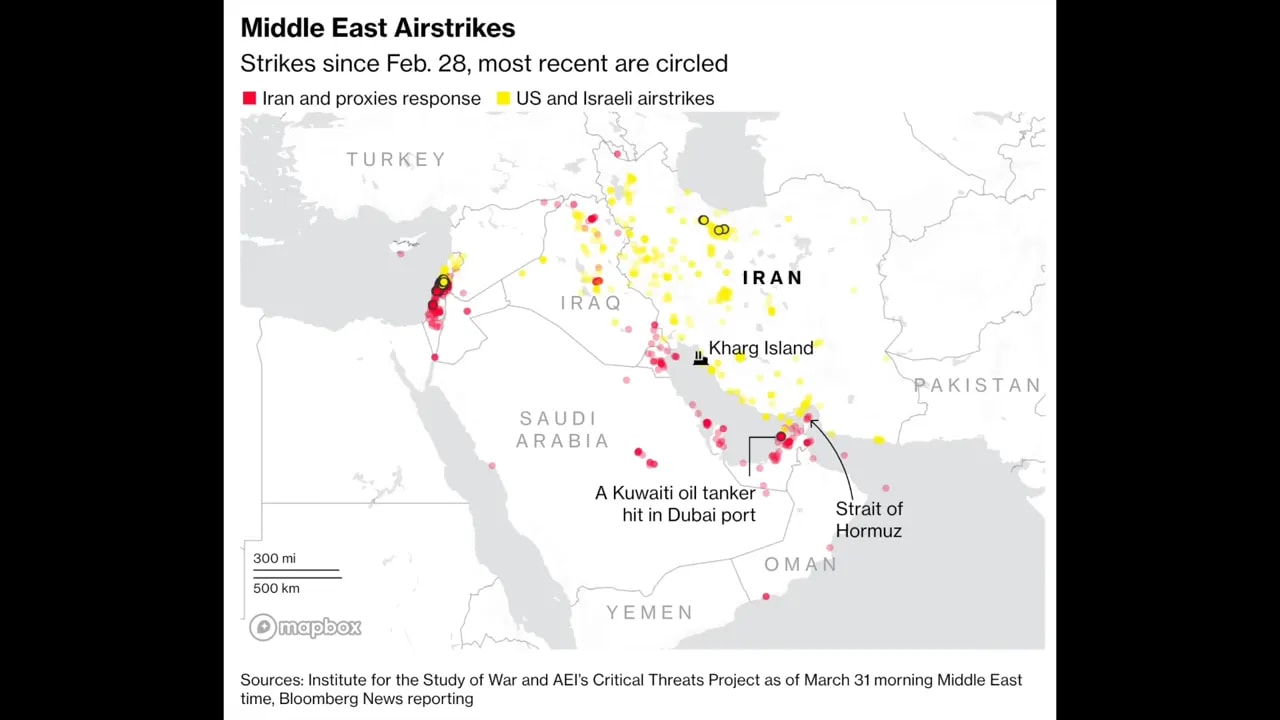
A key escalation risk is growing attention to the Strait of Hormuz. Reporting cited from the US-based Wall Street Journal indicates that the United Arab Emirates is pushing for a United Nations-backed coalition to forcibly reopen the strait. If that plan materializes, it could draw Gulf states directly into combat operations against Iran.
The geopolitical bind for Beijing
China’s problem is not simply that the Strait of Hormuz is strategically critical. It is that Beijing sits at the intersection of conflicting relationships.
- China maintains close ties with Iran, including political relationships and energy links.
- China also has deep economic and energy relationships with Gulf monarchies such as the United Arab Emirates and Saudi Arabia.
So if Gulf states become militarily involved, China’s diplomacy could become far more constrained. Beijing may face pressure to take clearer sides, even if it wants to avoid direct military involvement.
It is not just “closure.” It is selective control.
Another twist is how the disruption is unfolding. The Strait of Hormuz is not described as simply closed in the traditional sense. Instead, reports suggest it is being selectively controlled.
In practical terms, vessels appear to be negotiating passage through Iran-linked middlemen. Some reporting suggests that payments may be structured in informal ways, including use of cryptocurrency and other “tolls,” creating an uneven and politically conditioned access regime.
This effectively changes the risk profile for shipping. It is less about a single binary choke point and more about a tiered system that favors countries viewed as more politically aligned with Tehran.
2) Why China May Be Less Vulnerable Than Other Asian Economies, But Not Invulnerable
There is a counterintuitive argument gaining traction among some analysts: despite being a major importer of oil routed through Hormuz, China might be somewhat better positioned than before to withstand disruption.
The “energy rice bowl” strategy
China’s state media has described an approach meant to “insulate” the economy from external shocks: building an energy rice bowl. The logic is straightforward. If global events disrupt supply routes, the system should absorb volatility rather than collapse.
One pillar of that insulation is the rapid expansion of electric vehicles (EVs).
EVs are changing oil demand dynamics
EV adoption in China has accelerated far beyond official targets. The implications for energy security are significant because EVs displace oil demand directly, not just indirectly through efficiency.
Some estimates suggest the volume of oil replaced by EVs now rivals imports from major suppliers such as Saudi Arabia.
This does not mean oil suddenly stops mattering. It means China’s total exposure is reduced relative to what it would have been in an alternate scenario where transport stayed oil dependent.
Diversified energy supply chains
Another buffer is procurement flexibility. Unlike economies that lean heavily on a small number of Gulf suppliers, China is described as sourcing oil from a wider range of countries, including Russia, Venezuela, and even Iran.
The point is not perfect independence. It is that disruption in one corridor should not become catastrophic by itself.
Strategic petroleum reserves as a short-term shock absorber
China also relies on vast strategic petroleum reserves, described as largely opaque. Estimates suggest China could replace Hormuz-linked flows for months using stored supplies alone.
Electrification and a grid that is less tied to global fuel markets
The story becomes even more structural when considering electricity. China’s electricity grid is predominantly powered by coal but is increasingly supplemented by renewables such as solar and wind. That matters because grid generation is less dependent on shipping-based global fuel disruptions.
The build-out of solar and wind is described as reducing reliance on imported liquefied natural gas (LNG). In parallel, exporting pipeline networks from places like Russia and Central Asia offers alternatives to seaborne energy routes.
Important caveat: these factors do not eliminate risk. The China resilience argument is more about reducing the probability of a “systemic shock” than guaranteeing economic calm.
Even with these protections, China could still be crippled in ways that matter to industry and logistics, even if it avoids the kind of “industrial death” scenario some analysts associate with other highly import dependent economies.
So what might show up first? Costs already appear in the form of rising fuel surcharges and transport price increases. Those are early signals of economic friction rather than full collapse.
3) The Diplomatic and Economic Consequences Beijing Can Not Fully Sidestep
Energy security is only half the equation. The other half is geopolitics. As the crisis expands, it becomes harder for China to avoid direct involvement in some form.
So far: coordination instead of direct military protection
China’s approach so far has been described as avoiding direct military involvement to secure shipping lanes. Instead, Beijing relies on political coordination with Iran to facilitate limited passage for vessels.
But that strategy may weaken if escalation shifts toward open attempts to forcibly reopen the strait. At that point, “coordination” might not be enough to prevent China from being pulled into the operational or diplomatic consequences.
Unexpected opportunities for Chinese industry
There is also a more optimistic angle, at least economically. As global energy prices surge, Chinese manufacturers that benefit from relatively stable domestic energy costs may gain market share from competitors located in more energy exposed regions.
Notably, the idea is debated. Some analysts argue this could accelerate a broader shift in global industrial competitiveness, particularly in energy-intensive sectors. But it remains to be seen whether those gains persist once pricing pressures normalize.
4) ZX Moto’s Superbike Wins Signal a High Performance Manufacturing Shift
Beyond geopolitics and energy, China Update News also brought a story about industrial capability from a surprising arena: high performance motorcycles.

Back-to-back wins in Portugal
Chinese motorcycle startup ZX Moto secured back-to-back wins at the Portuguese round of the Superbike World Championship. A French rider won both races aboard the company’s 820RR, delivering what was framed as a “rear triumph” for a newly established Chinese brand against major industry names.
Why this matters: production-based competition
The Superbike World Championship is not just marketing. Because it features motorcycles based on production models, it is treated as a proving ground for manufacturers that want credibility in global performance categories.
ZX Moto’s success against established brands such as Ducati, Honda, and Yamaha is seen as evidence that the Chinese motorcycle industry may be moving beyond low-cost mass production into high performance engineering and more credible brand competition.
Rapid company growth
The company was founded in 2024 in Chongqing by entrepreneur Zhang Shui. The company launched its first model, the 500RR, in late 2024, and reportedly surpassed 25,000 unit sales within a year.
By 2026, it reported an output value of 750 million yen, supported by heavy investment in development.
A personal story of persistence
In the narrative around the victory, Zhang is described as a former mechanic’s apprentice from rural Hunan. The win is portrayed as the culmination of a long personal journey, now positioning Chinese superbikes on the global stage.
5) Museum Corruption Fallout: Beijing Launches a Nationwide Audit of State Collections
Finally, a major corruption scandal has pushed Beijing toward a sweeping governance response. The issue involves an illicit sale of a priceless Ming-era artwork, prompting anger online and leading to a nationwide campaign.
The audit: a one-year inventory of museum holdings
China’s National Cultural Heritage Administration announced a one-year nationwide audit of state-owned museum collections. The campaign requires every state-owned museum, described as the vast majority, to complete a meticulous piece-by-piece inventory of its holdings.
The process includes verifying each artifact against official records as authorities attempt to close systemic loopholes and strengthen standardized controls for “national treasures.”
Why Nanjing became the flashpoint
The policy shift follows a crisis centered on the Nanjing Museum, framed as a leading national museum rather than a local institution. Nanjing’s historical status is emphasized, given that it served as a capital across multiple dynasties and later during the Republic of China era.
Insiders were found to have illegally sold artworks from a prominent private donation. The scandal erupted after the Ming dynasty scroll Jiang Nanchun surfaced at auction in the capital with an estimated value of 88 million yuan (about $12 million).
A follow-on investigation reportedly found 29 individuals implicated in the illegal disposal of five paintings, including the former museum director Xu Huping.
A governance failure, framed as shocking but not surprising
Veteran China analyst Bill Bishop described the case as shocking, but not actually shocking to those who understand the PRC. The implication is that while the details are outrageous, the broader pattern of governance and oversight failures is something observers have already seen in other sectors.
A useful analogy in the discussion is that it would be like Americans discovering that management at a major museum such as the Metropolitan Museum of Art had stolen and sold a famous painting through something like eBay.
What Beijing is tightening: cataloging, archiving, and de-accession rules
Beijing’s response focuses on stricter protocols for:
- Cataloging
- Archiving
- De-accessioning (how artifacts are removed or transferred)
- Elevating overall collection management as a priority in the national development cycle
The audit is also described as a pilot for China’s second national census on movable cultural relics.
Disciplinary pressure: the anti-corruption machine gets involved
The crackdown is reinforced by the Central Commission for Discipline Inspection, a powerful body that traditionally targets significant corruption issues within the party system. The involvement signals that authorities view the sector not as isolated misconduct, but as part of a wider governance problem.
In the past two years, a growing list of senior museum officials and heritage executives have been investigated or removed, indicating the breadth of the campaign.
FAQ
How could a UN-backed coalition to reopen the Strait of Hormuz affect China?
If Gulf states join military operations, China could face higher geopolitical pressure despite its interest in maintaining close ties with both Iran and Gulf energy partners like the UAE. China’s existing strategy of avoiding direct military protection and relying on political coordination could become less workable if escalation turns into active attempts to force passage.
Why are some analysts less worried about a systemic shock to China’s economy from Hormuz disruptions?
The argument is that China has built multiple buffers: rapid EV adoption that reduces oil demand, diversified oil supply sources, strategic petroleum reserves that can cover disruptions for months, and a domestic electricity system increasingly insulated from global fuel market swings.
Does that mean China is completely safe if the crisis worsens?
No. Resilience does not equal immunity. Costs can still rise through fuel surcharges, transport price increases, and damage to industrial logistics. Geopolitics also becomes harder to manage if escalation draws in China’s partners or requires Beijing to take clearer positions.
What did ZX Moto’s Superbike wins signal beyond sports?
Because the Superbike World Championship features production-based motorcycles, the wins are treated as proof of engineering capability. The results suggest China’s motorcycle industry may be shifting from low-cost manufacturing toward higher performance design and global competitiveness.
What is Beijing doing in response to the museum artwork scandal?
Beijing launched a one-year nationwide audit requiring state-owned museums to inventory and verify every artifact against official records. The campaign aims to eliminate loopholes in cataloging and archiving, strengthen collection management rules, and pilot a second national census on movable cultural relics.
Key Takeaway
China Update News in this cycle is a reminder that China’s risk management is multi-layered. In energy, the focus is on structural buffers like electrification and supply diversification. In industry, it is on capability building that can compete globally. In governance, the response to cultural theft is not limited to punishment for individuals, but includes system-wide auditing and tightened controls.