
Here is the latest China Update News briefing, focused on three developments shaping risk and strategy right now: a worsening Chinese property and mortgage stress cycle, a new layer of US tech coordination aimed at Chinese AI competitors, and heightened political friction across the Taiwan Strait as a KMT opposition leader plans a mainland visit.
These stories may feel unrelated at first glance. But they share a common theme: governments and major institutions are trying to manage spillover risk. In China’s housing sector, that means preventing a cascade of defaults. In the AI race, it means reducing the economic and security exposure from advanced model “distillation.” And around Taiwan, it means testing whether deterrence-by-dialogue can calm tensions even as defense debates remain unresolved.
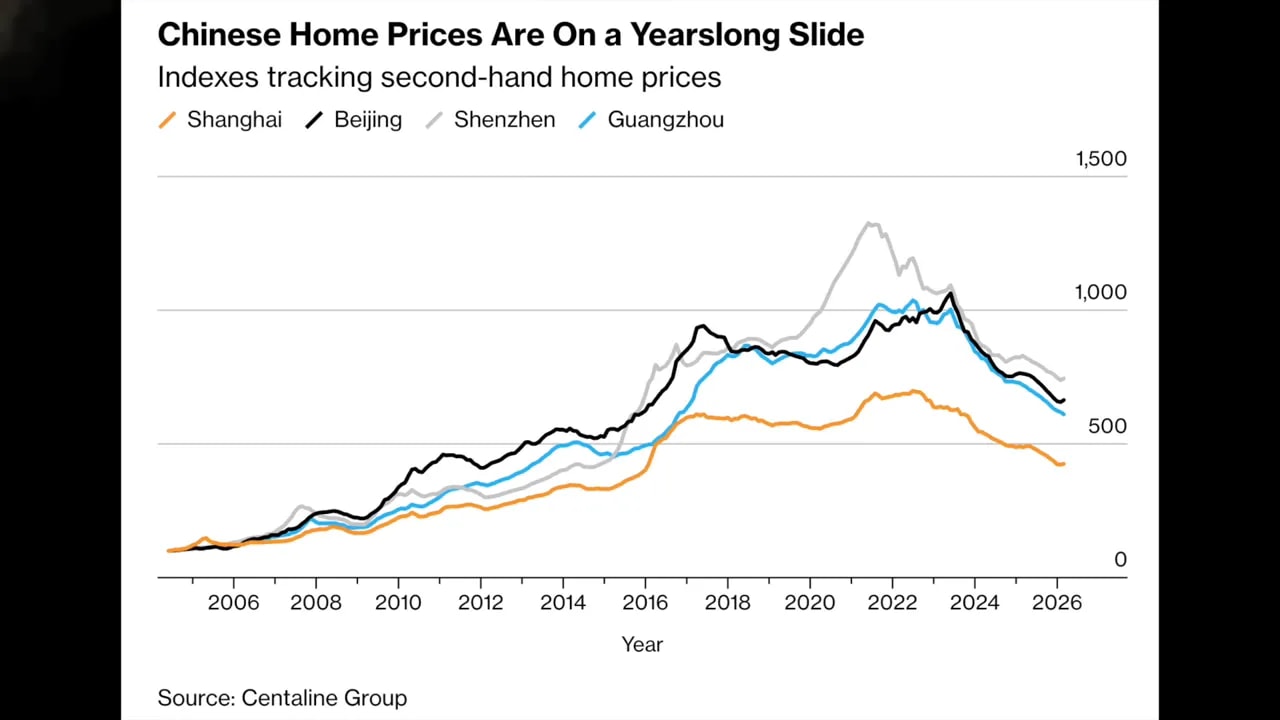
Table of Contents
- 1) China’s Property Reckoning: Quiet Bailouts as Underwater Mortgages Rise
- 2) US AI Giants Unite: A New Front in the Battle Over Model “Distillation”
- 3) Taiwan Tensions: KMT Opposition Leader Promotes “Deterrence with Dialogue”
- FAQ: China Update News Explained
- Bottom Line
1) China’s Property Reckoning: Quiet Bailouts as Underwater Mortgages Rise
China’s deepening property downturn is pushing banks into increasingly unconventional territory. The pressure is not just about falling home prices. It is about what those price drops do to mortgage holders whose loans now sit above the market value of their homes, creating negative equity and raising the risk of broader financial instability.
As home values fall, lenders such as Bank of China and Industrial and Commercial Bank of China have been rolling out measures designed to prevent a wave of defaults. Instead of waiting for arrears to trigger formal insolvency pathways, banks are trying to reduce the likelihood of missed payments escalating into a credit event.
What banks are doing to reduce default risk
Based on the measures described in the latest China Update News coverage, banks and related authorities are using a menu of borrower relief tactics. These include:
- Payment holidays of up to two years
- Switching mortgages to interest-only structures
- Extending repayment periods to lower monthly burdens
- Cutting mortgage rates where possible
- Helping homeowners find buyers to avoid foreclosure
In some cases, lenders are proactively contacting distressed borrowers to negotiate solutions before missed payments become formal defaults.
This approach is often described as prioritizing stability over profitability. And because many lenders are state-owned, it can also be seen as a system-wide effort to cushion both households and the property market. In effect, it is a quiet, gradual form of support rather than a single headline “bailout.”
The scale of the housing decline and the negative equity problem
The housing slump is now in its fifth year. Property values in major cities such as Beijing and Shanghai are estimated to have fallen by more than a third from their peaks. The pain is not limited to Tier 1 areas, either. In smaller cities and less developed regions, declines can be even steeper, with some price collapses estimated in the range of 70% to 80%.
Those numbers matter because they feed directly into mortgage math. When homeowners owe more than their properties are worth, negative equity rises. Estimates cited in the China Update News framing suggest that by 2027, as many as 3.3 million homes could be underwater.
From a pure system-risk perspective, the argument presented is that these figures may still be manageable relative to China’s broader banking system. But the direction is what counts. The quality of mortgage assets is deteriorating, and official non-performing loan ratios for mortgages have stayed near 1% at major banks. Analysts argue that those headline figures may understate the real level of stress because forbearance can delay recognition of bad loans.
Why China is trying to avoid a 2008-style foreclosure crisis
Authorities appear determined to avoid a foreclosure crisis similar to the United States experience during the 2008 global financial crisis. However, China’s system works differently, and that difference changes incentives.
In the US, borrowers can often walk away from a mortgage more easily. In China, even after foreclosure, borrowers cannot easily shed outstanding debt obligations. That discourages strategic default. But it also means households remain exposed even when homes enter distress.
So banks face a dilemma with real social consequences. If they push aggressively for collections, it can worsen household financial stress, potentially raising the risk of social instability Beijing wants to avoid. If they delay recognition of losses, they may stabilize the system temporarily while allowing the problem to build underneath.
The result is a classic tension between short-term stability and long-term balance-sheet clarity. In this case, the measures can “buy time” while pushing the day of reckoning further into the future.
Courts slow foreclosure pipelines, creating backlogs
Another lever is the legal system. Local courts in multiple regions have reportedly slowed acceptance of mortgage default cases and limited the number of foreclosure-related lawsuits banks can file. That reduces the flow of distressed properties entering the market.
In the short term, that can help stabilize prices by limiting new supply of forced listings. But it also means stress is not necessarily being resolved. It can be stored as a backlog of unresolved financial stress beneath the surface.
Think of it like reducing visible output rather than addressing underlying debt problems. The iceberg metaphor is apt: the bad assets do not vanish; they become harder to see and potentially harder to manage later.
Even foreclosure sales may not clear the market
Even when foreclosures do proceed, banks face a second constraint: selling the properties. The demand picture is described as weak, and in some regions, a significant share of foreclosed homes fail to find buyers at auction.
When distressed properties make up a sizable share of available housing supply, it can weigh on prices further and undermine market confidence. That feeds back into the mortgage problem because price recovery is a key ingredient for households regaining equity and banks reducing credit risk.
Structural issues remain: supply, demand, and expectations
The most important warning in the China Update News framing is that these steps are short-term fixes. They do not directly solve the structural imbalance at the heart of China’s property crisis:
- Over supply of housing relative to demand
- Weak demand capacity and willingness to buy
- Declining expectations of future price appreciation
Without sustained recovery in household income growth, or without meaningful rebound in housing demand, underwater mortgage burdens are likely to persist. That is where the “toxic apartment” sentiment becomes more than a human-interest line. It signals a shift in how households view home ownership, from a wealth path into a financial strain.
“Her apartment has become toxic,” as described by a homeowner quoted to Chinese financial media in Chengdu.
And the key point is spillover. Risks that begin with households can spread into property financing quality, local economic stress, and ultimately banking stability.
2) US AI Giants Unite: A New Front in the Battle Over Model “Distillation”
The next major China Update News segment shifts from housing to technology, but the core theme of risk management remains. Here, the risk is intellectual property and, increasingly, national security concerns related to how advanced AI models are replicated.
Rival US technology firms, including OpenAI, Anthropic, and Google, have begun an unusual collaboration to counter what they see as a growing threat from Chinese AI competitors.
Sharing intelligence through a joint forum
Instead of keeping competitive concerns entirely private, the firms are sharing intelligence through the Frontier Model Forum. This is a group co-founded alongside Microsoft in 2023.
In plain terms, the coordination focuses on detecting and preventing unauthorized extraction of advanced AI models.
Why “distillation” is at the center of the dispute
The central technique discussed is distillation. Distillation is widely used within the industry to create smaller, more efficient AI systems. A smaller model can be trained using the outputs of a larger, more advanced model.
That process can be legitimate. But US firms argue that unauthorized third-party distillation, especially by actors in China, amounts to intellectual property theft.
Industry estimates referenced in the China Update News framing suggest such practices may be costing Silicon Valley billions of dollars annually.
What changed: DeepSeek R1 and subsequent investigations
The issue gained prominence following the release of DeepSeq R1 by Chinese startup DeepSeq in early 2025. The model’s rapid rise triggered investigations by OpenAI and Microsoft into whether proprietary data had been improperly extracted to build competing systems.
OpenAI has since warned lawmakers that efforts to replicate model capabilities are becoming increasingly sophisticated. The warning also notes that some actors may attempt to bypass safeguards designed to limit misuse.
From business concerns to safety and security concerns
Beyond commercial harm, US firms describe the threat as a national security issue. The argument is that distilled models may lack safety guardrails embedded in the original systems, increasing the risk the models could be used for harmful purposes, including:
- Cyber attacks
- Even biological threats
This is why the coordination resembles approaches used in cybersecurity: companies share threat intelligence to strengthen collective defenses.
Why cooperation is still constrained
Cooperation is not unlimited. The China Update News framing highlights that legal uncertainty, particularly around antitrust rules, limits how much rivals can coordinate.
That matters because intelligence sharing can look like competitors acting together. Policymakers therefore influence how “aligned” the defense can be, even as AI competition intensifies.
The broader context: open-weight models and geopolitical competition
The push for coordination comes amid broader geopolitical tensions in the AI race. Chinese firms are increasingly releasing lower-cost open-weight models, intensifying pressure on US companies across both technology leadership and business models.
In this sense, the “distillation battle” is not just about one technique. It is becoming a defining front in the wider contest for technological dominance.
3) Taiwan Tensions: KMT Opposition Leader Promotes “Deterrence with Dialogue”
The final China Update News topic turns to Taiwan, where diplomacy and deterrence are colliding in real time.
Taiwan’s opposition leader, Chengli Wen (also described as “Chung” in the reporting), is set to visit mainland China this week. The trip is controversial because she is advancing the argument that diplomacy, not military strength alone, can serve as a key deterrent against conflict.
The visit is described as a six-day trip spanning major cities including Nanjing, Shanghai, and Beijing. It arrives at a sensitive moment for cross-strait relations and broader global geopolitics.
Why this trip is politically loaded
Chengli Wen leads Taiwan’s KMT, a party that has been blocking parts of Taiwan’s proposed $40 billion US dollar defense expansion. Instead, she has promoted “deterrence with dialogue,” arguing that engagement with Beijing can reduce war likelihood.
“Conflict is not inevitable.”
Her planned trip is described as the first by an acting KMT chair to China in a decade, and it is widely expected to include a meeting with General Secretary Xi Jinping.
Meeting Xi could shape Taiwan’s domestic defense debate
The potential meeting is significant because it could give Beijing an opportunity to influence Taiwan’s internal debate over defense spending, especially purchases of US weapons. The timing matters too: the visit comes weeks before a planned summit between Xi and US President Donald Trump.
Critics in Taiwan warn that the trip could weaken Taiwan’s security posture. Within the Democratic Progressive Party and also some within the KMT, there is concern that delaying defense funding reduces deterrence credibility. There is also concern about strains in ties with Washington.
What defense expansion includes
Analysts note that Taiwan’s proposed budget includes key initiatives such as the T-Dome air defense system. This is relevant because air and missile defense are central to deterrence credibility, and those systems are exactly the type of capability that may be debated or delayed.
Beijing may aim to project domestic support for One China alignment
Another risk highlighted is that Beijing may use the visit to project an image of domestic support within Taiwan for closer ties under the One China framework.
Taiwanese officials have suggested that the broader aim may be to discourage US-Taiwan military cooperation.
A broader split inside Taiwan over how to manage the China threat
Chengli Wen’s political gamble reflects deeper divisions inside Taiwan about how to manage the China threat. Some view dialogue as a way to buy time and reduce tensions. Others argue that only credible military strength can deter aggression.
As US-China rivalry intensifies, Taiwan is increasingly caught between competing strategic pressures. The China Update News framing emphasizes that the space for ambiguity is narrowing: diplomacy and deterrence are no longer easily balanced. They represent fundamentally different visions for Taiwan’s future.
FAQ: China Update News Explained
What is driving China’s housing crisis from a banking perspective?
Falling home prices are creating negative equity for mortgage holders. Banks are responding to reduce default risk by using payment relief, refinancing-style changes, and measures to limit foreclosure cases. This helps in the short term but can delay recognition of bad loans.
Why are forbearance and court slowdowns important?
They can stabilize prices and reduce immediate market disruption by limiting foreclosures. But they also can create backlogs, meaning unresolved household and credit stress builds underneath rather than disappearing.
What does “distillation” mean in the AI context?
Distillation is a technique where a smaller AI model is trained using outputs from a more advanced model. The US firms’ concern is about unauthorized use that they argue amounts to intellectual property extraction and may also weaken safety safeguards.
Why would AI distillation become a national security issue?
The argument is that distilled models may not include safety guardrails of the original systems. That increases the risk that such models could be used for harmful purposes, including cyber attacks and other threats.
Why is Chengli Wen’s mainland trip controversial?
It is controversial because it promotes deterrence with dialogue while Taiwan’s defense expansion has been a major political battleground. Critics warn the trip may weaken Taiwan’s deterrence posture and strain US-Taiwan defense cooperation.
Bottom Line
China Update News is increasingly defined by trade-offs. In housing, authorities and banks are balancing financial stability against delayed loss recognition. In AI, US competitors are coordinating selectively to protect intellectual property and reduce safety and security exposure. And in Taiwan, dialogue is being tested as deterrence at a time when defense spending debates are already tightening the range of political options.
The common thread across all three stories is spillover risk: whether it is mortgages, model extraction, or cross-strait deterrence credibility. How institutions manage those spillovers in the near term will likely determine what becomes visible, and what remains hidden, later.