China Update News has a lot in it this week. Three separate developments are unfolding at the same time, and even though they live in different policy worlds, they share a theme: Beijing is balancing internal political consolidation, external security dilemmas, and long-range strategic competition in space.
First, China’s party system has delivered another high-profile political shock. Second, China and Russia have vetoed a United Nations Security Council resolution connected to the Strait of Hormuz, as the energy corridor crisis intensifies. Third, as the U.S. pushes ahead with Artemis II, China is watching closely, while both countries race toward a sustained presence on the Moon.
Table of Contents
- 1) China Update News: Another Politburo-level fall in Xi’s tightening campaign
- 2) China Update News: UN veto blocks Hormuz “safe navigation” push
- 3) China Update News: Artemis II as both inspiration and a stress test for the U.S.-China lunar race
- What ties these stories together?
- FAQ
1) China Update News: Another Politburo-level fall in Xi’s tightening campaign
One of the most consequential political signals in recent weeks came from an official investigation targeting a senior figure at the top of the Communist Party’s decision-making structure.
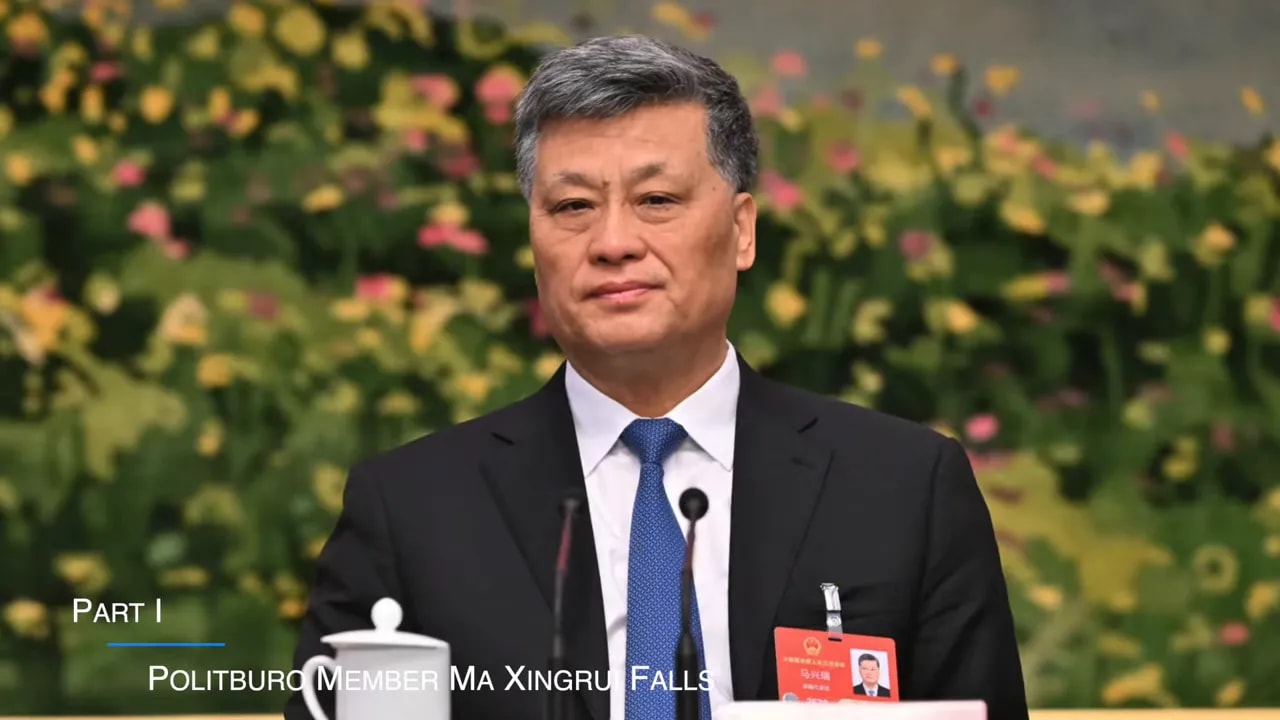
China’s party authorities have formally placed Ma Xingrui under investigation. The announcement was made by the Central Commission for Discipline Inspection (CCDI), China’s top internal anti-corruption and discipline body.
The CCDI statement said Ma, who is a Politburo member and deputy head of the Central Rural Work Leading Group, is suspected of serious violations of discipline and law. As is typical for such cases, the announcement did not include further allegations or details.
Why analysts immediately framed it as another purge
Even without specifics, the timing and the level of the official involved pushed analysts toward a familiar interpretation: this looks like another step in the intensification of Xi Jinping’s anti-corruption campaign.
Reporting referenced state media, including Xinhua, that described the process as disciplinary review and a supervision investigation. In China’s political system, such procedures typically do not end in rehabilitation for senior officials. Instead, they often mark the end of a political career.
The Politburo contraction: 21 members now, down from 24
Ma’s removal is not happening in isolation. It changes the size and shape of the Politburo itself. The Politburo’s size has been reduced to 21 members, down from 24 at the start of the 20th Party Congress.
This is described as one of the most significant contractions in decades. It also suggests that during this term, Xi’s leadership has sidelined three Politburo members, the largest such shake-up since the late-Mao-era political upheavals connected to the Cultural Revolution.
Who Ma Xingrui is, and why he mattered
Ma Xingrui had been widely regarded as a rising figure within the system. Chinese financial media previously highlighted that his early career ran through the aerospace sector, rising within the China Aerospace Science and Technology Corporation.
He was portrayed in media as a “young marshal” type figure, and he played roles in high-profile national projects, including China’s manned spaceflight and lunar exploration programs. Later, he transitioned into regional leadership positions, serving in Guangdong, and then becoming party secretary of Xinjiang in western China.
During his Xinjiang tenure, Ma was seen as moderating some of the harshest policies associated with the predecessor. Still, his time in office coincided with major flashpoints, including public anger and protests that erupted after events in 2022, tied to the fire at Urumqi, which became a broader symbol of dissatisfaction.
Late last year, signs of political trouble were reported to have emerged after he was reportedly removed from his Xinjiang post and began missing key party events.
Connections that drew additional attention
Another layer in the public conversation was Ma’s reported ties to a business figure described as an embattled copper tycoon, Wang Venyan. That business empire collapsed amid China’s prolonged property downturn. The implication raised by observers is not necessarily guilt, but that these personal and political networks can become part of the investigative narrative.
What happens next: replenishment or a smaller Politburo?
With roughly 18 months until the next party congress, Ma’s removal raises a practical question: will the leadership replenish the Politburo to restore its previous size, or allow it to remain smaller as power consolidation continues?
This matters because it affects how many senior “slots” exist for future promotion, and it hints at how quickly the leadership believes it needs to re-balance top personnel.
Rumors, disinformation, and the “spin” problem
An additional point mentioned by a veteran analyst was the way narratives can spread during these moments. The analyst observed that Falun Gong accounts were attempting to spin a rumor that Ma’s fall would put Peng Liyuan, the wife of Xi Jinping, in a precarious position.
The analyst’s view was blunt: these claims should be treated as unreliable. Still, the comment reflects a broader problem during political shocks: when senior figures disappear from public view, external actors and networks often attempt to fill the information gap with speculation.
For now, there is no strong evidence presented in this analysis suggesting that Ma’s removal undermines Xi in any direct, verifiable way. But observers said they would keep watching for signs, because sometimes major personnel changes do create second-order effects within the system.
2) China Update News: UN veto blocks Hormuz “safe navigation” push
The second major item in China Update News comes from the intersection of diplomacy and energy security.
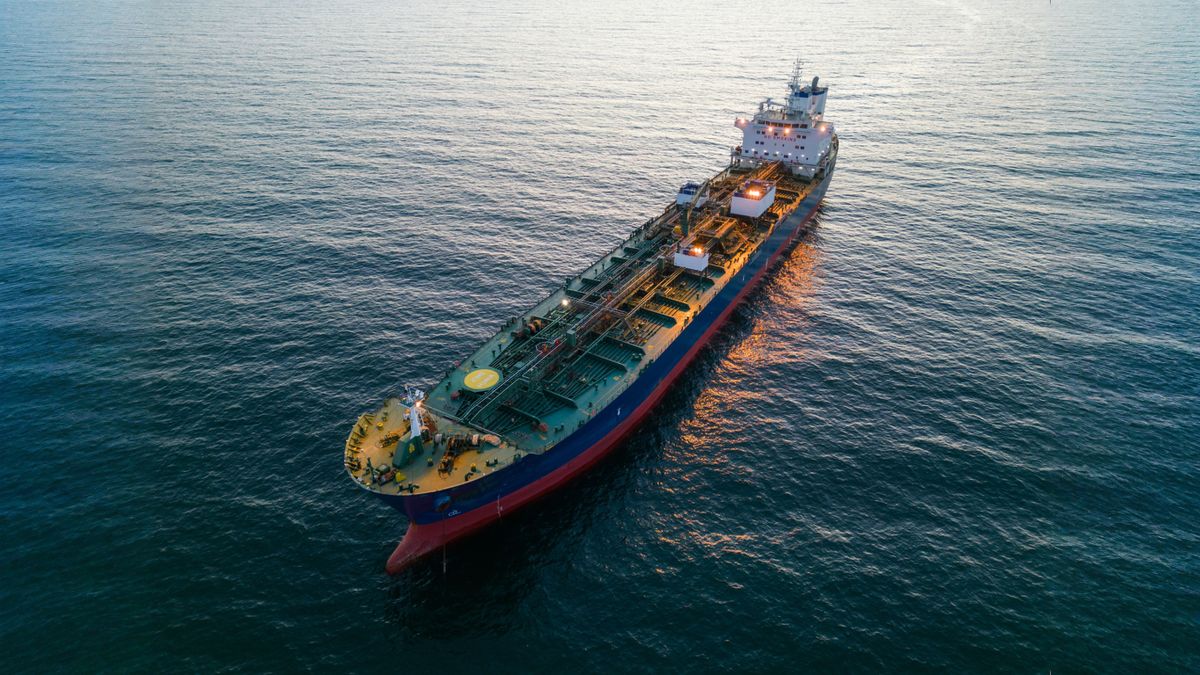
China and Russia vetoed a United Nations Security Council resolution intended to encourage coordinated international efforts to reopen the Strait of Hormuz. The veto highlighted deep divisions among major powers as the energy corridor crisis intensifies.
The UN resolution: 11 votes in favor, but veto ends it
The resolution was proposed by Ukraine and received 11 votes in favor. It still failed because two permanent members with veto power opposed it: Beijing and Moscow.
The measure called on countries to coordinate defensive efforts to ensure safe navigation through the strait, after mounting pressure from Gulf states to restore maritime security.
Beijing’s argument: de-escalation over authorization
China defended its decision using statements from its Ministry of Foreign Affairs. The logic was that UN actions should prioritize de-escalation and diplomacy, rather than risk legitimizing military intervention.
Beijing also stated that the Security Council should not be used to endorse illegal military moves. The broader diplomatic message is clear: China wants security language that does not cross into a step that could be interpreted as authorization for force.
In private, however, the political calculation is described as more complicated. The analysis suggested Beijing likely tries not to alienate its relationship with Iran. That effort can be understood as an attempt to preserve economic interests while still projecting a stance of neutrality.
The trade-off: neutrality is harder when economic ties are deep
The risk for China is that this “neutral actor” posture can strain relations with Gulf Cooperation Council (GCC) countries. Several of those states have faced direct threats or attacks linked to the conflict involving Iran.
If Gulf states interpret China’s stance as blocking security actions that could protect shipping, distrust can build even if Beijing frames the decision as de-escalation.
Energy cooperation is the central complication
The strongest evidence behind that complexity comes from reporting that highlights how extensive China-Iran energy cooperation has become.
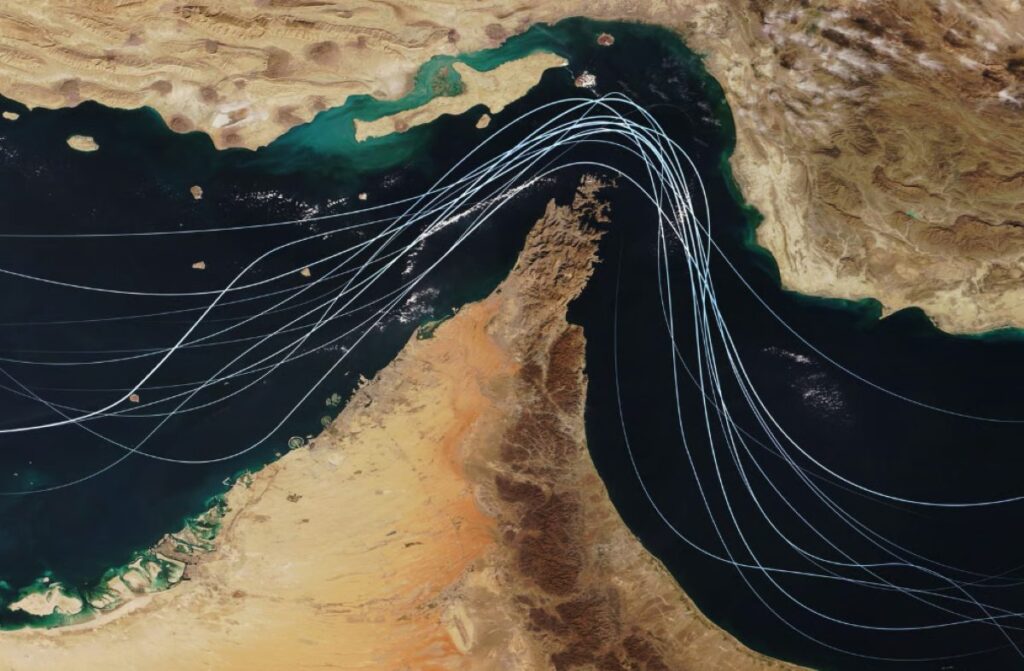
China now purchases nearly all of Iran’s oil exports, up from about 30% a decade ago. The expansion is described as being facilitated by a sanctions evasion network, which may include smaller Chinese boats, front companies, and so-called “teapot refineries” processing discounted Iranian crude. The crude is often disguised using falsified documentation.
Can China absorb an Hormuz disruption?
One question that matters for policymakers and markets is whether China would suffer materially if Hormuz shipping is disrupted for a prolonged period.
Nomura’s chief China economist, Lu Ting, offered an argument for relative insulation. The reasoning is that while China is the world’s largest oil and gas importer, its manufacturing sector is relatively insulated, and oil and gas are a smaller share of China’s overall energy mix. The figures provided were:
- Oil around 18%
- Gas around 8%
Only a limited portion of imports depends directly on the Strait of Hormuz. That does not mean there would be no pain. But the claim is that the impact could be less severe than it looks at first glance.
Strategic reserves and alternative energy sources
Another buffer is China’s energy resilience. The analysis pointed to large strategic petroleum reserves capable of covering over 100 days of net imports. It also referenced China’s energy system, including coal and an increasingly renewable energy base.
Taken together, China’s veto is framed as a balancing act: opposing Western-backed security measures while maintaining critical energy ties with Iran, and preserving economic resilience at home.
The open question is whether that balancing act can hold up as the Hormuz crisis continues.
3) China Update News: Artemis II as both inspiration and a stress test for the U.S.-China lunar race
The third topic in China Update News shifts away from Earthbound politics and energy shipping and into a longer-term contest: lunar exploration and the strategic implications of building capability off-planet.
As Artemis II moves humans back toward the Moon, China is paying close attention. The focus is not simply inspiration. It is also about extracting lessons from successes and setbacks, including seemingly small operational issues.
Why minor failures matter in long-duration spaceflight
The analysis emphasized that space missions are systems engineering problems as much as they are science missions. Even small events, like a malfunctioning onboard toilet or software glitches, carry significance because they reveal how resilient a spacecraft is when stretched over long durations.
These kinds of incidents can signal the importance of redundancy and system resilience, areas China is actively refining in its own lunar roadmap.
Two programs, two timelines, one emerging strategic frontier
Both countries are targeting crude lunar landings by the end of the decade. NASA aims for 2028 to 2029, while China’s target is around 2030.
But the competition is not just about reaching the surface. The analysis frames it as a move to establish a sustained presence on and around the Moon, especially in regions that hold resource potential such as the resource-rich area south of the lunar pole.
That region is believed to have water and other materials, including ice and hydrogen, which could support long-term habitation and fuel deeper space missions.
Control over resources and the infrastructure to access them could produce long-term economic and strategic advantages. In that sense, the Moon is emerging as the “next frontier” of industrial and geopolitical competition.
China’s structural advantages: central planning and momentum
China’s space program is described as highly centralized, which allows long-term planning and more consistent funding. China has also already achieved milestones that include landing on the far side of the Moon and returning samples.
Upcoming missions such as Chang’e 7, along with development of the Mengzhou crew spacecraft, are positioned within a steady roadmap toward a lunar base in partnership with Russia.
NASA’s approach: contractor ecosystem and diplomatic value
By contrast, NASA’s Artemis program is described as heavily dependent on a network of private contractors and international partners. That model can drive innovation and spread costs, but it can also create complexity, delays, and political vulnerability.
Budget uncertainty and shifting policy priorities in Washington are also highlighted as risks, even as NASA aims to accelerate timelines and expand commercial involvement.
At the same time, Artemis is framed as a diplomatic tool that anchors a US-led coalition of allies through shared missions and agreements.
Possible governance split in space
Another point is that China is building a parallel “ecosystem,” which could lead to competing blocks in space governance. That does not necessarily mean open conflict, but it suggests that rules, standards, and coordination frameworks could develop along national lines.
Some scientists argue it will not be completely zero-sum. The analysis supports a nuanced view by noting that early missions may diverge by target region: China’s near-side focus, while NASA’s focus is on the technically challenging south pole.
That divergence could allow both programs to progress independently in the near term. Still, the strategic stakes are framed as obvious over time.
Artemis II as a warning and a roadmap
Artemis II demonstrates both the promise and fragility of modern space exploration. It also illustrates how technological progress, economic ambition, and geopolitical rivalry are now intertwined beyond Earth’s orbit.
What ties these stories together?
They are different headlines, but together they show a pattern in China’s current strategic behavior.
- Internal consolidation: high-level personnel changes signal tightening control and risk reduction at the top.
- Selective external alignment: veto decisions in the UN reveal Beijing’s preference for de-escalation language while protecting energy and political relationships.
- Long-range competition: attention to Artemis II shows how Beijing is treating space not only as technology, but as governance, infrastructure, and strategic positioning.
In short, China Update News continues to point toward a world where policy, security, markets, and even space systems are all part of one interconnected strategic landscape.
FAQ
What happened with Ma Xingrui in China Update News?
China placed Politburo member and senior rural work leader Ma Xingrui under investigation for suspected “serious violations of discipline and law.” No additional details were provided publicly.
Why did analysts interpret the Ma Xingrui case as a purge?
Because senior figures investigated in China’s disciplinary and supervision system rarely return to public office, and because the timing fits a broader pattern of intensified anti-corruption actions during Xi’s term.
How does Ma Xingrui’s fall affect the Politburo?
It reduces the Politburo’s size to 21 members from 24 at the start of the 20th Party Congress, a contraction described as one of the most significant in decades.
What did China and Russia veto at the UN?
A UN Security Council resolution backed by 11 votes in favor that aimed to encourage coordinated international efforts to help reopen the Strait of Hormuz for safe navigation. The veto prevented it from passing.
Why did China oppose the UN resolution related to Hormuz?
Beijing argued that UN actions should prioritize de-escalation and diplomacy rather than risk legitimizing military intervention, and it also framed the resolution as potentially endorsing illegal military moves.
Does the UN veto mean China will abandon its energy ties to Iran?
The analysis suggests the opposite: China’s energy cooperation with Iran is described as deep and extensive, including oil purchases facilitated by sanctions evasion mechanisms. The veto reflects a balancing act rather than a break.
How is Artemis II connected to the U.S.-China lunar race?
The connection is strategic learning and competition for lunar presence. Artemis II is treated as a stress test of operational resilience, while China is refining its own lunar program. Both countries aim for lunar landings in the late 2020s to around 2030, with resource access near the lunar poles as a key long-term driver.