

Welcome to China Update News for a new week of developments across China’s economy, food markets, domestic regulation, and capital markets. Taken together, the themes point to a country managing multiple pressures at once: slower growth momentum, tighter fiscal discipline, market interventions where prices are breaking, and deeper controls where security risks are rising. Meanwhile, investor appetite is still finding new targets in artificial intelligence.
Table of Contents
- 1) China’s urban rail investment set to plunge nearly 34% in 2026
- 2) Beijing begins frozen pork purchases to stabilize the market
- 3) Beijing restricts consumer drone activity nationwide from May
- 4) AI-led fundraising pushes Hong Kong equities toward a five-year high
- What to watch next
- FAQ
1) China’s urban rail investment set to plunge nearly 34% in 2026
The biggest economic signal in this week’s China Update News is a forecast for a sharp drop in China’s urban rail transit investment. Planned spending is projected to fall by nearly 34% in 2026, extending a broader five-year decline.
According to the figures cited from Chinese financial media, spending is projected to reach 272.7 billion yen, roughly $40 billion. That would follow another drop in 2025 and mark a significant reversal from the infrastructure boom period that peaked around 2020.
Why rail is becoming a structural problem, not just a cyclical one
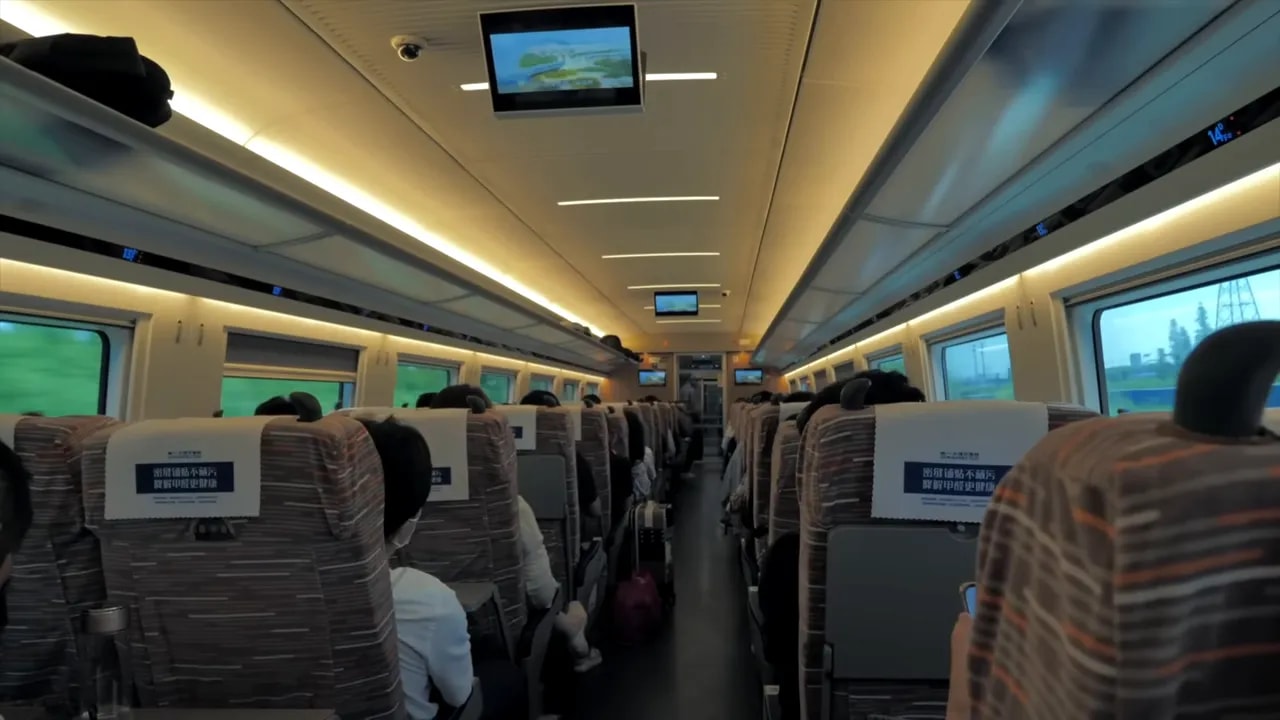
The core issue described is that urban rail systems are struggling to cover operating costs with operating revenues. This includes subway networks, light rail, and also China’s high-speed rail lines when considered under the broader “rail” umbrella.
One of the most striking points highlighted is the cost-versus-income gap:
- In 2025, average costs per car kilometer were reported to be nearly double the income generated.
- That means revenues from these systems do not even cover half of running costs.
And that comparison excludes the initial capital costs required to build new lines, which were described as running into the hundreds of billions of dollars depending on scale and project scope.
The logic is straightforward: in a purely private financing model, a system that cannot cover operating costs would quickly turn into insolvency. In the public sector context, that insolvency risk does not disappear. It shifts into the fiscal system and ultimately into the balance sheets of local governments.
Local government debt is the pressure point
The rail investment slowdown is tied to mounting financial strain on China’s local governments. For years, infrastructure spending, often debt-fueled, helped deliver growth and political stability at the local level.
As returns on infrastructure projects diminish, the debt becomes harder to manage. That has moved policymakers toward tighter controls over projects and funding requirements.
Key policy adjustments described include:
- Local governments being required to contribute up to 60% of the project capital.
- New rail lines needing to meet higher passenger density thresholds.
- More indebted regions effectively being shut out of new projects.
These changes reflect fiscal discipline, but they also create a near-term growth tradeoff. If fewer projects get approved, construction activity and related demand cool down. If existing systems struggle financially, the long-term viability question remains.
Spreading consequences across contractors and demand assumptions
The slowdown is not confined to budget lines. The China Update News picture also includes reports of declines in new rail orders for major state-linked contractors.
At the same time, falling passenger density suggests that demand is not matching the assumptions behind past expansion. When ridership underperforms, both the economics and the political rationale for new builds become harder to justify.
So while this is presented as an “infrastructure” story, it is framed more broadly as a signal of China’s economic transition: a move away from investment-heavy, debt-driven expansion toward something more dependent on efficiency and sustainable growth.
The challenge is that this transition is proving difficult, and underlying fragilities could weigh on growth for years.
2) Beijing begins frozen pork purchases to stabilize the market
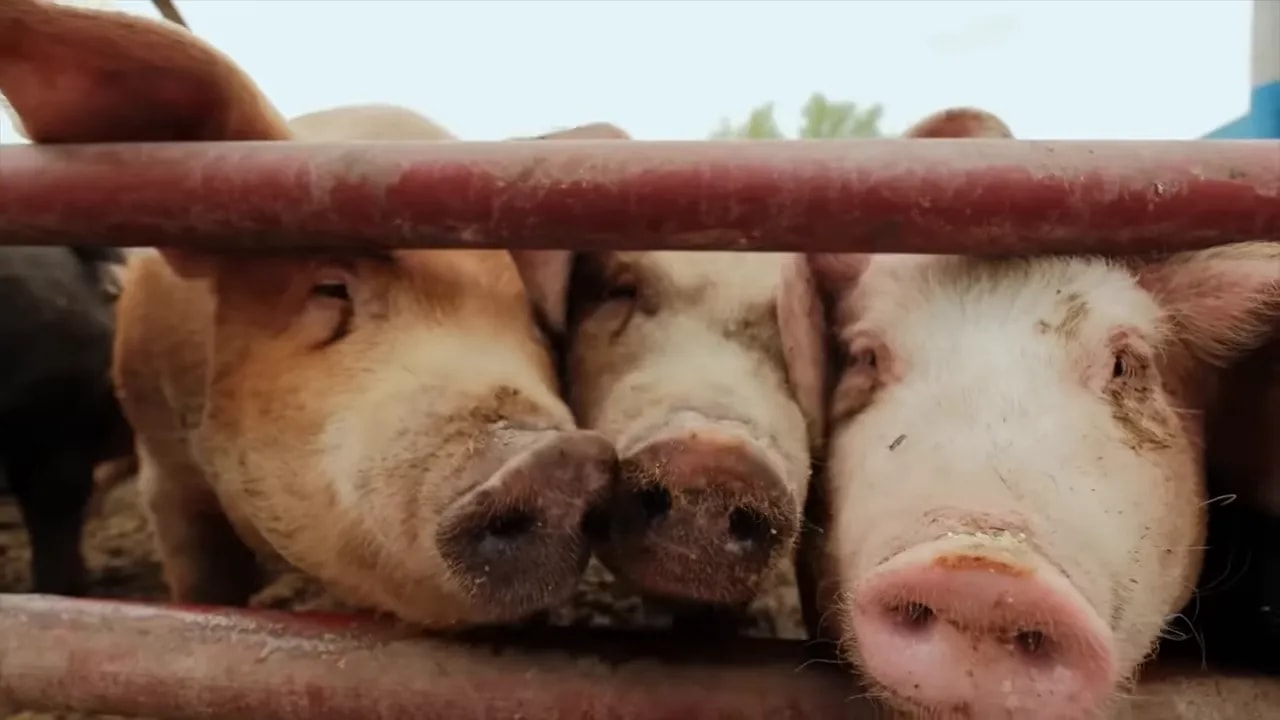
Another major item in this China Update News is a decision by Chinese authorities to purchase pork for central reserves after hog prices fell sharply and persistently.
What policy action was taken
Authorities initiated frozen pork procurement operations, described as “frozen pork procurement operations to stabilize market conditions and support producers.” The move follows a joint notice from:
- Ministry of Commerce
- National Development and Reform Commission
- Ministry of Finance
The market context is key. Pork prices continued dropping for months, with the national average live hog price reported at 10.68 yen per kg in late March. That is:
- about 30% lower year-on-year
- and the lowest level in eight years
Why pork matters so much in China
Pork is politically sensitive and economically important because it is a staple and a benchmark for broader agricultural conditions.
In the China Update News framing, pork is crucial because:
- China is both the largest producer and the largest consumer of pork.
- Consumption accounts for nearly 50% of global pork.
The hog-to-corn ratio shows strain for farmers
Beyond price alone, the episode emphasizes the hog-to-corn price ratio, a common indicator used to estimate profitability for farmers.
The ratio fell to 4.40 to 1, which is described as being well below the 5 to 1 threshold that signals severe financial strain. The ratio level was said to be the lowest since 2019.
In practical terms, the ratio is pointing to the widening gap between input costs and the price farmers can sell at the farm gate. When costs rise or output prices fall, losses accumulate quickly.
From earlier disease-driven price spikes to today’s oversupply
The underlying supply-demand imbalance is described as a result of years of expansion after earlier price spikes. The episode references that earlier price surges in 2019 were linked to African swine fever, and the eventual market response led to oversupply, even though consumption growth has remained subdued.
Now the central procurement approach is another attempt to smooth commodity cycles through strategic reserves. That includes monitoring market conditions and adjusting reserves as needed to prevent further price collapses and restore stability.
3) Beijing restricts consumer drone activity nationwide from May
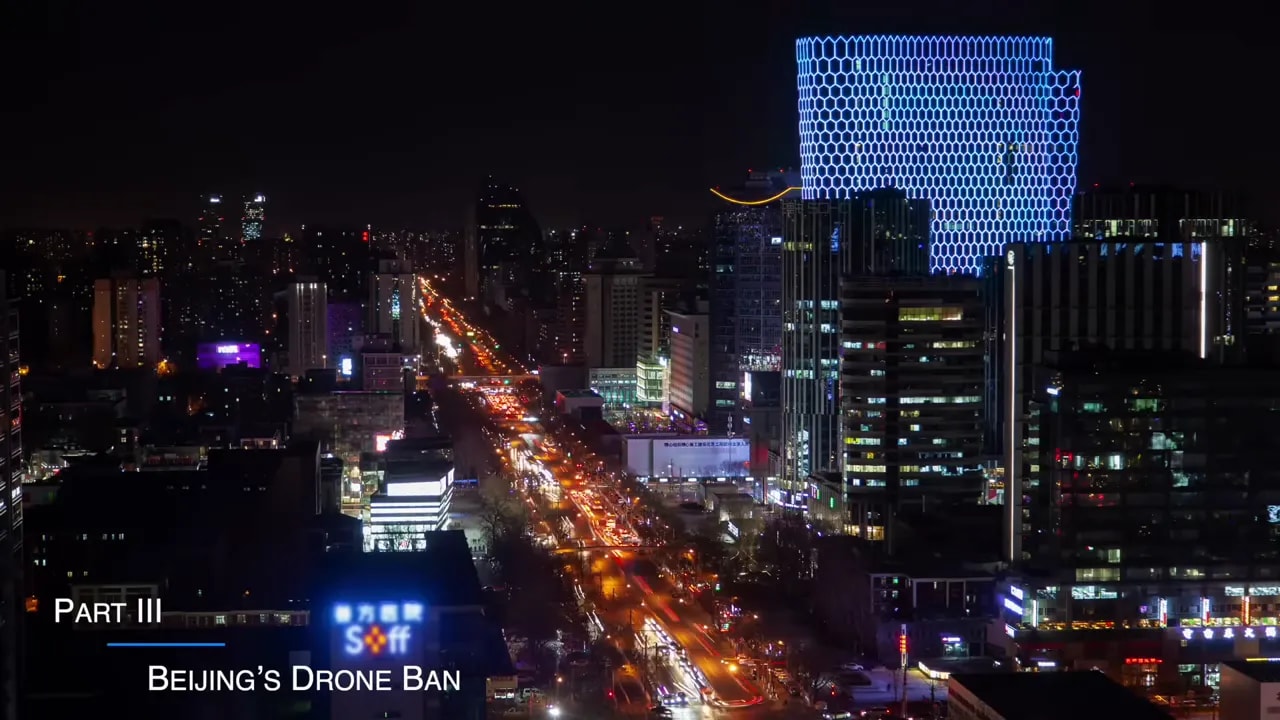
In the regulatory category of this China Update News, Beijing is moving to sharply restrict consumer drone activity. The policy is described as effectively banning most private drone use within the capital from 1 May.
Controlled airspace and limits on sales and delivery
The rules designate all of Beijing as controlled airspace. Under the restrictions, there are prohibitions or severe limits on:
- the sale of drones
- rental activity
- and transport of drones and key components into Beijing
Importantly, this includes transport via private vehicles, rail, and courier services.
What happens to existing drone owners
Existing drone owners are given a limited reprieve, but with strict administrative requirements:
- complete real-name registration by the 30th of this month
- verify details with police within three months
Even registered users face additional limits, including tightly regulated storage. No new storage facilities are allowed citywide, with further restrictions within the Sixth Ring Road. Holding more than three drones at one address triggers additional oversight.
Exemptions apply for approved uses such as:
- research
- agriculture
- emergency services
Why the crackdown fits a broader security trend
Even as China promotes a broader “low-altitude economy,” this week’s China Update News emphasizes that security concerns are tightening controls on consumer use drones.
Beijing is not acting in isolation. The same trend is described as applying more broadly, with stricter laws and enforcement for consumer drones. The rationale centers on public safety and airspace management.
Enforcement includes fines typically ranging from 200 yuan (around $30) to 500 yuan. New nationwide rules taking effect in May require users to register personal information before operating newly purchased drones.
Technology is becoming part of enforcement
Another practical detail in this China Update News is the use of monitoring technology. Cities such as Kunshan are described as deploying low-altitude monitoring systems capable of identifying and tracking unauthorized drones in real time.
Operators are required to obtain flight approval through a centralized platform managed by the Civil Aviation Administration of China. In many cases, local police notification is required in advance.
Incidents and a black market for modified drones
The crackdown follows high-profile incidents, including:
- drone collisions
- dangerous high-altitude flights
Authorities also targeted an emerging black market for modified drones that bypass built-in safety limits.
The overall message is a balancing act: tighter rules may support safer development of low-altitude commercial activity, but constraints on airspace access and complicated approval systems remain barriers to wider growth.
4) AI-led fundraising pushes Hong Kong equities toward a five-year high
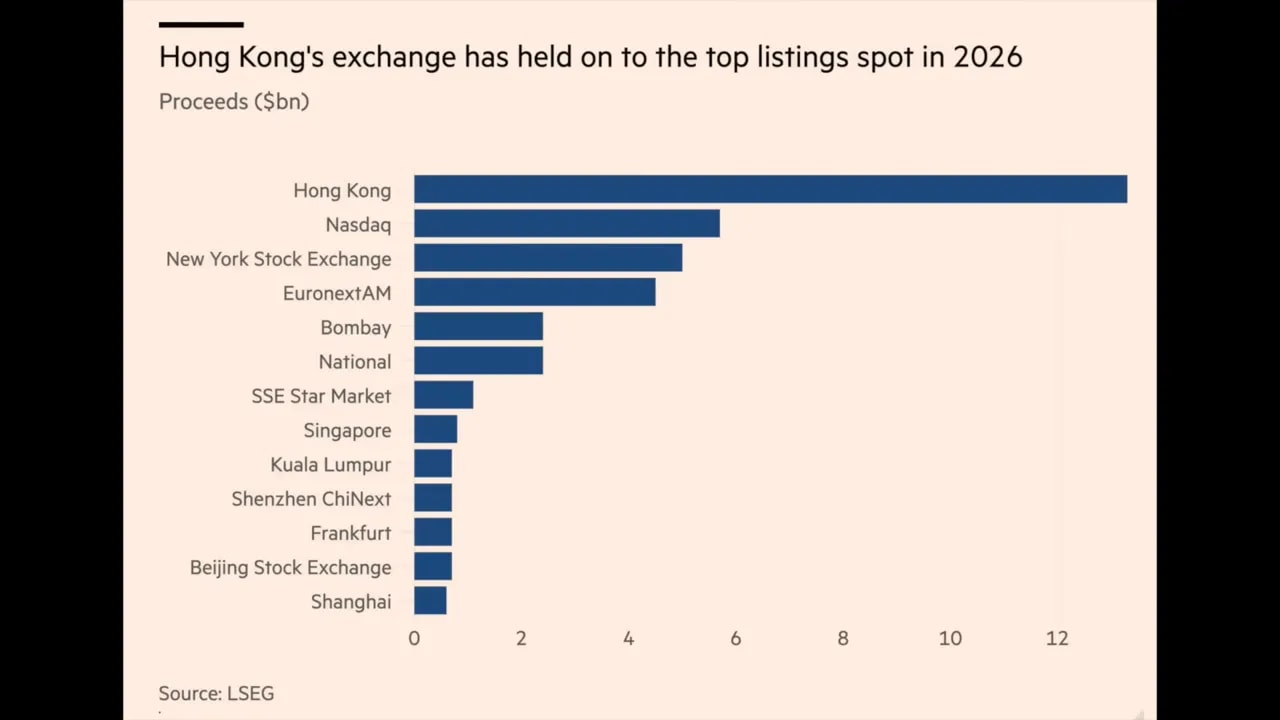
While parts of the economy face pressures, China Update News also shows a contrasting story in financial markets. Hong Kong’s equity markets are seeing strong early momentum driven by a surge in Chinese AI and technology listings.
Strong start for Hong Kong’s market
The episode reports that Hong Kong equity markets have delivered their strongest start in years as investor appetite for the sector intensifies.
Companies raised more than $13 billion in the first quarter of 2026 through a combination of primary and secondary listings. That amount is described as:
- the busiest opening to a year since 2021
- and outpacing major global exchanges
Pure-play AI firms are outperforming
At the center are “pure play” AI firms, including newly listed companies such as Drupal and Minimax, which were reported to have delivered extraordinary gains of over 400% since their debut.
This performance is described as reflecting a shift in investor behavior. Instead of focusing only on large-cap technology giants, capital flows are moving toward more specialized AI developers and hardware firms.
Building on the “deep-seek moment”
The momentum is said to be building on what many analysts describe as the “deep-seek moment” in 2025, when breakthroughs in Chinese AI capabilities reshaped global market perceptions.
Since then, investors are increasingly seeking direct exposure to China’s advancing AI ecosystem, fueling demand for listings tied to cutting-edge technologies.
Broader IPO activity beyond AI
Although technology dominates, the episode notes that sectors such as agriculture and retail also appear in the IPO pipeline. That suggests the market base may be broadening beyond pure AI plays.
There is also a structural element behind Hong Kong’s role. As an offshore fundraising hub, Hong Kong has been reinforced by regulatory dynamics on the mainland.
Regulatory pressure shapes where companies list
The episode describes restrictions on listings in parts of the mainland, which have pushed many Chinese firms to seek capital in Hong Kong. That trend may shift if some high-tech companies consider domestic listings, particularly on Shanghai’s STAR Market, where strategic sectors can receive faster approvals.
At the same time, regulators are tightening oversight both in Hong Kong and on the mainland by aiming to improve IPO quality. That includes slowing approvals and increasing scrutiny of corporate disclosures.
For now, the AI-driven listing boom remains intact, positioning Hong Kong at the center of global capital markets tied to the next wave of technological innovation.
What to watch next
- Rail investment and local government finances: If stricter funding rules persist, the sector’s economic model may keep facing pressure. If passenger density disappoints, financial sustainability concerns will likely intensify.
- Pork stabilization: Central reserve procurement can reduce extreme price volatility, but it also depends on monitoring how supply adjusts and whether market prices stabilize sustainably.
- Drone regulation and enforcement technology: Beijing’s rules may become a template for other cities, especially if monitoring systems scale up and flight approval requirements expand.
- AI listings and market quality: Strong early fundraising is notable, but the episode flags that whether this is sustained and “healthy” depends on ongoing oversight and investor demand.
FAQ
What does the predicted 34% drop in China’s rail investment in 2026 signal?
It signals growing structural stress in a debt-and-investment-heavy model. The slowdown reflects local government funding strain and concerns that rail revenues are not covering operating costs, especially when initial capital costs are included.
Why is Beijing buying frozen pork for central reserves?
Because hog prices have been falling sharply amid persistent overcapacity. Procurement is intended to stabilize market conditions and support producers.
What exactly is changing with drone rules in Beijing?
Beijing is designating the entire city as controlled airspace and effectively banning most private drone use from 1 May, including restrictions on sales, rental, and transport into the city, with limited reprieves and strict registration and storage requirements for existing owners.
What is driving Hong Kong’s AI listing boom?
Investor appetite for Chinese AI and technology firms, including pure-play AI developers. Strong Q1 fundraising and large first-day gains are described as building on earlier breakthroughs and shifting capital flows toward specialized AI ecosystem exposures.